Showing posts with label biblical counselling. Show all posts

Monday, October 27, 2025

Teenagers and Mental Health

Teenagers and Mental Health: A Handbook for Parents, Pastors, and Youth Leaders, Monica Kim and Danny Kwon (New Growth Press, 2025)

This is an excellent resource for those wanting to provide Christian care for teenagers with mental health challenges. Kim and Kwon aim to 
“outline the foundational elements of humble, godly, compassionate care for parents and churches who engage with teenagers struggling with mental illness. Our prayer is that parents, pastors, and youth leaders will be equipped to care in a variety of ways, feel empowered to do so more wisely and skillfully than before, and know when to humbly ask for help from others.” (p6)
Part 1 explores the foundational biblical principles, teen development and current cultural challenges. Practical ways churches can support teens and caregivers are suggested, as well as when to seek professional help, including advice for families who refuse outside help. I appreciated the suggestion that the role of the church is to develop relationships with teens’ families, and then act as refuge (safe place), lighthouse (navigational aid to help and other resources) and first responder. There is also encouragement for parents to be the parents, lovingly and kindly: 
Parents are “to model God to our children who is bigger, stronger, and wiser than they are and is undeservedly kind to them” (p71)
Part 2 explores specific mental health challenges in each chapter, including:
  • anxiety and stress 
  • depression 
  • body image issues and eating disorders 
  • substance abuse issues 
  • trauma 
  • schizophrenia or bipolar disorder 
  • suicidal ideation 
  • excessive screen use issues 
Each chapter follows the same format:
  • A definition, with facts and statistics. 
  • How the gospel speaks into that situation or mental health challenge 
  • Providing compassionate care, often including some practical tools and approaches (essentially a Christian counsellor mini-tool-kit). This includes an ongoing reminder that these things can only be attempted after you have developed a relationship with the teen, and fully understand their story. 
  • The benefits of good habits - encouragement to help the teen form helpful habits regarding sleep, exercise, diet, screen management, etc. 
  • When to seek additional help 
The chapters on anxiety and depression are longer and provide more tools. Wisely, the chapters on more complex presentations are shorter, recognising that specialised help is often needed. When read as a whole, the chapters are quite repetitive, with similar content and the same exercises. However, if used as a resource for that one presentation, each chapter provides a more complete picture.

If I had a concern, it is that the tools and details included could give some overconfidence in using them when they do not have the skills. It’s one thing to guide someone in a breathing exercise, but it takes a fair amount of wisdom and self-awareness to help someone process their experience of trauma and challenge their distorted beliefs as a result of it. I would be cautious suggesting parents, pastors or youth leaders attempt this unless they have relevant training in that area.

Further complicating this is whether parents should be applying these tools with their own children at all. It is important to let parents be parents, and not muddy the role by also trying counsel their children. I suspect this isn’t what the authors are proposing, and the tools are more aimed at pastors who can handle such circumstances. I certainly came away with some tools and practices I could utilise in counselling.

This is comprehensive and compassionate resource that many who work with youth will benefit from. It encourages churches and leaders to care for their youth well and wisely, and gives all who work (or live) with teenagers extra information and encouragement to support them well. 
“Families need the love and support of their local churches for the long haul as they walk through difficult experiences of mental health struggle” (p215)
“The ultimate message of hope we can offer to teens and their parents - take heart, for Jesus has overcome the world, including the brokenness of our own hearts and minds.” (p216)

I received an ecopy of this book in exchange for an honest review.

Monday, October 13, 2025

After Sexual Trauma

After Sexual Trauma, Camille Cates (New Growth Press, 2025)

Having previously read another of Cates’ books, Moving Forward after Abortion, I was already aware of her compassionate and gospel-focussed approach. Her vulnerable honesty about her own experiences gives her unique credibility to write both books.

This one is in a similar format, with each chapter addressing common questions, including:
  • Did that really happen? 
  • Was it my fault? 
  • Why me? Am I damaged beyond repair? 
  • How can I trust again? 
  • Will justice be done? 
Cates wants readers to know that their trauma experiences are understood, seen and recognised. Biblical accounts expound the points, mostly sourced from the Old Testament, such as Hagar, Dinah, Tamar and Joseph, all of whom were awfully mistreated by others, but seen and cared for by God. She then leads the reader to see how Christ is the one who truly understands, knows, heals, and redeems. For the Christian who wants to find their comfort in God’s work and promises, there is much here that is helpful. She explains some of the physiological, psychological and emotional impacts of trauma. She is honest about the failings of the criminal justice system and is clear that churches cannot handle these things alone; they must bring in civil authorities.

While there is much here that is of great benefit, I had two hesitations.
  • Deut 22:25-27 was used to prove that a woman who has been assaulted is not at fault. However, Deut 22 also addresses other circumstances, including stoning a woman who is not a virgin, and requiring a man to marry the woman he has raped. Those who look up the passage may find they are more confused and less comforted. 
  • Chapter 2 focuses on Dinah’s rape (Gen 24). Most comments were helpful: highlighting the power imbalance (he was a ruler), his attempts to downplay it, her brothers’ outrage and retribution. Yet, oddly it was used as an example against victim-blaming. There is no victim-blaming in the passage, but Cates refers to a 300-year-old commentary that does (Matthew Henry’s, published 1706). There would have been simpler ways to talk about victim-blaming, without making such an outdated link. 
Despite the above, this is a supportive resource that will provide help and comfort to victim-survivors while encouraging them to find their true value, worth and healing in Christ. 
“This journey towards healing and renewal after sexual trauma begins with seeking…the God who not only sees your past and present suffering but also holds your future. You are not unseen. You are not alone… God sees you and is ready to meet you where you are - to comfort you, restore you, and lead you into the future he has planned for you.”

I received an ecopy of this book in exchange for a honest review. 

Monday, October 6, 2025

Do I Need Boundaries?

Do I Need Boundaries? Jim Newheiser (New Growth Press, 2025) 

Do I Need Boundaries? is a new addition to the growing Ask the Christian Counsellor series by New Growth Press, many of which I have reviewed. Helpful overarching principles are outlined in the opening chapters. He is rightly concerned that boundary language is overused, often to justify cancelling people or cutting off relationships. Yet, God calls us to sacrificial relationships, where we are to love and please God, and love others. Of course, some boundaries are needed for safety, and we all have limited time and resources. But we need to be aware of the risk of erecting boundaries with the sole goal of meeting our own needs.

Nine brief chapters then provide case studies to explain his principles, covering topics like workaholism, extended family, finances, sexual boundaries, failure to launch and screen addiction. As such, numerous life stages and relationship complications are included. Each provides biblical wisdom and insights into how one might approach the situation, often allowing for the freedom to choose different responses.

However, there are limitations to instruction through primarily short, specific examples. Some may find it hard to transfer to their situation if it doesn’t match their circumstances. In addition, the language used throughout was often “we must”, “we need”, “we must not”, suggesting a directive counselling approach. However, the primary concern is that because each chapter was so short, it felt like the issues were simplified. For example, the few pages on boundaries with a family that perpetrated abuse did not mention the possible major trauma impact on the survivor. Case-study solutions were presented as if they were relatively quick to determine and enact, but in reality, they may be very difficult and often not resolved for years after much counsel and prayer. It felt that the real-life complications of the proposed situations were not adequately acknowledged.

For those who want to think about boundaries, it’s a helpful starting point. For a quick summary of his thinking, see this blog post. Newheiser also provides a critique of the Cloud and Townsend boundary books, which some may find interesting.


I received an ecopy of this book in exchange for an honest review. 

Wednesday, June 4, 2025

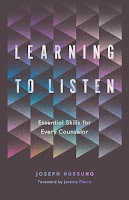
Learning to Listen

Learning to Listen: Essential Skills for Every Counselor, Joseph Hussung (New Growth Press, 2025)

Hussung has provided a short, easy-to-read resource that is applicable for counselling and pastoral care, as well as everyday life. Focusing on the importance of listening, he explores the purpose, posture and practice of listening well.

The practical tools at the end are useful, but I found the first two sections the most valuable. We all know we are to listen well; it is loving and essential for relationships. However, we rarely explore a Christian reason for why.

We listen, because God listens. “God stoops down to us and hears our cries, and that is remarkable!” He listens to us because he knows us and he loves us. 
“If we move toward the practice or posture of listening but forget that we were created by a God who listens and loves, then we will never fully grasp the complete scope of God’s vision for the care of his people. We listen to others because God listens to us. We love others because God loves. We need to constantly remind ourselves of God’s love for us and his expression of that love to us in listening as we hear the stories of others.”
But we don’t only listen to the people we counsel, we listen to God and encourage them to listen to him. Hussung observes that empathy is uniquely human because its starting place is from ignorance. 
“God knows, but we do not. We engage to know someone more deeply while God engages so that we know him more deeply. Empathy says, “Only you can tell me about yourself, and I will wait patiently and try to be a safe place to hear your story so I can help you.” In this way, empathy serves as the posture of a people who listen.”
Yet, sin mars our ability to listen and to love. “Sin cuts us off from the source of love, puts us at the center of our universe, and puts us in opposition to others.” So we speak too soon, we minimise suffering, give simplistic answers and think we know better.

Turning to section 2, the posture of listening, Hussung starts with Jesus, who was humble, gentle and patient. Our posture should be the same, “as counselors, we must exhibit Christ’s heart for our counselees, rather than our naturally hard hearts that makes it so difficult to listen.” So we move away from judgmentalism or defensiveness, we recognise our limitations, we are slow to speak, and we are compassionate to those who struggle with sin and suffering.

These first two sections were the real strength of the book - because we have a reason to listen well, a motivation for our actions. We don’t just do it because it is good practice, we do it to honour the Lord we are serving, and to love those around us. It’s yet another outworking of “Love the Lord your God with all your heart and with all your soul and with all your strength, and love your neighbour as yourself” (Luke 10:27).

He finishes with some practical tips for listening well:
  • Prepare to listen. This means being aware of our body language, how we are feeling, and awareness of the gaps in our knowledge (perhaps context, such as culture, values and perspective). 
  • Actively listen - aware of our tone, using questions well, and reflecting back what we have heard. 
“It is an active process that first allows the physical hearing to take place, then ponders and interprets what we hear, and finally communicates that we have heard and what we understand.”
  • Respond, always with affirmation (of their inherent value, and their story) and sometimes with empathic confrontation (What can they not see that perhaps we can help them to see?)
Many of these practical skills should already be known to someone who is counselling or caring in any format. It’s the framework that underpins them that is the most helpful.

He finishes with a logical conclusion: keep reading about Jesus (let his character shape yours), keep practising (we can improve these skills with time) and keep listening.


I received an ecopy of this book in exchange for an honest review.

Monday, October 23, 2023

Caring for Families Caught in Domestic Abuse

Caring for Families Caught in Domestic Abuse: A Guide Towards Protection, Refuge and Hope, Chris Moles (ed) (New Growth Press, 2023) 

This is another excellent resource, but one we all wish didn’t need to exist. Sadly, the stain of domestic abuse (or intimate partner violence, or family violence) spreads throughout families, and Christian homes are not untouched.

It is edited by Chris Moles, who is a pastor, biblical counsellor, and works with perpetrators. He has brought together very experienced people in this field, providing a guide to care for families caught in domestic violence.
“My hope is that this book will help pastors, elders, deacons, counselors, and other church leaders move toward greater unity in how they respond to domestic abuse, and thereby prevent or lessen some of the potential conflicts and missteps.”
I am not going to write a detailed review. It’s something that needs considered reading and thought, and my summary won’t do it justice. Responding to domestic violence is a specific ministry area and one that requires skills, training, time, and energy. I suspect that few of my readers or their churches will get deeply involved in this space in a structured way. Not for lack of desire or a belief that it’s unimportant, but due to lack of skills, training, and resource allocation. However, it’s so important that I want to flag this book’s existence for those for whom it may be helpful.

I will provide some summary points and some quotes:

Regarding the church:
“My prayer is that the church of Jesus Christ will be the safest place on the planet for women and children. I pray that the church will lead the way in not only providing compassionate care, but also in developing best practices to address the needs of victims and confront the abusers. We represent an army of responders who can effectively, graciously, compassionately, and firmly confront the evil of domestic abuse. As we do so, we will simultaneously promote healthy, God-honoring relationships.” (Chris Moles)
A church needs to consider what they can offer with the resourcing they have. This is not an area that you can partially help in, you really need to be there for the family for the long-term.
“My desire is … to encourage you undershepherds as you seek to minister in a complex, confusing, time-consuming, and redemptive ministry. I want to help you think through how to address domestic abuse in your church in a biblically faithful, organizationally sustainable, and practically helpful way.” (Kïrsten Christianson)
They propose a team-based approach to domestic abuse, requiring numerous people (e.g., victim counsellor, crisis counsellor, victim advocate, perpetrator counselor, pastor). My overwhelmed thought was: this is a massive undertaking for a church. Of course, worthwhile and needed, but I don’t know many churches who could even attempt to do this well (knowledgeably and skilfully) with one couple, let alone numerous couples.

Caring for survivors:

Is long term care, needing awareness of the impact of trauma.

It was openly acknowledged that this is “likely the most complex and difficult problem most counselors will ever face” (Joy Forrest). Few women realise they are experiencing abuse, and abusers are often charming, confident and convincing.

Confronting and counselling abusers: 

The most important rule of engagement - safety - the victim must give consent and advice. This would be an area where churches need to be very careful, for the increased risk if this goes wrong can be devastating.

“One way of thinking about abuse relative to other relational sin is to say that most relational sin is competitive, while abuse is parasitic or predatory.” (Greg Wilson) Relational is me before you, abuse is me over you.
“Working with abusive people often feels a bit like the work of Jeremiah or Isaiah—you care in grace and truth as well as you can, but in the end there is a high likelihood that they will reject you and/or your message.” (Greg Wilson)

There is a helpful chapter about how to discern true repentance (godly sorrow, not worldly sorrow).

Impact on children:

Two initial priorities for working with children who have lived or are living in homes with domestic abuse:
  • determine whether they blame themselves 
  • discover how the distress impacts them and what coping strategies they employ. 
“Several factors can influence the severity of the impacts (age, socioeconomic status, birth order, frequency and form of abuse, duration of exposure, existence of supportive relationships, and cultural beliefs). Generally, preschool-aged children tend to have physical and anxiety-based symptoms. School-age children tend to show stress along behavioral and emotional dimensions, and teenagers tend to be at risk of seeking relief destructively (drugs, sexual activity, running away).” (Darby Strickland)

Appendices include a safety plan and basic abuse screening questions (a much more comprehensive list is in Darby Strickland’s Is It Abuse?)

A very worthwhile resource for anyone in Christian churches who is counselling or working with families affected by domestic violence, or looking to establish a ministry to do so.


I was given an ecopy of this book in exchange for an honest review. 
Monday, October 16, 2023

Moving Forwards after Abortion

Moving Forwards after Abortion: Finding Comfort in God, Camille Cates (New Growth Press, 2023) 

This book completes the newly released additions to the Ask the Christian Counselor series by New Growth Press.

Camille Cates has written this caring, gentle yet honest book for women who have had an abortion. It is aimed at Christian women, but does spell out the gospel for those who are unbelievers. I’m not sure if an unbeliever would pick it up - but God does indeed work in mysterious ways.

Cates is uniquely equipped to write this book, both having had an abortion herself, and having worked with women since 1999 “who have been left with hurt, confusion, and unanswered questions after an abortion.”
“I hope and pray that you feel comforted as you read this book, not only by my words as a woman who has had an abortion, but by God’s Word. The Bible truly has answers for aching hearts and mixed-up minds.”
She starts sharing her own story, full of sadness, grief and shame, and how she then found a bible study for women struggling with post-abortion trauma. Her openness can help other women acknowledge their own experience. So many in our churches find this so hard to talk about, yet many are sadly dealing with their struggles alone.

She addresses common questions women are dealing with:
  • Is God going to punish me for this? - No, Christ has borne the punishment of all sin, and now is the time to draw near the God for healing. “God, in his mercy and kindness, doesn’t waste the pain and suffering that his children endure….He uses both our sin and suffering to reveal more of himself to us.” 
  • Why is it so hard to move on? - You need to acknowledge your sin, idols and trauma. 
  • What do I do with my thoughts about the baby? - Acknowledge it was your baby, take time to grieve, consider memorialising in some way. 
  • Why am I struggling with forgiveness? - There are helpful comments here about the myth of forgiving yourself - for only Christ can atone, redeem and forgive. 
  • Will I ever stop feeling this way? - Need to work through the guilt, grief, anger, anxiety, depression and numbness. 
“Processing your thoughts and emotions after an abortion can be daunting. You may have felt like it’s all too much to work through on your own. Yet, you may not have asked for help, believing no one could possibly understand what you’ve been through. Maybe you’re scared to lift the lid off your heart, afraid of emotions boiling over and spilling out into your life, making things messy. However, God wants you to understand why you feel the way that you do, especially if it is hindering your relationship with him or other people.”
There are self-reflection questions at the end of each chapter, and many recommended resources throughout. It is strongly encouraged that one reads this alongside a trusted friend, pastor or counsellor. Cates encourages women to talk about their journey, to help others who are going through the same thing, and to share how Christ’s redemption has worked in their lives. We want to be communities who walk alongside each other sharing our struggles, pain, regrets and griefs, and rejoicing in the healing and forgiveness that Jesus offers.


I received an ecopy of this book in exchange for an honest review.

Monday, October 2, 2023

I have PTSD

I have PTSD: Reorienting after trauma, Curtis Solomon (New Growth Press, 2023)

This is yet another very helpful release in the expanding Ask the Christian Counselor series by New Growth Press. While it is a short book, Solomon sensitively and carefully unpacks the core issues well, explaining trauma and it’s impact, and then guides the trauma sufferer through a process of reorientation in God’s love and care keeping our eyes fixed on Jesus.

He is clear from the beginning - God knows about trauma: 
“If you open the Bible to its first book, Genesis, you will read story after story of trauma inflicted and endured. Trauma did not take a break or disappear; it has been with us ever since. In each generation, people from every tribe and nation have experienced and inflicted trauma.”
Throughout, he uses three ongoing examples of people who have experienced trauma:
  • Vanessa - who watched her brother die from a football injury 
  • Javier, an army ranger - who experienced traumatic events in war, including the explosion of an IED which took a friend’s life. 
  • Carl - who was in a car accident where a child died. 
Therefore, the focus is on trauma that is connected to a specific event, not long-term childhood abuse or neglect. For those who are aware of diagnostic labels - this means it’s more for people experiencing post traumatic stress disorder (PTSD), not complex PTSD (C-PTSD). In fact, Solomon is clear that he is not addressing abuse (particularly long-term).

He is clear that this is not a battle for one to fight on their own. You need a team around you - he has specific ideas who that should be, including a biblical counsellor, a counselling ally (someone who does counselling with you) and trusted supporters who you can call when things get tough. It’s a specifically structured approach, but one that could have value.

Early on he explains trauma and post-traumatic stress, and how the body responds to it, noting:
“Your response to trauma is unique because you are a unique person with a unique blend of genetics, relationships, history, thoughts, feelings, and desires. Nevertheless, while the difficult things are unique, they are not uncommon. So when you face them, remember you are not having an abnormal response to normal life; rather, you are living a common response to extreme suffering.”

Because of this, Solomon (like many others) takes issue with the term ‘disorder’. As such he refers to PTS throughout (rather than PTSD). 

He helps the reader to develop a “peace plan” when triggered - which includes praying, sitting down (for safety), breathing (with instructions), thinking truths about God, and considering who to call. He further explores triggers and how to manage them, including how to face them wisely and in small doses. Next, there is encouragement to grieve your losses, and take responsibility for what you can, noting that while some things may bring shame, they do not necessarily stem from actual guilt.

In reminding of how Jesus restored - he notes that Jesus suffered as well, and that he is our saviour. We need to remember that:
  • The world has been disoriented since sin entered the world 
  • God came to rescue the world and put things right 
  • Jesus understands your suffering because he has suffered 
  • God does bring transformation out of trauma 
It’s this idea of transformation that structures the final part of the book - how to reorient your past, present and future. There are concepts of CBT in here, as well as general trauma—informed therapy - there are trigger logs and charts to help you process. But all also focus on God, who he is, how he loves us, and how he brings transformation even through awful suffering.
“One hope that God offers trauma sufferers through the Bible is the happy news that a person’s PTS can be reframed to become Post-Traumatic Sanctification.”

I was given an ecopy of this book in exchange for an honest review. 

Monday, September 18, 2023

My spouse was unfaithful

My Spouse was Unfaithful: Finding Strength in God's Presence, Robert D. Jones (New Growth Press, 2023)

This new book in the Ask the Christian Counselor series by New Growth Press is quite specific - addressing when a spouse has been unfaithful. It is aimed at Christians, who wants to process this in light of God’s word and with a biblical framework, including concepts of forgiveness and repentance.
“As we begin our journey, we must recognize that God doesn’t promise you restoration with your spouse. He only promises to be with you as a Christian—to help you know, follow, love, and enjoy him, however your spouse chooses to behave.”
Jones recommends reading it through first to get the big picture, and then turn to consider personal application. He also strongly recommends both counselling and pastoral care, and a group of supporters who will walk this road with you.

I’ll outline each section in brief:

1. Moving forward with God-given hope, which means recognising the hope that we do and do not have. So, we do not expect God to remove troubled feelings, for the Lord to restore the marriage, or to undo the consequences of a spouse’s sin. We can however hope in “the triune God—Father, Son, and Holy Spirit [who] promises to be with you, watch over you, and walk with you through the entire aftermath of your spouse’s infidelity.”

2. Identifying your hardships and temptations. This encourages exploration of what has happened through a biblical lens, including the various emotions one might be feeling (e.g., confusion, despair, anger, jealousy, regret, shame, vindication or freedom). There is encouragement to pay attention to your own response (e.g. beware of bitterness, vengeance, rash decisions, gossip, cynicism, etc.)

3. Drawing near to your gracious, compassionate God. Believing that God is present to help you, trust that he hears you when you cry out, and to recognise your core identity is as his beloved child (not as someone’s spouse). 
“My brother or sister in Christ, God has not abandoned you just because your spouse did. God is with you amid your marital crisis. He is ever-present, always available, on call. He is your refuge, strength, and fortress. He stands by your side. Begin your path by striving to believe this.”
4. Humbly responding to God - seek to obey God, embrace his purpose in your suffering. Here Jones includes seven ways God uses hardship to make us more like Jesus - which have much broader application than this book’s topic:
  • to enhance our relationship with him, 
  • to help us experience Christ’s sufferings, 
  • to expose our remaining sin, 
  • to engage us in the body of Christ, 
  • to exhibit Christ’s work in us, 
  • to equip us for wiser more compassionate ministry, and 
  • to elevate our eyes longing for Christ’s return. 
5. God’s way to view and treat your spouse - cultivate mercy and attitudinal forgiveness, confront them to encourage repentance and reconciliation, and deal biblically with the sin in your marriage.

6. Responding wisely to your spouse’s decision - which will depend on whether they repent or not. His options seem to be: if they repent - you commit to rebuilding your marriage, if they do not - you demonstrate Christ-like love and mercy. He addresses separation and divorce, suggesting separation is probably necessary for a season, and divorce is an option, especially if they are unrepentant.

Sections 5 & 6 raised some issues - mainly because they are such large, complicated and individual circumstances and this approach, by virtue of being short, seemed to leave some gaps in terms of the reality of dealing with this. I’m not sure that one’s response will be entirely dependent on what their spouse does and whether they are repentant. The wronged spouse has more agency than just waiting to see how the other acts. There is also a brief reference to ‘make’up’ sex which trivialises the deep pain and significant healing that would need to occur before intimacy is considered.

The Gottman Institute has some helpful (secular) research and therapy for couples experiencing infidelity. They suggest that a spouse that has been cheated on is often found to have symptoms of PTSD). They also note that at the point of an affair marriage #1 is over, it’s now up to the couple to decide whether to proceed with what will become marriage #2. They also note the important of rebuilding trust and hope. Jones takes it further (noting this is not a promise):
“Jesus can not only restore your marriage but make it stronger than it was before. We don’t want to merely revert to the pre-infidelity state of your marriage. In Christ, God provides something better. Here’s why: Our God delights in making broken things better than they were.”
In this book, Jones has explored the need for grace, mercy, repentance and forgiveness after adultery - not just between partners, but also with God and with ourselves, with the overall goal being maturity in Christ, whatever happens with the marriage.


I was given a ecopy of this book in exchange for an honest review.

Monday, September 4, 2023

Someone I Know is Grieving

Someone I Know is Grieving, Edward T. Welch (New Growth Press, 2023) 

I’m pleased to have the opportunity to review the new additions to the Ask the Christian Counselor series published by New Growth Press. They are very short books that aim to explore life’s common challenges, but not overwhelm the reader.

Someone I Know is Grieving is a gentle and compassionate offering by Edward Welch. Welch is prolific writer in the biblical counselling space, and he always has a kind and wise perspective (see his other books I have reviewed here.

It is structured simply and effectively, in four easy to read chapters:

Responding wisely to suffering - we all want to help rather than hurt people, so our goal is “to care very well for those who suffer; to bring life to those who are hurting. As we grow in this goal, the body of Christ will be drawn both toward Jesus and toward each other.” He encourages reflection on what you have found helpful in times of suffering.

Consider Christ our wisdom - who reshapes our hearts with love and humility. From here he springboards into the two our care should be offered:

Care shaped by compassion means we want to know people, and we understand that life experiences and emotions are complex.
"Compassion means that you love the person and are affected by his or her hardships, no matter how transient those hardships might be. They leave their mark. You remember them and are changed by them. Such a response takes you into the very heart of God, who chooses to place compassion at the forefront of how we know him."

Practical tips here include: say something, do something, avoid stories about you, and remember the details and the dates.

Care shaped by humility means we listen to what people want and need, and don’t assume that we know better.
“For us, humility knows its creaturely limits and persuades you that your comforting skills need work. You don’t always know what is helpful to say or do, and you can’t fully understand another person’s pain.”
Tips here include: prayer for and with them, don’t over interpret grief and suffering, hold your advice, and be careful using bible passages and responding to theological questions.

The end of each chapter has questions to prompt further thought and consider how it personally applies (the book is really acting as a counsellor at this point).

Welch has combined the theological realities about God’s care, sovereignty, and love for his people with thoughtful application about how to apply that to those who are grieving. The humility perspective adds a dimension of self-awareness - we must know people well before we can speak to them helpfully. We cannot think we have the answers to their concerns. And while God’s word speaks to all situations, sometimes silence, prayer and companionship is the more compassionate response in the immediate moment. Theological reflection on how God has been present in the moment will likely come later, as people process their experience. So, we walk alongside people as they grieve: learning, supporting, encouraging, and showing them Christ’s care.

I was given an ecopy of this book in exchange for an honest review. 

Monday, June 5, 2023

The Christian Counselor’s Medical Desk Reference

The Christian Counselor’s Medical Desk Reference (2nd ed). Charles D. Hodges Jr. (Ed.) (New Growth Press, 2023)
This book is intended to be a reference guide for counselling individuals with medical problems, and as such it is a helpful and well researched resource. Its stated goal is to be a tool for those helping those who struggle and are looking for hope. The opening chapters consider general principles when counselling those with a medical or psychiatric (DSM-5) diagnosis. Then it moves to detailed chapters on a wide range of medical and psychological challenges. There is a stronger emphasis on psychological challenges, from anxiety & depression, ADHD & ASD, PTSD, schizophrenia, OCD, post-partum depression, and bipolar disorder. There is information about medications, psychotropic drugs & alternative medicines, and how they impact the body and brain. Chapters that address more medical diagnoses include PMS, dementia, sleep disorders and rheumatological conditions.

There were numerous authors of different chapters, each addressing their areas of expertise. However, it resulted in various tones. Some authors were gentler, more compassionate, and more client-focussed. Others seemed harsher, and quick to call certain challenges sin, and I was left wondering about their compassion with a client struggling with such challenges. It was this variety of language usage that highlighted the range of interpretation amongst biblical counsellors. While titled for “Christian counselors”, actually it’s intended for biblical counsellors, which depending on your definition can be a different thing.

I would have liked to see more consideration of the impact of trauma in people’s lives (this was only touched in with PTSD), and how it can impact both medically and psychologically. But I can see why it was structured around DSM labels, as that is how many medical professionals operate, and how funding is allocated.

I appreciated this comment from Jocelyn Wallace (in a very helpful chapter on postpartum depression):
“My job as a counselor is to love my counselees, to sacrifice to serve them at the most terrible times of their lives, and to suffer with them while they grow in their understanding of God, themselves, and this world we live in.”
Despite my concerns with some aspects, overall this is a helpful resource. A counsellor’s awareness of medical challenges that clients face can only further enable their understanding of their client, and their ability to helpfully work alongside them.


I was given an ecopy of this book in exchange for an honest review.

Note: as per usual, if quoting a resource I use their spelling (e.g., counselor), but for general usage I follow the Australian convention - counsellor.

Monday, November 28, 2022

Angry with God

Angry with God: An Honest Journey through Suffering and Betrayal, Brad Hambrick (New Growth Press, 2022) 

This is the fifth and final book in the new Ask the Christian Counselor Series by New Growth Press. Brad Hambrick skilfully leads the reader through an exploration and processing of their anger and grief due to suffering, betrayal or loss. As such, it’s quite specific - aimed at the Christian who is angry with God or others for what has happened to them. Hambrick helps with processing the hot emotions of grief in a way that allows for self-reflection, honesty, discovery, and growth. 

With very small, bite sized chapters, Hambrick logically leads through a compassionate exploration. He starts by considering anger itself, and how to pace oneself along the path of exploring it. He guides in the construction of a timeline of events and topography of pain to chart the emotion connected with it. He strongly encourages the finding of close friends with whom you can walk the path. These are helpful set-ups for the deep work he later encourages. Starting to address the theological complications of how to view pain and suffering, he comforts with the truth that your pain is not a riddle to be solved (why? why me?), but an experience to be processed and a journey to be endured. 

Section 2 (Articulating your pain) leads the reader to analyse the events that led to the anger and distress. Explore what was good amongst the pain, what happened factually (enabling you to move from primarily emotions to learning and considering). Whether things that God’s people did affected your relationship with God, and what other things made the pain worse. All of these help to move from angry grief to memorialising grief. Section 3 is a detailed exploration of the multifaceted effects of the pain played out in emotions, thoughts, relationships, choices, and our view of God. This is where honest assessment of how we have reacted to our situation has played a part and how we have choices moving forwards. Section 4 is where resolution begins to come as our faith matures, we understand suffering as part of life, we accept that we only understand partially. So, we make decisions of how to live moving forwards, and how to move towards hope. Section 5 brings the reader back to the gospel through the lens of creation, fall, redemption, sanctification, and glorification. Having done the hard work of grief and anger processing, hopefully the promises of God for this life and the life to come now bring further hope and understanding. 

There is a lot of value in this short book. Hambrick uses counselling skills and processes skilfully, and sensitively combines them with gospel truths. It is a counselling tool in your own hands. Additionally, a counsellor could use this to assist a client through a grief process. While not naming them, many concepts he flagged were familiar to standard counselling practice - the timeline, Neimeyer’s meaning making through grief, Stroebe’s & Schut’s dual process grief model, and various CBT concepts. A very helpful resource.


I was given an ecopy of this book in exchange for an honest review.  

Monday, November 7, 2022

I Want to Escape

I want to escape: Reaching for hope when life is too much, Rush Witt (New Growth Press, 2022) 

On first glance at this title, I assumed it was about someone contemplating suicide. While it does indeed address that topic, the escapes that Witt talks about are much more wide ranging. As such this book is more widely applicable that I first thought.

Witt notes the overwhelming desire we have to escape. Whether it’s through distraction, denial or destruction, we all have a tendency to avoid the challenges of life and to choose what seems to be an easier path.

I liked Witt’s honesty throughout. He is compassionate as he explores the many reasons and ways we choose to escape. Yet, he calls us to a better way - a courageous dependence on God in midst of our challenges. 
“When life overwhelms us, we often see escape as our only option. But through Scripture, God welcomes us to walk his better way: the way of grace-enabled, faith-directed, Christ-centered, Word-delivered, glory-focused dependence on God.”
His goal is:
  • To gain a better understanding of why escape appeals to us 
  • To learn to draw near to Jesus, who remains closer than a brother 
  • To develop practical plans to shape our response to trouble
Early on he chooses 1 Cor 10:13 as a key verse:
No temptation has overtaken you except what is common to mankind. And God is faithful; he will not let you be tempted beyond what you can bear. But when you are tempted, he will also provide a way out so that you can endure it.
On this he notes: “our trouble is common, our God is faithful, and that courageous dependence is the way toward peace and rest”.

The plan moving forwards is three-fold:
  • pray with humility 
  • believe with gospel hope 
  • act with courageous dependence 
This plan is then applied over following chapters to the four main escape routes that people take:

1. Denial 

Denial doesn’t work in the end, we need to face our problems. There is benefit to enduring trials - they prove the genuineness of our faith, they make the beauty of faith appear, and they purify & increase our affection for Christ.

2. Distraction

We distract ourselves in so many ways - some more mindless (maybe TV, gaming, social media). Others may cause more harm - substances, overeating, etc. Others might look good - always being busy or always saying yes to serving, but still function as a distraction from our concerns.
“Our idolatry takes center stage when we turn to a myriad of distractions and discredit God’s power and purposes. As we’ve seen, every escape route begins with a false belief or promise. I often find in my heart the belief that some distracting activity is surely better or more enjoyable than facing trouble with God.”

3. Deflect & destroy (deflecting responsibility and behaving in self-destructive ways). This one is harder to face because it’s anchored in us showing we are right, others are wrong and someone else is to blame.

However, we meet our challenges with gospel hope:
“When facing a difficult situation we should profess with confidence, I am here (1) by God’s appointment, (2) in his keeping, (3) under his training, and (4) for his time. The only way to work through overwhelming hardships is by remembering God’s loving care in all times. When we feel cornered by circumstances we can’t control, we can know God holds us and our circumstances in his hands.”
4. Death

This honest and gentle chapter included a detailed contribution from Witt’s wife Kathryn who shares her personal struggles with depression and wishing for the release of death.

He focuses here on 1 Cor 10:13 again - you are not alone, your troubles are ‘common to man’, others have faced what you are walking through and help is found in Christ through his Spirit.

Witt finishes bringing the reader back to the reminder that “after darkness, there is light”. We have hope in Christ, he walks with us, and so we turn to him in prayer, we believe the gospel, and we act with courageous dependence, trusting in him to be alongside us as we walk the difficult path.

A gospel-focussed, short and instructive book that helps people to identify their own escapes and avoidances, and encourages a more fruitful path. Another helpful addition to the Ask the Christian Counselor series.


I received an ecopy of this book in exchange for an honest review.

Monday, February 14, 2022

Is it Abuse?

Is it Abuse? A Biblical Guide to Identifying Domestic Abuse and Helping Victims, Darby A. Strickland (P&R Publishing, 2020)

This book falls into that sad category that while being excellent, Christ-centred, and extremely helpful, it is only because of deep sinfulness that it needs to be written and read. 

Darby Strickland is an experienced counsellor in the field of abuse, and brings her significant years of learning, helping, and writing to those who want to further understand domestic abuse, its impacts, and how to support those in the midst of it.

This is not for those who are experiencing domestic abuse, they would be better to start with her mini-book: Domestic Abuse: Help for the Sufferer. Those in church leadership who want to start the process of understanding this issue better would be well placed to begin with her other mini-book:

Domestic Abuse: Recognize, Response, Rescue
. 

While this is highly recommended for all in church leadership and those in pastoral care, it is also for those who want to walk alongside women in these situations:
“I have written this book for anyone who desires to come alongside a victim, or victims, of domestic abuse. Maybe you are a church leader, friend, or counselor, and you find yourself dealing with the many layers of complexity that unfold as you encounter an abusive marriage.” (p. 15)
Strickland anchors abuse in the language of oppression:
“I want you to grow in your understanding of what is at the root of oppression and what the Bible says about it while also giving you the means to create pathways to safety and restoration for victims.” (p. 16)
She states her three goals are to prepare the helper to be able to:
  • pick up on cues that something is wrong, 
  • draw out stories to get clarity on situations and their severity, and 
  • be equipped to provide wise and Christ-centred counsel as you navigate this complex issue. 
The whole book is worded around a male perpetrator and a female victim, noting that is her area of expertise, and that statistics suggest is to be the case in >95% of situations. She does however, acknowledge it can be the reverse, and that the principles can be applied to male victims.

I’m not going  into deep level detail in this review, but will rather give readers a general overview, and some quotes. It’s a significant topic, and those that are interested in pursuing it would be much better placed to read the book.

Broken into three parts, Strickland begins by unpacking abuse: Part 1: Understanding Oppression

First, she considers “Is it Abuse?” and the complications of trying to know. One one hand “abuse is easy to miss, but it is even easier to minimise” (p. 15), yet we must go very slow, for much is at stake “for labelling something as abuse when it is not will do damage of a different kind” (p. 26). So, go slow, compile stories and examples of power and control.

At the core of abuse, she suggests, is oppression:
“Abuse occurs in a marriage when one spouse pursues their own self interests by seeking to control and dominate the other through a pattern of coercive, controlling, and punishing behaviours… I like to use the term oppression, seeing as it provides a framework for this behaviour that is addressed in scripture and captures the domination that it involves. No matter what form the oppression takes, its intended outcome is the same: to punish and wound a victim so that an oppressor gets their world the way they want it.” (p. 24)
In the end, the assessment is for coercive control, rather than based on specific incidents, many of which could be explained away.
“Abused women tend to ask somewhat veiled questions as they try figure out if what they are experiencing is normal and if you are a safe person to talk to” (p. 22).
To be the helper we need to listen carefully, offer gentle words, restore her ability to make choices, and bring her the truth that God loves her, honours her and delights in her.

She suggests that at the root of oppression is entitlement:

“While we all struggle with entitlement, oppressors exhibit patterns of demanding and punishing that are retrenched, unbending, and unrelenting”. This person:
  • Deflects all blame 
  • Admits no wrongdoing 
  • Renationalises punishing behaviours as being an appropriate response (p. 64). 

She considers six false beliefs of an oppressor, of which some or all might be present:
  • It’s all about me 
  • You and I need only to listen to me 
  • Rules are not for me to follow, they are to keep me happy 
  • My anger is justified 
  • Other people attack me 
  • I don’t have to appreciate what you do, but you have to appreciate what I do 
She then spends time considering the wide range of impacts of abuse on a victim, and how to help her speak.

Part 2 - Uncovering Oppression explores physical, sexual, emotional, spiritual, and financial abuse in detail, expounding on what they might look like, how they might impact her, and how to help someone in this situation. There are specific inventories included, which might assist both a victim and her helper to assess the severity of her situation, and how it might have escalated over time.

She notes that emotional abuse is the hardest to quantify:
“A broad category that encapsulates many forms of non-physical control. But we do not want to wrongly expand this label or over apply it. There are many good marriages in which cruel words are sometimes exchanged, and many bad but non-abusive marriages in which couples fight in detrimental ways.“ (p. 179)
The key is to look for patterns of control and dominance. She also considers extreme neglect and gaslighting, as they are two of the most difficult situations to detect.

Part 3 - Upholding the Oppressed has a chapter on helping mothers and children, noting the danger many children are in abusive households. Most children are aware of what is happening in the home, and some women might need to teach their children how to leave the house in a violent situation, or to call the police.

The final chapter, supporting steps towards freedom, confirms much of what Strickland said throughout - change is slow, it can take months or years for women to comprehend and face the abuse they are living with, and longer to choose what to do about it, whether challenge it, ask for help, or safely leave. She sagely notes that for all these situations, women will “have to pick their pain” - because every option is hard, challenging, and potentially dangerous.

The book finishes with some excellent appendices:
  • Safety plan - for a woman to fill out, especially in cases of physical abuse, which outlines what action she might take and when. 
  • Ten ways to educate your church, concluding a reference to this online course 
  • Detecting red flags during dating 
  • Premarital abuse assessment 
  • Abusive argument inventory 

Not surprisingly, this is a very sobering read. The stories included are heart-rending, and the detailed abuse inventories are awful to imagine someone living with. Yet, there is hope here too. Strickland deeply cares about women in these situations, she longs for them to experience freedom in Christ and to have a deep knowledge of God’s love for the weak, the vulnerable, and the mistreated. She calls on us to care for abused women and walk alongside them. She encourages the church to have a role in loving and caring for victims, as well as challenging and (ideally) calling perpetrators to genuine repentance. It's worth reading, but even more so, it's worth being better equipped to walk alongside people in these very challenging situations. 

Friday, November 5, 2021

A Biblical Counseling Process

A Biblical Counseling Process: Guidance for the Beginning, Middle and End, Lauren Whitman (New Growth Press, 2021)

Whitman is a trained biblical counsellor with the CCEF, and has written this very helpful, succinct resource for those seeking to counsel biblically in a professional way, which also has application for those counselling more informally in pastoral care situations. It’s essentially a primer for newer counsellors, guiding them through the beginning, middle and end of a counselling relationship. In each section, Whitman covers both theory and practice in an easily implementable way. First the theory is outlined with the goals of counsel at that stage, a potential session structure, and topics for the counsellor to be considering. Then, through the use of one main case study throughout the book, she illustrates how to do it in sessions with a real counsellee.

Positive aspects include:
  • Her emphasis on getting to know the client, being personal and adaptable, and empathic. 
  • Working hard to confront any assumptions we might be making about the client, and being aware of our tendency to do so. 
  • Being aware of and acknowledging cultural differences we may have with a counsellee, and seeking to understand their experience. 
  • She models a natural and seamless way to integrate scripture and Jesus with someone’s life experience. (If you want another book that also does this well, try Mike Emlet's CrossTalk)
  • The approach seems to be similar to person-centred cognitive behavioural therapy, with the analysis of feelings, thoughts and responses, and encouraging people to do their own homework between sessions. However, it is integrated with a biblical perspective that acknowledges sin, forgiveness, potential for change and growth in Christ, and a desire to love God and others. 
  • A great reference list is at the end, mainly to articles in the Journal of Biblical Counseling & other CCEF faculty books. 
  • It’s well structured, and easy to read. I read the whole text in a few hours, but there is content I will return to again for reference. 
One note: this book should not operate as a stand-alone tool. It does not make the reader a biblical counsellor. Anyone training to be a biblical counsellor would likely be taught much of the content. So, it will likely function as a simplified reminder of what a counsellor in training would be learning or already know.

In saying that, I am in exactly that position (a trainee counsellor) - and I found it very helpful. It reminded me of much that I already know, but collated in a useful way for future reference and use.

So, this book is aimed at a rather specific audience - the new biblical counsellor - but for them, there is much of value within.


I was given an ecopy of this book in exchange for an honest review.

Monday, September 20, 2021

The Church as a Culture of Care

The Church as a Culture of Care: Finding Hope in Biblical Community, T. Dale Johnson Jr. (New Growth Press, 2021)

Johnson is an experienced biblical counsellor, and he has written this book for church leaders and elders, seeking to re-establish the church as the central place of soul care. He challenges the perception that secular psychology has outdated the church, but rather proposes than God has equipped people for every function of the care of souls, placing Jesus at the centre of restoration. He states that “this book is intended to be an admission of our failure and an exhortation to arise and reclaim the church as a culture of care” (p. 4).

He starts by expounding that God made the church to care for people, and then outlines a biblical vision for the church to be a culture of care: because God first cared for us, it is for his glory and for our good.
“Every aspect of the work of the such intended to care for souls. Preaching, shepherding, one-anothering, church discipline, missionary proclamation, personal obedience - all are intended to awaken or strengthen the soul to live faithfully and peacefully in a war-torn and sin-cursed world.” (p17)
The third chapter (when the church doesn’t care) was one of the strongest, and one those in church leadership would do well to ponder. Johnson outlines how we have embraced secular psychology, abdicated discipleship, and we hesitate to obey and apply God’s word. He explores the costs that this has had, the one that struck me was our changed view of the church - with an aversion to church discipline, the specialisation of the pastorate, and the lack of discipleship. Another point rang true for me, based on my current study experience - eclecticism is now valued, rather than a over-arching systematic approach:
“What is in vogue at the moment is a smattering of methodologies used at the discretion of the therapist from an ever expanding toolbox” (p. 50).
The following four chapters continue to expand his biblical vision of the church as the centre of soul care:
  • Christ as the head of the church - we must submit to him and glorify him 
  • Christ as our good shepherd - because the rule and authority of Jesus is always “tethered to love and gentleness”. There is a detailed look at what it means for Christ to be our shepherd, and how we are to listen to him and depend on him in response. 
  • The care of under-shepherds - what it means for pastors and elders to minister and care, and to equip the saints for works of ministry. 
  • Equipping the saints - because pastors forget that God has called the whole church to care for each other. 
The final chapter (counselling in the local church) was also very good, with Johnson making the distinction between preventative and intensive soul care. Preventative care should be a normal part of the one-anothering life of the church:
“every believer is to be engaged in the care of souls within the body of Christ, and as such they will provide “counsel” or wisdom for living during the course of their normal conversations. Every member of the body is called to minister the Word to one another” (p. 145).
Intensive care is that which requires immediate attention through formal counselling or intensive discipleship. Formal counselling ministry is not intended to subvert or deter normal care within the body of Christ, rather: 
“it is the overflow of healthy biblical discipling and caring relationships that creates a demand for a more formal counselling ministry” (p. 149).
This is a helpful offering to assist church leaders consider why biblical soul care and counselling is an essential part of the the role of the church. I felt it was more wordy that it needed to be, and yet still didn’t get specifically practical, in terms of how a church or a pastor might go about making change. Some of the discussion questions might help people to get to that place on their own, but I imagine others might be left feeling, “I agree, but what do I actually do now?”

Having said that, he has laid excellent groundwork for churches to think through their own culture of care, what they may be missing, and the reasons for that. Numerous people would benefit if these principles were put in place in more churches.

An ecopy of this book was given in exchange for an honest review.

Monday, August 16, 2021

The Whole Life

The Whole Life: 52 Weeks of Biblical Self-Care, Eliza Huie and Esther Smith (New Growth Press, 2021) 

Biblical counsellors Huie and Smith have combined their skills to create this wise and winsome book that considers what biblical self-care looks like, and ways to approach it. As New Growth Press say:  
“They give Christians a framework for biblical self-care that will help them live for Christ by stewarding the spiritual, emotional, relational, and physical aspects of life.”
Huie and Smith start by identifying their audience:
“This book is for Christians who are committed to loving God and loving others; it is for believers who pour their lives out in sacrificial service” (Introduction)
Then they helpfully define what they consider biblical self-care to be:
“the practice of drawing on divinely given resources to steward our whole lives for personal enrichment, the good of others, and the glory of God. We don’t practice self-care because it’s trendy. We practice self-care because it’s a biblical concept. We embrace self-care as a way to steward our souls, minds, bodies, and relationships. This whole-life stewardship is an act of obedience to God’s call to love others as we love ourselves.” (Week 1)
The 52 weeks are divided into 6 sub-sections:
  • Spiritual life 
  • Physical Life 
  • A Purposeful Life 
  • Community Life 
  • Work Life 
  • A Restful Life 
Each week brings focuses on a specific area, allowing the reader to pause, reflect, consider God’s word, and respond in prayer and thoughtfulness. This includes a gospel spotlight, and a chance for application through consideration of questions covering four areas (spiritual, emotional, physical, and relational), and finishes with a a guided journalling suggestion.

As such, taking a week for each topic doesn’t appear to be too slow. I read this book quickly to get the review done, but I plan to return to it and read it much slower at a pace that enables me to dwell in it further. Yet, even a fast read gave me much to consider and be aware of.

Some things I appreciated:
  • Their starting focus on the gospel, our relationship with God, and our spiritual self care 
“The key is that we prioritize time alone with God to spiritually care for ourselves in the midst of caring for others. We cannot properly pour out to others if we are empty.”
  • The encouragement to see the value of counselling in Week 6. They were honest about the fact that there are time where we may need some extra help. 
  • The recognition that not everything can be solved with self-care: 
“Rest and self-care do not always prevent burnout. Sometimes burnout is a form of suffering that comes from the circumstances of living in a broken world. No matter how faithfully we care for ourselves, we may not be able to experience whole-life thriving. It’s difficult to grapple with the reality that some burnout has no earthly solution. If this describes you, I want to encourage you that even this realization has purpose” (Week 51 - Self Care is not a Savior)
I found this to be a wise, balanced, and helpful guide to biblical self-care. It’s quite short, and each week covers only 2-3 pages. However, the real benefit would be taking the time to work through each week in detail and prayerfully. Highly recommended for all Christians who long to serve the Lord sacrificially and faithfully, yet also with wisdom and awareness of our human limitations.


I received an ecopy of this book from New Growth Press in exchange for an honest review. 

Monday, August 2, 2021

Consider Your Counsel

Consider Your Counsel, Bob Kellemen (New Growth Press, 2021)

Kellemen has decades of experience in biblical counselling, and is the founder of the Biblical Counseling Coalition. He brings that knowledge and wisdom to bear in this succinct book which addresses what he considers to be the ten main mistakes in biblical counselling. He investigates the growth areas that are needed in counsellors, and seeks to answer the question:
“What patterns, themes, and threads of blind spots do I detect in rookie and veteran biblical counselors—myself included—from which we could learn and grow?”
It’s worth going through the mistakes he lists, including some comments. For some, this will prompt you to read the book, others might just appreciate the brief summary below.

Mistake #1: we elevate data collection above soul correction. This was all about empathy, and being relationally present with a counsellee.

Mistake #2: we share God’s eternal story before listening to people’s earthly story. Rather, we need to be ‘lingering listeners’, avoiding the ‘shallow concordance approach’:
“With one foot, we enter deeply and personally into our counselee’s story, situation, and soul. With the other foot, we pivot into and journey together to Christ’s story of redemptive hope. Our calling is to step into and move between two worlds, between two stories as we help our counselees see how Christ’s redemptive story intersects and invades our counselee’s troubling story.”
Mistake #3 - we talk at counselees rather than exploring scriptures with counselees. Instead, we want to be collaborative.

Mistake #4 - we target sin but diminish suffering. “Instead, let’s be comprehensive, compassionate biblical counselors who address the gravity of grinding affliction.”

Mistake #5 - we fail to follow the Trinity’s model of comforting care. There were helpful insights here into the care, compassion and comfort of the Father, Son and Spirit.

Mistake #6: we view people one dimensionally instead of comprehensively. We need to consider the whole person - physical, relational, spiritual, etc.

Mistake #7- we devalue emotions instead of seeing emotions as God’s idea. Rather, emotions are of great value:
“In summary, the key to our emotional reaction is our belief or perception about the meaning behind the event. Events impact whether our emotions are pleasant or painful. Our longings, beliefs, and goals impact whether our emotional reaction is holy or sinful.”
Mistake #8 - we minimise the complexity of the body-soul interconnection. We are complex body-souls, yet broken by sin and also redeemed, awaiting glorification.

Mistake #9 - we maximise sin while minimising grace. Rather, we want to be grace maximisers, grace magnifiers and grace dispensers.

Mistake #10 - we confuse the sufficiency of scripture with the competency of the Counselor. I must say, this is not something I feel, but do understand the issue. He says, rather that we need ongoing equipping, we are not self-sufficiently competent to counsel, we are incompetent to counsel in our own strength, and we are not independently competent to counsel without support and community.

He goes on to expand this idea, stating we need to be aware of our competency to counsel, and a way to do this is by asking:
  • What’s my level of overall growth and maturity in character, content, competency, and community (4C)? 
  • What my level of 4C equipping related to the particular issues I’m being asked to address? 
Five guidelines are suggested to ensure competent help is provided: 
  • Consistently involve a comprehensive body of Christ team approach 
  • Prayerfully ponder whether the wider resources of the body of Christ may be needed 
  • Prayerfully ponder whether resources outside he church may be needed 
  • Have a candid conversation to mutually determine your next steps, potentially refer to others in the body of Christ, remain part of a team approach 
  • Potentially decide to be the primary caregiver but become further equipped and be supervised 
I appreciated his conclusion that with counselling, “at the the of the day, it’s all about humility”.

This is a very helpful book for those that seek to pastorally care for or counsel believers. It’s a quick and easy read, yet very insightful. In essence, it is not about the content of counselling, but rather on “the process, the journey, the relationship between the counselor and the counselee, and the mindset embedded behind the art of counseling.” I found much of value within.


(Please forgive the switching between counsellor/counselor - I spell the Australian way, unless I am quoting directly)

An ecopy of this book was provided in exchange for an honest review.

Monday, March 22, 2021

Saints, Sufferers and Sinners

Saints, Sufferers and Sinners, Michael R. Emlet (New Growth Press, 2021)

Michael Emlet has brought his biblical wisdom and counselling skills together to create this fantastic resource for those who want to pastorally care in a balanced and nuanced way (which hopefully means all of us).

Whether we to minister to others in our personal circles, our ministry, or in a more formal counselling space, Emlet provides a short yet comprehensive way to consider our approach to people and the complexity of their lives.

His first book CrossTalk introduced the idea of people as saints, sufferers and sinners, and this develops that concept in more depth.

He proposes that all people are fundamentally dealing with two main issues:
  • They struggle with identity and are asking ‘what is my purpose?’
  • They struggle with evil - both from without (suffering) and that from within (sin). 
God comes to his people recognising all three:
“Scripture reveals that God ministers to his people as:
  • Saints who need confirmation of their identity as children of God,
  • Sufferers who need comfort in the midst of their affliction, and
  • Sinners who need challenge to their sin in light of God’s redemptive mercies”

And indeed Jesus is the ultimate saint, sufferer and ‘sinner’ (in that he took our place for sin).

While Emlet mainly applies this book to believers, he notes its relevance to unbelievers as well, requiring thought and skill on behalf of the counsellor to adapt it appropriately:
“So, while the fundamental experiences of wrestling with one’s identity, enduring bodily, relational, and situational suffering, and struggling with sin are universal problems, the specific contours of ministry will differ between believers and unbelievers as we employ the biblical categories of saint, sufferer, and sinner.”
Then he turns to each category - saint, sinner, sufferer - in detail, with the same chapter format for all three:
  • Scripture speaks to saints / sufferers / sinners (s…)
  • How God loves s... - a biblical example 
  • Ministry priorities for loving s...
  • How we love s... - everyday examples
  • How we love s... - counselling examples
  • Barriers to loving others as s...
In almost every case, Emlet encourages us to start with people as saints. Consider the good; consider how God is at work in them. Our identity is shaped by our relationship with God, and so our designation as saint is more foundational than sufferer or sinner:
“Ongoing struggle with suffering or with sin must be understood in this basic context of our new identity as children of the living God. We are saints who suffer. We are saints who sin. But we are saints nonetheless at our core.”
He notes,
“It’s an issue of ministry priority—what does this person most need to hear right now? I find that many people, particularly those who are discouraged, anxious, and depressed, have trouble noting the good that God has been up to in their lives. In that sense, I am acting as a signpost for them that points out, “You are a beloved saint and I see God’s grace here!””
“Counseling is hard work. It involves a deep dive into the particulars of suffering and sin in the context of a trusting relationship. In the midst of talking about all that is not right, it’s important to surface for air and gain fresh gospel perspective. Sometimes all the person (and the counselor!) can see are the problems at hand. Because of this, I make it a priority in every session to highlight some evidence of God’s grace I see in my counselees’ lives. They need that encouragement just as much as you and I need that regular encouragement.”
With regard to sufferers, he directs us to our Saviour “with whom we are united, both in his suffering and his comfort”. So we do not shy away from the reality of suffering, nor do we minimise it.
““Groaning until glory” is actually a biblical description of the Christian life. The suffering of God’s people is front and center throughout Scripture. But also highlighted is God’s comfort to his people in the particular moments of their suffering, as well as his promise to bring an end to all suffering, ultimately through the life, death, and resurrection of Jesus Christ.”
“Ministry to those who are suffering is difficult. It often taxes our own faith and emotional strength to listen to stories of great affliction and misery, particularly in the midst of our own trials. How can we console others when we are so often in need of consolation ourselves? We do share in the sufferings of Christ, but the apostle Paul makes it clear that we also share in Christ’s comfort.”
Moving to the category of sinners, he acknowledges that we are saints who struggle with the ongoing presence of sin:
“Even though the power of sin has been broken and the penalty for sin has been paid for us in Jesus Christ, continued wrestling with sin—war between flesh and Spirit—characterizes our lives in the time between Jesus’s resurrection and his return.”
We encourage sinners to see they are loved by a Holy God, who can enable change and growth:
“In both the Old and New Testament, a clarion call for God’s people to live holy lives is always undergirded and motivated by the relational bond of love that exists between God and his people.”
“Celebrating the good you see in someone’s life and being honest about problems you observe are both essential because they keep God in the picture. But as you minister to believers, never forget that their baseline identity in Christ means that you expect to see the fruit of the Spirit in their lives.”
All of these chapters were biblical, wise, logically structured, and easy to read and digest. The list of barriers to loving others was particularly insightful in each category, considering why we might find it hard to encourage saints, recognise suffering, or challenge sin. My only issue was that I wanted more detail in some areas.

Emlet finishes with exploring what balance looks like as we hold the triad of saint, sufferer and sinner together. He explore the risks when we overemphasise one over the other. These were multi-faceted, including how we may minimise wrongdoing and responsibility, view ourselves primarily as victims and live without hope, or focus on rules and following laws rather than our relationship with God.
“Ministering wisely means that we hold all three aspects of human experience together even if at a given point in time, we focus on one because that is most needful for the person in front of us.”
He leaves the reader with the hope and promise of the day to come when we will only be saints, no longer sufferers or sinners.

This is an excellent book for anyone wanting to love and counsel others in a well-rounded, biblically grounded, caring way that desires growth and change in the context of a living relationship with our saviour God. 


This post first appeared on TGCA.
An ecopy of this book was provided in exchange for an honest review.   

If you would like to listen to podcasts of how Emlet looks at these categories by interviewing people, go to the CCEF podcasts.