Monday, April 30, 2018

World Without End


World Without End, Ken Follett

This is the second book by Ken Follett based around the town of Kingsbridge and its priory, and it’s just as interesting and gripping as The Pillars of the Earth. Now there are nuns as well, with the Prioress also making a valuable contribution to the town. The monks tend to hold back progress, set in their ways of old physicians training and leaving all to God's will. More forward thinking citizens are at risk of crossing them with new ideas, and the balance of power is often under threat. Combined with the events of the times which includes wars in France and the plague, it is a fascinating account of the early 1300s. Many were at the mercy of their feudal lord and all lived in fear and awe of what the church said about anything. I love learning history (or a version of it!) through historical fiction.

It starts with four children gathered in the woods one festival day: merchant’s daughter Caris; Ralph and Merthin, brothers very different in character; and young thief Gwenda, born into poverty. As the book unfolds, their lives go varied ways but remain interwoven. The story spans about 30 years and covers changes in poverty and wealth, station and status, work and unemployment, love and conflict. For those who love a long read, it certainly meets that criteria at about 1200+ pages.

As with The Pillars of the Earth, I'd wait till teens were older to suggest this one, it's interesting on many levels with a depth of many characters, but there is still a lot of actual and implied sexual violence. For adults though, it’s a good detailed read, and keeps you occupied for hours.

Friday, April 27, 2018

Jumanji – Welcome to the Jungle

We had a very enjoyable family movie night watching Jumanji – Welcome to the Jungle. Full of laughs and adventure, everyone enjoyed it, as evidenced by Miss 10.5 and Miss 13 watching it two more times in consecutive days.

Four teens end up in detention: Spencer (nerdy, over-cautious geek) has been caught submitting papers for Fridge, his old childhood friend who needs to keep up his grades to keep his place on the football team. Martha (intellectual but socially awkward) and Bethany (self-obsessed and always connected to her phone) have both managed to insult teachers. I felt there were echoes of The Breakfast Club at this point, especially with the teacher’s comment that they need to “Think about who you are and want to be. You get one life, decide how you spend it. There is no better place for self-reflection than detention.”

They find an old video game and end up dragged into the game as the players they selected. Now Spencer is strong, muscly and perfects the smouldering look as Dr Smoulder Bravestone (Dwayne Johnson). Spencer is in a constant state of amazement at what his strong body can now do, especially as the game informs him he has no weaknesses. Fringe is his side-kick Moose Finbar, delegated to carrying Bravestone’s bag. Martha has become Ruby Roundhouse, action fighter and all round cool girl. Bethany has transformed into Prof Shelley (Sheldon) Oberon, played by Jack Black

Like all good quest type video games, they have a job to finish before they can leave the game. They each have three lives, and no-one is quite certain what will happen when their lives in the game are used up. As they work their way through the increasingly harder game levels, they come up against various enemies trying to prevent them succeeding. They also discover another player, who it appears has been in the game for some time. It reflects the reality of some video games well – there are NPC (non-player characters) who explain things and how to do them, and everything is a little unrealistic. Our kids connected well to these elements having played numerous quest video games themselves.

Much of the humour is found in the characters having vastly different bodies than in real life. Bravestone can do anything and does it well. One of Ruby Roundhouse’s strengths is dance fighting, providing some very funny scenes of her trying to flirt her way out of a problem, with no knowledge how, but ending up beating all the men up. Oberon of course is an older larger man, and much of the crasser toilet level humour is about Bethany having a man’s body and figuring out what to do with it. There is some low-level swearing, a little bit of alcohol and some action level violence.

There is also a bit of self-reflection (as promised by the teacher handing out the detention). The characters think about who they are, and how they present themselves. They are challenged to see each can cope with things very differently from their reality, and they learn from it. Bethany comments after a while in the game “since I lost my phone, all my other senses are heightened”. When confronted with having only one life left, Spencer says “It’s easy to brave when you have lives to spare, not when you only have one life”, to which one of them echoes the teacher’s words: “We all have only one life, it depends show you live it. Who do you want to be?”

A fun, enjoyable movie that also just might make older kids think about who they think they are, and what they could be.

Monday, April 23, 2018

The Radical Book for Kids

The Radical Book for Kids, Champ Thornton

Your child has a birthday coming up and you want to give them a Christian book. But what? They’ve got all the good kid’s bibles, or have grown out of them. They’ve read (or aren’t interested in) biographies for their age group. They’ve exhausted the kids’ fiction section (or the ones you think are ok). They’ve dabbled in some church history, and tried some apologetics for kids. What next?

This new offering by Champ Thornton, may just be what you are looking for. The Radical Book for Kids: Exploring the Roots and Shoots of Faith doesn’t fit any clear category – and as such, it hits a whole lot of them. Overall subject themes include:

  • knowing God
  • history
  • faith questions
  • living like Jesus
  • understanding the bible
  • fun facts, info and skills to learn.

All of them are mixed up throughout 67 chapters, so you might read about how to understand the Bible, then details about some names of God, accounts of men or women who gave their lives for Christ, and then how to make your own sling.


I think the fact that there is no clear order will appeal to numerous children. It will keep them interested as to what’s coming next and they can easily flip around to find things that appeal.

  • For the historian, there are details about ancient weapons, what church was like for the early Christians, and details of men and women who have faithfully served the Lord.
  • For the numbers fan, there are explanations of money in the bible and the length of the journeys in Acts (with a table to figure out how long it took to walk places)
  • For the letters fan, there is an explanation of how the epistles travelled, and details of the Greek and Hebrew alphabets and key words in Latin.
  • For those asking questions about the bible, and the truth of its claims – there is information about the historicity of the bible, the differences between the gospels, and how to understand different writing in the bible. There are chapters about what God is like, and general & special revelation.
  • For those wanting to know how to live for Jesus, chapters address how to make good decisions, how to apply wisdom, what it means to obey your parents as well as acknowledging parents aren’t perfect, and how to read the bible daily and how to pray.
  • And then there are random things like information about jewels and animals in the bible, the meaning of the Jewish holidays, how to memorise things, and how to make a catapult.


You can see how the appeal could be very broad. It’s marketed at children aged 8-14 and I think many in these age brackets will enjoy it and keep returning to re-read sections. The colourful illustrations, diagrams, maps and charts are all engaging and assist the reader in their understanding. It’s also beautifully produced, with highly quality printing and a great embossed cover.


With all the variety on offer, there are bound to be a few things though you disagree with. Mine included:

  • While the explanations of faith, the bible and living for Jesus chapters were mostly excellent, it was the ‘extra’ type stuff that I had most issue with. For example, I could not understand why there was a chapter on how to clean your room. And chapters on things like manners could have been much better applied, rather than reading like a list of rules, it could have been more about how God wants you to live.
  • There were times where the bible verses linked were a real stretch. In particular, the chapter on fun and games in bible times was unwisely referenced, including chariot races in Phil 3:13-14, running races in 1 Cor 9:24, and going on walks in Psalm 23. A stretch at best, and inaccurate hermeneutics at worst.
  • I would have liked to see some suggestions for responsive prayer in numerous chapters, to help the reader learn how to come to God in praise, thanksgiving, confession or request based on the material covered.

What are its particular strengths?

As you can see from the descriptions above, Thornton presents biblical material and matters of faith in a fun, different and digestible way for kids. The approach is based around topics and questions, so it will helpful both for children who know their bibles well, but may not have linked it together thematically; and it will also appeal to those who want more facts and details about the bible accounts, enabling further explanation and a different angle of understanding.

The explanations of faith and the bible are very good. Kids will be drawn in with language that is appropriate to their lives, but doesn’t dumb things down. The challenges of life are recognised. The questions that we all ask are openly acknowledged. Simplistic answers aren’t given, but the reader is given the truth from the words of God.

Add The Radical Books for Kids to your gift list and the kids in your life will likely learn a lot about the bible, find an explanations for questions they didn’t even know they had, and they might just surprise you with some fun facts along the way too.

Friday, April 20, 2018

Ready Player One

We had a very enjoyable trip to the movies to see Spielberg’s new offering Ready Player One. Set in 2045, most of the world is hooked on virtual reality world Oasis, designed by brilliant recluse James Halliday. People spend their life immersed in Oasis because “you can be all the things you want to be”, and with the exception of sleeping, eating and toileting, it's all there and usually better than real life. Halliday has since died, but having no heirs, he left his game to the person who first completes the mystery hidden inside Oasis, to be solved by finding 3 hidden keys which lead to the final Easter egg prize.

After years of searching with no luck, many have given up, but those still looking are the Gunters (the egg hunters). Wade Watts, in his avatar form Parzival, along with the friends he has met in the game spend their days trying to find the keys. Their main competition is IOI (Innovative Online Industries), headed by Nolan Sorrento, who once was an intern with Halliday. IOI put all their money and resources into researching every aspect of Halliday’s life with the aim to win the game and therefore entirely control it, including its revenue and income streams. They give an insight into a world where one company monopolises the digital space, for as people get further and further into debt paying real money for power-ups and new lives, they are imprisoned in debt collection agencies. Parzival meets Art3mis and is immediately attracted to her. After winning the first key, he breaks all the rules of Oasis, and reveals his true name to Art3mis, shocking her because the whole point is that: “you know what I want you to know and you see what I want you to see”. This enables IOI to track him down in real life and so the virtual and real lives of all players begin to intersect.

While IOI are clearly out to rule the world and completely control the population through Oasis, it’s not a depressing movie. It’s upbeat, very easy to follow, the good characters are really likeable, both in real life and in their avatars; and while the bad guys are bad, it's mainly because they are greedy and controlling, but not perhaps inherently evil.

The graphics are fantastic, Oasis is real enough to be visually amazing yet digital enough to be clearly created. It’s clear why Oasis is addictive. Especially if like Wade, if your real world is a load of trailers stacked on top of each other, with both parents dead, and living with a grumpy aunt.

There is a fair amount of digital action violence, some real world violence, some romance and kissing but no sex, and minimal swearing.  Husband and I both really enjoyed it and are very happy for Mr 15 to see it too. At one level it’s an enjoyable action movie with some fun cultural references to the past, particularly the 80s music and video games.

At another level, it will make you think about the impact of the digital world on real lives and whether the costs are worth it. It will make you consider where we are headed as a society with a dependence on alternative reality. There’s an inherit warning about spending your life lost in a virtual world and the highly selective representation of ourselves that we choose there. And there’s a challenge to think about what is actually important, as Parzival says “the thing about reality is that it’s real. People need to spend time in the real world”. A good movie, well worth watching.


The movie is apparently based on a book of the same name by Ernest Cline (2011).

Monday, April 16, 2018

5 things to pray for your church

5 things to pray for your church, Rachel Jones

I recently discovered this excellent prayer resource by the Good Book Company. It’s one in a series which guide you in biblical, specific prayer for various things, this one obviously being for your church. It’s a little book (smaller than A5) and just under 100 pages, but it packs a punch and is chock full of ideas for prayer.

Reading the title, I thought that there would only be five main things to pray for your church, but it is so much more than that. It is actually five things to pray under each of four main categories and with extensive sub-categories under them, so you might pray for:

1. Praying that my church would:
  • Remember what we are
  • Be a body growing in maturity 
  • Love and serve one another
  • Make known God’s glory
  • Give generously
2. Praying that I would:
  • Use my gifts well 
  • Persevere when I get weary
3. Praying for people in my church:
  • For my church leader 
  • My small group
  • Children and young people
  • Not-yet Christians
  • The elderly
4.  Praying for the wider church:
  • Another church near us
  • Our mission partners
  • Churches far away
  • The unreached. 
All in all, there are 21 things to pray for, each supported by different bible verses and then five prayer points drawn from that scripture. Each prayer point is explained slightly, so you have actual specific ideas to bring to God, drawn from his word. So, there are ideas for praying for your church to keep you going over a month and then you could start all over again. Because of the way the prayer suggestions and who to pray for are worded, you could use it a little differently each time you use it. I've been praying for my church for years including people, leaders and ministry families, but this is more extensive and biblical than anything I have used before. Having said that I did notice that when praying for ministry leaders, their families were not included, which I would have liked to see. In addition, while young people, children and the elderly were prayed for – there was nothing about marrieds, singles, families, etc; and nothing about the sick, the unemployed or the marginalised. If the other books in this series as good: 5 things to pray for people you love, …for your heart, and …for your city (this last one by different authors), they would be well worth investigating. They would be a great set of resources to encourage you to biblical prayer that is wide ranging yet specific. 

Friday, April 13, 2018

The Last Jedi

Not surprisingly, the eighth episode of the 40-year-old franchise was highly anticipated by three generations of this family. It was with a sense of adventure that 2 grandparents, 2 adult daughters and 2 children saw this together. As we emerged blinking into the light 2.5 hours later, it was clear that all were satisfied.

We are fans, but not overly critical ones. So we are willing to overlook re-used plot ideas, repeated lines of dialogue, about 30 minutes too much movie, and a time sequence that further thought suggests is impossible. We overlook it because the overall idea is still captivating. Light vs darkness. Good vs evil. The strength of family bonds and a desire to understand who you are and where you come from. A fantastic music score that still grabs and haunts or excites. The familiar faces we’ve come to know and love. And always the impressive space and battle scenes on the big screen.

We pick up where we left off in Episode 7: The Force Awakens – Rey having found Luke Skywalker. Leia leads the rebellion forces, including renegade pilot Poe with BB8 as his sidekick, and Finn is wondering where Rey has gone. I was pleasantly surprised how much of the movie contained Leia (Carrie Fisher) as she died over a year prior to it's release.

It is really one very long extended chase scene as the First Order try to extinguish the Rebels for good. Will they succeed? Well, there has to be a ninth movie – so you know some good and some bad have to survive to battle it out in that one. All in all, a good addition to the collection, but probably unlikely to capture that attention of those who aren’t already fans.

Monday, April 9, 2018

Wise Up

Wise Up, Marty Machowski

This devotional by Marty Machowski adds another resource to the list for those looking for biblical material to study together as a family.

Based on the book of Proverbs, Machowski has designed a 12 week (5 days per week) set of readings, each designed to be 10 minutes long. As such, it’s very manageable. My biggest issue with family devotionals is how long they are, so something that’s planned to be used for 3 months is achievable in my opinion. It maintains interest for that time, but by the end everyone is ready to try something different. I should also add a disclaimer here - it took us over a year to get through Wise Up, by the time we had the natural breaks common to all when life is busy, as well as breaks for Easter and Christmas readings. So, we never really got a good run straight through it. Having said that, it was easy to pick up where we left off, remind ourselves what we were up to, and keep going.

While anchored in the book of Proverbs, the 12 weeks are thematic, covering topics like:

  • The Real Wise Man (Jesus)
  • Our hearts
  • God’s word – the greatest treasure
  • Listening to wisdom
  • Learning to follow your parents’ instruction
  • Welcoming correction
  • Learning diligence
  • Learning to give (generosity)
  • True friendship

Each day’s reading has a short bible passage with some comments and observations, often with illustrations that children easily connect with. There are a few questions to talk about, and an idea for prayer. The questions include indications of where you want the conversation to go, so a parent who is less confident with handling God’s word will find ample help to ensure the family stays on a gospel-centred track. Each week also has an activity suggestion and a song to listen to or sing connected with a Sovereign Grace album, Walking with the Wise). [We skipped those optional extras].

Machowski has woven the truths of Proverbs with the Jesus’ fulfilment of true wisdom and so the gospel is brought to bear through the discussion and application. As such, the family is taken through a gospel-centred guide to wise living. He suggests in the forward for parents:
“Enjoy all of the practical direction in Proverbs, but remember, don’t try this without turning to Jesus for forgiveness, help, and direction. Jesus lives in the hearts of his people, empowering them to become like him, the wisest King of all.”
This was a helpful corrective and it is clear Machowski was trying very hard to apply the wisdom and practical living of Proverbs without it becoming a book of “you should / you shouldn’t”. He kept trying to bring grace to each topic. I particularly noticed this tension in the week on diligence, when it seemed to keep building up how we should work faithfully to honour God, but gave a breath of freeing grace on the final day reminding us we cannot pay for our sin by how hard we work, it is through Jesus’ work that we are saved.

Some nights we headed into longer, deeper discussions. One reading on friendship focussed on a marriage partner being a faithful friend who shares your love of Jesus. These are conversations we need to have early and regularly with our children. Extended discussions about honesty, generosity and what it means to be obedient also came up.

We read it with Mr 14, Miss 12 and Miss 10. It was a bit old for Mr 14, by his admission and our acknowledgement; and Miss 12 was borderline. Partly this was because the some of the discussion questions were a bit repetitive, requiring only comprehension skills of the previous comments. However, there was usually one question for discussion that made us all reflect a little more on the application of wisdom in that context. So, this is a very helpful, biblical and applicable devotional resource for families, and would be of particular benefit for those with children in the primary school years.

Monday, April 2, 2018

White Fang

White Fang, Jack London

I must have read this at least once when I was young because I recalled it was good. It was very enjoyable to return to.

It tells the life of White Fang, a pup born to a runaway sled dog, and fathered by a wolf. His early days know the life of a burrow, famine and exploration into the world. A chance encounter with an Indian group reveals to White Fang that people are gods: they rule everything and even his feisty, protective mother gives her obedience to the owners she once lost.

His character is strongly affected by those around him: bullying pups, a harsh master and cruel children. In time he becomes the property of Beauty Smith, who uses his vindictive streak to turn him into a dog fighting champion.

One day Weedon Scott, a compassionate engineer breaks up a dog fight and buys White Fang outright. In the same way that cruelty and meanness shaped White Fang, now the patience, tenderness and care shown by Scott begin to change him. An incredibly close bond develops between them.

It's a very insightful book by someone who knew and understood the nature of canines, humans and the various bonds that develop between them. White Fang is never personified, although his actions are explained and detailed. This is a highly intelligent animal who has instincts as well as learned behaviours and responses.

This is definitely worth reading for adults and older children alike. Originally published in 1906, it still is very readable and understandable. There's a depth to it that children and teens may miss and it does require a certain level of vocabulary and intuition, but adults will appreciate the insights and comments throughout. I suspect it will resonate with dog lovers for it will describe things they already know and understand about canines, and those who aren't may appreciate them a little more.

Monday, March 26, 2018

Luther on Prayer

Sometimes I come across resources that are simply excellent, but I know not many people are going to attempt them. The writings of Luther could well fit into that category. However, if you are at all tempted to read some of Luther, his comments on prayer would be an excellent place to start.

Inspired by Keller's Prayer, I ordered a little book containing two of Luther's Works: Little Prayer Book, 1522 and A Simple Way to Pray, 1535. Both were treasures waiting to be discovered.  The whole volume is under 100 pages, and in a modern writing style, which I trust has retained the essence of Luther's German but in a way I can actually read, understand, savour and appreciate. They are extracted from a larger body of works, and the authorial comments (by Mary Jane Haemig and Eric Lund) help the reader to understand Luther's points and flow.

I'm not going to give an extensive review. Not only do I feel ill-equipped to review Martin Luther, but there is a vast chasm of time and experience between my life and his. Instead, I'll share with you some of his words and main points.

Little Prayer Book, 1522

Luther encouraged all people to earn and know the Ten Commandments, the Creed and the Lord's Prayer:
"Indeed, the total content of Scripture and preaching and everything a Christian needs to know is quite fully and richly comprehended in these three items. They summarise everything with such brevity and clarity that no one can complain or make any excuse that the things necessary for salvation are too complicated or difficult to remember."
So the commandments teach us our failings, the creed shows us where to find healing (grace) through God and his plan in Christ, and the Lord's Prayer teaches how to bring all this to God in prayer.  Luther then spends considerable time expounding what it would mean to break each commandment and what it would be to keep each. These would bring any believer in humble repentance before God.

The same detail is then given to the creed in sections and the Lord's prayer (and shorter to the Hail Mary, which I chose not to spend much time in).  The depth of his thought brings the reader to a truer understanding of what it really means to trust in Jesus and follow him with your whole life.

Here is just a section on possible prayer on Your will be done on earth as it is in heaven:
"Your will is at all times the best, to be cherished and desired above everything else. Therefore have mercy upon us, O dear Father, and let nothing happen just because it is our own will. Grant and teach us a a deep patience in times when our will is preventing from happening or comes to nothing. Help when others contradict our will by what they say or do, do or leave rundown, that we not become angry or vexed, not curse, complain, protest... 
Grant us grace to bear willingly all sorts of sickness, poverty, disgrace suffering, and adversity and to recognise that in them your divine will is crucifying our will."  
Regarding the Lord's Prayer:
"I am convinced that when Christian rightly pray the Lord's Prayer at any time or use any portion of it as they may desire, their praying is more than adequate. What is important for a good prayer is not many words, as Christ says in Matthew 6, but rather a turning to God frequently and with heartfelt longing and, doing so without ceasing... get accustomed to praying this plain, ordinary, Christian prayer. The longer one devotes one's self to this kind of praying, the more sweet and joyous it becomes."

A Simple Way to Pray, 1535  

Written as a letter to his barber, this is more of a guide to prayer for a friend.  (you can view some of it online here)

With a wonderful starting line:
"I will tell you as best I can what I do personally when I pray. May our dear Lord grant to you and to everybody to do it better than I! Amen."
He proceeds to model how to pray through the Lord's Prayer and the Ten Commandments in depth. There is a richness here which is so encouraging. He evens warns people against using his actual words so that they don't become rote, but rather using it as an example from which to spur you on in your own prayer.

About the Lord's prayer:
"It is the very best prayer, even better than the Psalter, which is so very dear to me. It is surely evident that a real master composed and taught it. What a great shame that the prayer of such a master is prattled and chattered so irreverently all over the world!"
About morning prayer:
"It is a good thing to let prayer be the first business of the morning and the last at night. Diligently guard against those false, deluding ideas which tell you, “Wait a little while, I will pray in an hour; first I must attend to this or that.” Such thoughts get your away from prayer into other affairs that so hold your attention and involve you that nothing comes of prayer for that day. This is especially so in emergencies when you have some task that seems as good or better than prayer."
This letter is where the idea that Keller quotes from Luther about praying 4 ways from a passage comes from:
  • Instruction – what is the point of the passage, and what does God intend for the passage for me? This may be obvious or make take some thought.
  • Thanksgiving – praise God for it.
  • Confession – confess in response to it.
  • Petition – ask God to act, for change in me or others.
And some comments on Amen:
"Finally mark this, that you must always speak the “Amen” firmly. Never doubt that God in his mercy will surely hear you and say “yes” to your prayers. Never think that you are kneeling or standing alone, rather think that the whole of Christendom, all devout Christians, are standing there beside you and you are standing among them in a common, united petition which God cannot disdain. Do not leave your prayer without having said or thought, “Very well, God has heard my prayer, this I know as a certainty and a truth.” That is what Amen means." 
I was encouraged and refreshed by this volume.

Monday, March 19, 2018

The Pillars of the Earth

The Pillars of the Earth, Ken Follett

This is an epic tale of life in the Middle Ages in southern England. (Or if you can credit the non sequitur of our book cover "A timeless story of passion and idealism set in the midst of the Middle Ages"!)

Set around the priory of Kingsbridge, the monks rule the town and the prior Philip longs to build a cathedral. The local earl of Shiring is against the plan, wanting the money from such a project to go to his own pockets.

The story spans some 30 years from 1135 and covers the building of the church with all the challenges of architecture encountered by senior builder Tom. At the same time, there is the tale of Aliena, the previous earl's daughter as she struggles to survive and return her family to their previous state, and her spurned fiancé William, a spiteful cruel man who long bears a grudge.

The interwoven lives of all means Archer has write a captivating story of the Middle Ages and the lives of nobility, the peasants and the various levels of clergy. At the same time the real events of history are played out with various Kings seizing the throne and their rulings affecting the lives of those at Kingsbridge.

As our children get older I am reading adult fiction with an eye to whether I would recommend it to them also. I would hesitate letting younger teens read this one because of the sexual violence. There's a fair amount of rape and most of the sex scenes described or alluded to are non-consensual, with some distasteful characters persisting in such behaviour. While it is probably accurate for the times and displays the power that men and nobles had, my young teens don't need to be reading about it yet.

It's the first book in a trilogy by Archer. This one was published in 1989 and the final one was just released in 2017. Reviews of the other two still to come. Great epic reads, all of them.

Monday, March 12, 2018

Developing a Healthy Prayer Life

Developing a Healthy Prayer Life: 31 Meditations on Communing with God, James W. Beeke and Joel R. Beeke (Reformation Heritage Books, 2010)

A talk series on prayer has led me again to investigate resources for prayer. I have come across some good ones.

This very short offering (under 100 pages) is designed to be used as a devotional, with 31 brief chapters covering numerous aspects of prayer. Starting with a definition of prayer as “the act of forging a connection between two specific points: our human needs and the resources of God offered to us in Christ”, it’s then extended to include expressing desires to God, embracing God’s will, confession, and worship. The reader is invited to be both challenged and encouraged by prayer, and to be changed by it.

They begin by addressing the question: “Who should pray?” and address some excuses why people don’t think they should pray, concluding “You are too sinful not to pray; sinners are the very people who need prayer. Therefore, pray.”

The following 29 chapters focus on different aspects of prayer, such as pray in Christ’s name, pray believingly, pray humbly, pray boldly, pray intercedingly, pray thankfully, pray dependently and pray against besetting sins. Each were instructive, helpful and bible based.

Some helpful things along the way:
“Prayer requires faith: believing in God, trusting in God, and placing our expectations in God.” (Ch 3) 
“You need humble boldness – humility when viewing your sinful self and boldness when viewing a reconciling Christ.” (Ch 7) 
[Regarding praying with thankfulness] “First we are to be thankful for mercies received… Second, we are to be thankful for trials endured… Third, we are to be thankful for the absolute goodness and infinite mercy of God expressed in His actions toward us in both prosperity and adversity.” (Ch 11) 
“In our prayer, God does not note the expressiveness of our voice, the multitude of our words, or regard the eloquence of our expressions. Rather, He observes the sincerity of our heart. To pray sincerely is to pray without pretence or deceit.” (Ch 17)

“We are to pray dependently, not independently, True prayer weans the petitioner from self-reliance.” (Ch 23) 
“Unfulfilled prayer can serve as a means to produce far deeper and more valuable benefits that those we originally requested. Unfulfilled prayer can teach us patience and contentment, surrendering and bowing before God…. Unfulfilled prayer can serve to teach us humility and dependency, to trust more in God and less in self.” (Ch 24) 
“Thoughtful prayer moves us from weakness to strength and from strength to glory. It binds us to God and comforts us in distress, pray not as a last resort, but in the increasing knowledge of God and His will." (Ch 30)

There was an appendix at the end with 31 Marks of True Prayer – they were helpful to read but I would have appreciated an explanation of where they came from, they seemed to be sourced from elsewhere.

I did have a couple of hesitations:

  • Chapter 29 was about praying with scripture. I wasn’t sure why this was placed so late in the order, it would have been much better to have this much earlier. Indeed, there was no real logical to the order of the chapters.
  • It was very disappointing that in 2010 they chose to use the KJV translation for all bible quotes. It makes the bible almost inaccessible to modern readers. Even the small number of suggested written prayers modelled the use thees & thys whereas all the other writing was modern. This implies you need to use different language for both bible reading and prayer than you use in daily life. It’s very unhelpful.
  • It would have been both instructive and encouraging to have a short prayer or aid to prayer at the end of each devotional. Modelling such prayer, not just talking about prayer would have been beneficial.

So as an aid to consider prayer from multiple angles, it's a very helpful book with instructive prompts and challenges. With each chapter only ~2 pages, it's very, very readable. One a day would indeed be excellent food for thought over a month, and a way to analyse your prayer life in light of the teaching of scripture.

Note: it only appears to still be easily available as an eBook.

Monday, March 5, 2018

Fitz and the Fool


Fitz and the Fool Series, Robin Hobb

The fifth and final series of Robins Hobb's world of the Elderlings was only just finished last year. Good thing I only found this series in the last 12 months, or I (like millions of other fans) would have been waiting a long time for this one!

Back we return to the Six Duchies and Fitz. About 20 years have passed, he is now happily married and living at the estate at Withywoods, and the Fool has been absent since the events of series three.

Really there isn't any point saying much more. If you aren't already reading this series (13 books in so far) you won't understand the details, and those still working their way through them won't want me to spoil anything.

It's enough to say it's a cracking end to the whole series. All our favourite characters are woven in again, not just in the Six Duchies, but in the Rain Wilds, Kelsingra and on the Liveships as well. These books occupied me completely on holidays and got me through a few rough days with a tummy upset too. It was a fitting completion to a very impressive series, which has clearly been a life's work for Hobb, who has been writing them since 1995.

I have noticed with authors that write a series over the course of their lives that you start to feel you know them a bit: what they care about, their worldview, and their value system. You also can glimpse  how their attitudes or values change as the years go on. I felt the same about Jean Auel and Diana Gabaldon. I assume any writer's values and beliefs come out in their writing. It's an interesting privilege to be allowed, just a little, into someone else's mind and how they express it creatively.

Friday, March 2, 2018

High School Musical

This fun, musical about life in high school seems like it was meant to be the clean, modern version of Grease. When I say clean, I mean really clean – no bad language, one kiss on the cheek and everyone grows in character. Even the clothing choices are mostly appropriate.

When Troy and Gabriella meet on holidays at a ski resort, they are unceremoniously shoved together and made to sing karaoke. Initial horror turns to fun and interest as it turns out that (wow!), they can both sing really well. Fast forward to the next semester and Gabriella (no way!) turns up as a new student at Troy’s school. Troy is captain of the basketball team whereas Gabriella excels in maths and science. But both start to wonder if they should try out for the high school musical. Obviously, there is a lot of romantic interest between them, but as I said, it’s all very chaste.

Friends try to convince them to stay in their own cliques (with a catchy song ‘stick to the status quo’). The overarching message of the movie though is that it's OK to be a bit different, and to do the things that you like – whether it’s singing, dancing, baking, academics or sport. Positive messages abound throughout– kids learn to encourage their friends into different interests, the teachers while caricatured at points do help the kids out, and parents are positive role models. The basketball coach / dad in particular makes it clear to his son in the end that he wants him to enjoy playing rather than concentrate on winning. The brother/ sister duo of Ryan and Sharpay who run the Drama club even learn to cope with the intrusion on their domain, and their antics are fun to watch in the process.

The songs aren’t really anything special (the music from Grease is certainly much much better). One review suggested the songs sounded like offcuts from a Paula Abdul album and the lip syncing is pretty bad. But the energy is fun, lighthearted and enjoyable.

Moving on, it's as much fun watching #2 and 3. Continuing with comparisons, it seems to me that High School Musical 2 is trying to be a conservative Dirty Dancing. It's summer and Sharpay is living at the country club. She wants Troy in the show and fixes it so he has a job there. He manages to get all of the crew from East High employed for the summer. This one is much more about Ryan and Sharpay's shenanigans and there is tension developing between Troy who is favoured, and Gabriella and the rest of the gang.

High School Musical 3 is Senior Year and while looking forward to prom and graduation, there is uncertainty about everyone's future. Where will they go to college? What will happen to Troy and Gabriella's relationship?

As with the first, there are a lot of songs and dance routines. Few will stay with you for long (unless your children listen to them on constant repeat), but they are fun to watch and the choreography of all the large dance scenes is pretty impressive.

All three (ages 10, 12 and 14) enjoyed these and laughed at the jokes. Husband and I liked the positive messages and that they were funny (sometimes laughing at, sometimes laughing with). Troy and Gabriella kiss properly in #2 & 3, but as with the first, there is no bad language, the interactions are pretty chaste, and all the characters tend to improve and learn. Definitely a bit of enjoyable family fun.

Monday, February 26, 2018

The Alice Network

The Alice Network, Kate Quinn

Kate Quinn’s writing has grabbed my attention again with The Alice Network covering the lives of women over two world wars.

Evelyn is a spy recruited by Britain to work in German-occupied Lille, France in 1915. She combines forces with other women including Lili and Violette, all key players ensuring that gathered information makes it back to their superiors. Eve is willing to do whatever it takes for the war effort, putting her body and life on the line.

The concurrent story line has Charlie St Clair searching for her cousin, whereabouts unknown since the end of WWII. A vague report on her last known details was signed off by Evelyn, and Charlie sets out to confront her to determine more details. As their stories unfold, they find increasing links to people of their past.

Because Eve is introduced very early on as having extensive hand injuries that were purposefully inflicted, there's a tension over the whole book as you wait for the inevitable to happen. And while the scene is indeed unpleasant, I had probably built it up more in my head in expectation.

The resolution when it comes is quick and not quite what I expected. It has made me reflect on the difference in denouement when a story is based around revenge or when redemption is the key theme.

I do prefer it when themes of redemption and forgiveness break through. I don’t expect it from authors, but in the end, resolution through revenge is rarely as satisfying. I realise that puts my faith perspective over my reading and I can sometimes hope for themes that authors aren’t going to write about. However, it’s been helpful for me to realise why I find some endings more satisfying than others.

Monday, February 19, 2018

The Rain Wild Chronicles

The Rain Wild Chronicles, Robin Hobb

The fourth series by Robin Hobb takes us back to the Rain Wilds, the land we learnt of in The Liveships Traders (the second one). It picks up again with similar characters and lands of those days. The events of Fitz and the Fool have no impact on this series, except that the released dragon drake Icefyre is now the mate of Tintaglia.

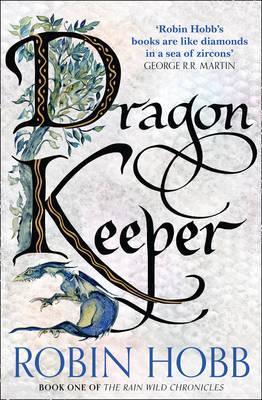
Dragon Keeper (Book 1) shows how the serpents that were coaxed up the Rain Wild River to form cocoons have emerged, but these baby dragons are an embarrassing lot, not fully formed, with no strength or flight, and look like they will never be the lords of the earth, sea and sky that they once were. Tintaglia has gone and the people of Trehaug are saddled with the care and responsibility of the increasingly large and irate dragons.

The dragons long to return to the lost Elderling city of Kelsingra, as their memories suggest that healing and help could come from there. So Trehaug provides each with a dragon keeper, who just happen to be the outcasts of society they would like to be rid of. With Tarman, first liveship ever made, and his crew, an expedition sets out to relocate the dragons in Book 2 (Dragon Haven). Yet the treacherous Duke of Chalced is on the trail. Lured by the hope of extending his life and curing his rapidly failing health, he believes that dragon products are the only things that will save him. His mercenaries are close behind the dragon expedition.

In City of Dragons and Blood of Dragons, the famed city of Kelsingra has been found, but can its treasures be discovered to save the dragons? Will this mighty race again rule the earth with their now altered human companions, who are slowly becoming the new race of Elderlings?

I loved this series as much as the others. It's always good to return to loved characters and see how the author has moved their stories on. She gives much food for thought about dragons and many details of the lives of the Rain Wilders. Various relationships are detailed, both functional and highly dysfunctional, heterosexual and homosexual. She has a wide range of character types, people that redeem their behaviour, people that persist in wilful violence, people that learn new ways of relating and how to love, and those that do not necessarily change for the better. This breadth gives her books a depth, for even though the people and Elderlings are very different in appearance and life than we are, the essence of what makes them people rings true to the reader.

I find it interesting to reflect on how often dragons feature in fantasy writings. Where does this human interest in mythical flying powerful serpents come from? Why are they so prevalent in human ponderings? I do not know, but I enjoyed this series, not just the dragons but also the people.

Friday, February 16, 2018

Paddington 2

This movie is absolutely charming.

Miss 7 was a bit scared by Paddington; Nicole Kidman was a very convincing evil museum curator trying to stuff the loveable bear.

This time the enemy is Phoenix Buchanan, wonderfully played by Hugh Grant, he is marvellous: funny, over the top and completely believable as a self absorbed actor needing quick money so that's he can stage his own one man play at the West End.

Unfortunately for Paddington, the planned source of Phoenix's money is the valuable pop-up book of London that he wants to buy for his aunt Lucy. Working hard as a window cleaner (giving some very funny scenes) Paddington almost has enough to buy the book, but then a masked bandit steals it.

Mistaken work by police has Paddington put in prison for the crime. These scenes turn out to be some of the funniest in the movie as Paddington's determined kindness turns the prison around.

This is a gorgeous movie to look at. It is really picture book London at its best, and the scenes which incorporate the pop-up book are dazzlingly clever.

Miss 10, my mother and I all loved this movie. It was charming, never scary and never felt like it dragged. It operates wonderfully on two levels, so much so that in a moment where all the adults were laughing out loud, a small voice in our showing piped up and said "why is everyone laughing? It's not funny."

Highly recommended for all, especially those who enjoyed #1.

Wednesday, February 14, 2018

Being Involved at School

[This article went up on TGCA last week, and is an updated version of a previous post] 

As we dive into yet another school year, have you considered what your involvement as a parent might be?

We’re now into our 11th consecutive year at the same local primary school. It’s been a great opportunity to develop long-term relationships with students, parents, teachers and staff. Our school is multi-lingual and multi-cultural with immigrant families, as well as the usual mix of born and bred Australians. It’s also a bastion of secular, inclusive thought. Jesus calls us to be salt and light to those around us (Matt 5:13-15), and for our ministry family, the local school is the only place where we regularly spend time with unbelievers.

There are many ways a parent could be involved, but as with all things, no-one can or should do everything. Our involvement has varied greatly over the years. We reassess annually and also consider it a ‘joint task’: sometimes my husband has been more involved with a sports team or on the council, which means I do less; other times it’s reversed.

Here’s what we’ve prioritised:

1. Get to know the teachers

We ask about their families, weekend, holidays, so that not every conversation is about our child. It acknowledges their humanity: they aren’t just there to teach our child, they have a life with ups and downs just like we do. To our children, it models respect as well as understanding for those in authority.

I’ve realised this isn’t what all parents do. Each year, teachers have thanked us for being so supportive of them and the class. We just thought we were taking an interest, but apparently, it stands out.

As they progress through the years, this is trickier as I go into the classroom less. But I’ve observed most teachers really appreciate it when you occasionally come into the classroom in the senior years.

2. Get involved in the school community

We’ve been involved in various ways: committees, Governing Council, sports coaching, listening to reading, testing times tables, going on excursions, and hosting events for class parents. When senior management change, I make an effort to meet them. I try to know the office staff by name, and again being a friendly, cheerful face with no agenda appears to be a refreshing change.

In the early years, I committed to more than I could manage and ended up feeling guilty about pulling out of something. These days I do less and feel guilty for not getting more involved! It’s always a bit of a balancing act. But God gives grace, and we are reminded it’s a privilege to serve the school community, even when it can be time-consuming and challenging.

3. Get to know the children

When I went into the classroom, the main benefit was meeting the children, as well as understanding the class dynamics. In later years, an excursion can help fill in the knowledge gap. Even one day spent with a class gives you an insight into relationships and dynamics.

I pray that my children will be good friends (Prov 17:17, 18:24) and have helpful friendships (Prov 27:17). Observing these interactions can help identify friendships to encourage, both for the sake of my child and for other children.

4. Get to know the parents and families

This is easier in the first few years. When each child began we hosted get-to-know-you events for parents. Having them in our home started many friendships that continue today. We are called to hospitality (Heb 13:2, 1 Pet 4:9), and the school community is included in that.

In later years, this happened through sporting teams. For a while, we knew all the soccer families, and now it’s the netball families.

I think we should prioritise looking out for people that aren’t already connected. It’s a funny thing, primary school. The parents seem to be in cliques too: cool parents, sporty parents, committee parents, and others. As Christian parents, we want to be welcoming, inclusive and hospitable. This should include migrant families, who in my observation are often not included by Australian parents. Let’s be the friendly ones—some of these parents are very lonely. Secondly, let’s be helpful—there’s a certain culture to any school, which takes everyone time to figure out. Throw in some ethnic differences and I imagine some are left wondering what’s going on (eg. lunch orders, swimming lessons, how excursions work). One of my friends has just started a part-time job in her children’s school to do exactly these things—help the international parents assimilate.

5. Pray for the school

We certainly pray for the school, students, teachers and families privately and as a family.

For a time, a group of Christians mums from school met once a term to pray and it was very encouraging. While we no longer meet, we’ve seen God answer those prayers in two amazing ways:

  1. Our school now has a Pastoral Care Worker funded 2 days-a-week. She is a cheerful presence amongst the staff and students and is greatly valued by management. We started praying for this when our son started, that prayer was answered when he was in his final year!
  2. A group of Christian families have run an out-of-hours gingerbread house event for three years. We can speak about being Christian and advertise the churches we attend. It is fast becoming a highlight annual event for school families.

We’ve loved being involved in our school community. It certainly takes time and effort, but it’s worth it—for our kids, for us, and hopefully, for the people we meet and support along the way.

How might you consider being involved in your school community?

(We have two children in upper primary. Our eldest is now in the wilds of Year 10 at high school. We've chosen to keep our main involvement at primary school, rather than split our efforts between two schools!)

Monday, February 12, 2018

The Beginner's Gospel Story Bible

The Beginner’s Gospel Story Bible (Jared Kennedy, Illustrated by Trish Mahoney)

Sometimes I wish I still had very young children. It’s not because I loved the baby and preschool phase and want to return to it. No, this is one mother who celebrated those first days of school quite openly!

It’s because of the great books being produced for little ones. There were good books 10-15 years ago, absolutely. But sometimes it seems like some very good material came out just when we had passed that stage.

This is exactly how I feel about The Beginner’s Gospel Story Bible. I want to sit down with little friends who are 1-5 years old and read this aloud with them. It’s an excellent bible for the early years firmly grounded in Jesus Christ from beginning to end. It shows how the Old Testament (subtitled Promises Made) continually points to him and the New Testament (Promises Kept) speaks the truth of his life and our response to it.

I have read legion children’s bibles in the last decade and I have increasingly come to appreciate the challenge it is to make God’s word available to very young children in a logical, accessible, accurate and clear format. Jared Kennedy has done an admirable job of doing exactly that, combined with the eye-catching, appealing illustrations of Trish Mahoney.

Each of the 52 stories are about 6 pages. There is always a question at the end to talk about together and a brief explanation of how Jesus fits into the story and how that relates to our relationship with him.

An example double page spread

Overall the stories are excellent, and are united by theme of promise - God is either making promises or keeping them. It’s the way we should read and understand our own bibles and so presenting it to children via the theme of promise is not only helpful, it’s correct.

I did take minor issue with a few choices in interpretation, such as:

  • It’s not absolutely clear the statue Nebuchadnezzar built was of himself.
  • The implication that Jesus physically covered his face to prevent the disciples on the Emmaus Road identifying him.
  • Jesus says to Saul, “Why are you hurting my friends?” whereas Jesus actually says, “Why do you persecute me?”.
  • The story about Peter and Cornelius didn’t sit quite right. The emphasis made is that it was about food people could eat. But it’s really an illustration to show Peter that Christ brought Gentiles as well as Jews to salvation. (and I was very surprised that the blanket indicating the animals Peter could now eat included a camel, lion and rabbit. I think young kids could take issue with that!)

Also, I’m not sure why it was chosen to only have 52 stories. It makes it neat with 26 from each Testament, but this isn’t a book you would only read once a week, so it seemed a random choice. Indeed, as a result, I thought it was a shame some things were missing.

  • There was nothing about David once he was King. Since this book is based around promise, it could have included 2 Sam 7 where David wants to build a house for God, but God instead promises him a dynasty.
  • Inclusion of the Psalms and how they show us how to praise God would have been worthwhile.
  • Interestingly there were no Jonah, Elisha or Elijah accounts.
  • The New Testament went straight from the first missionary journey in Acts to Revelation, so there was very little about the early church and nothing from the epistles at all.

However, those things are all minor. Some of the things I really appreciated were:

  • The Old Testament had some accounts rarely included in children’s bibles: Jeremiah, Esther and Nehemiah.
  • The honesty about the failings of some biblical characters. For example, in the story of Jacob and Esau, Jacob is described as jealous and tricky; it says “God didn’t choose the nicest brother. God chose Jacob.” And goes on to say that God’s choices might surprise us, but he chooses people who need him.
  • The crucifixion story is accurate and doesn’t shy away from the unpleasant details (there are even nails), yet it’s done appropriately for the intended age.
  • The clear way this is designed to read aloud, and it would be fun to do so. The illustrations often include extras, like counting, size differences (eg. Goliath is tall, David is short), so that you can point them out along the way. The basket is labelled empty when Hannah has no baby, and full when she has a baby. Left, right, inside and outside are marked when Jesus parents were searching everywhere for him. These are extra touches that make additional teaching moments along the way.
  • There are great nudges to evangelism, such as “We can tell our friends and neighbors about Jesus. We can share his love with the whole world” or “Think of a friend who you can tell the good news to.” What a great way to make this normal from a very early age. It even acknowledges that sometimes telling people about Jesus can be difficult and scary, but we can be brave because the Holy Spirit promises to help us.


The Beginners’ Gospel Story Bible is a ‘must-have’ for those with toddlers and pre-schoolers. With the unifying theme of promise, clear retelling of bible accounts, wonderfully creative illustrations, and a way to make each story personally applicable; this is a bible you’ll want to have in your home and to read regularly with the little ones in your life.

Friday, February 9, 2018

Why to visit a gospel partner

This January we enjoyed a trip to Cambodia, visiting friends on the field.  We have several dear friends who are gospel partners overseas (we used to call them missionaries, but this is the term now!). Some we studied at college with, some we have met at church over the years. This lovely family we have only ever known on the field, for they left Adelaide the same year we arrived, and a relationship has built up over various home assignments and connections in between.

The trip has been a long time in the planning, and finally this year we were able to make it work.

It was fantastic. We saw the sights of Phnom Penh in the capable hands of locals, ate together, spent time in their home, had them for meals at our hotel, went to church together, and had lots and lots of conversation. Our kids know their kids quite well, all being similar ages and having spent time together over the years. It took a little while on the first day for the ice to break again, but then they were like old friends - playing basketball, swimming, joking, sharing food and talking.

They emphasised that our visit was a blessing to them, and we feel the trip was exactly the same for us.  Here are some of the blessings:

  1. Understanding. Yes, it's only a very small amount, we were only with them for two full days. But we now have a glimpse of what their home, their school and their church is like. We have a feel for their city - the major traffic and driving skills required, the street vendors, the fun of riding tuk tuks, the haggling in the markets. We saw the range of poverty and wealth, the beauty of the city and the friendliness of the people.
  2. Conversation. We talked and talked and talked. The women talked, the men talked, the families talked. We learnt more about Theravadabuddhism, the monks of the city, and what living there is like. We heard the story of how they met and married. We shared about our life in Australia and what we are involved in.
  3. Fun. While the adults enjoyed all the conversations and catch ups, the kids really had fun together. Whether it was sharing food, tuk tuk rides, nerf gun wars or basketball, it was a great chance to be reminded that no matter where you live, the same things are still fun. 
  4. Connection. One of their concerns is that their children won't develop the same Christian friendships that they might if in Australia. So the time for the kids was very beneficial. We’re looking forward to them being back on home assignment, and when they are, we'll treat them as the normal friends they are, not as if they're the 'special missionaries' who generally aren't approached. Our kids are already talking about how to connect with them again when they’re next here.
  5. A wider worldview. Australia is a very egalitarian and secular culture, and we don't realise it until we come face to face with the strong contrast of wealth and poverty side by side, and the overt elements of religion all over a city. 
  6. A wider acceptance of difference. Travel the world and you encounter different languages, traditions, ways of communicating and understanding. Having to be the outsider is a good thing. Struggling to communicate teaches you how much you value being able to do so easily. Having to wear pants and longer sleeves, even when the weather is very hot, is a small price to pay to learn that we show respect in different ways. Communicating to our children that there are differences and considering why, means we are hopefully raising them to understand and analyse a variety of cultures.
  7. Insight into what they actually do. In many ways, their lives are very similar to ours: the kids go to school, the wife is involved in school management and teaching, and the husband is involved in translation work. They go to church as a family and they try to connect with locals in myriad ways. It's very normal. It's not super special and it's not super spiritual, but it's living faithfully for Jesus in their context, just as we would hope we are all doing in our own contexts.   
  8. Food for prayer. We have prayed for this family for years. Now we can pray more informed, specific prayers for this family, with an idea of what their days and weeks look like.

Another option is to consider holidays together. A few years ago, I met a dear friend in Dubai for ten days. She worked in a country with high safety risks and was required to have regular out-of-country breaks. While I never saw her life ‘in–situ’ there were still wonderful benefits for us both: a break, encouragement, fun being tourists together, the chance to worship together, and lots of time to talk and debrief. For a single woman, there was the added bonus that she had a companion for her holidays. For me, it was a marvellous treat to be away from the responsibilities of my own family life!


Both trips have been highlights of the past few years, and times of great fun, joy, conversation and encouragement.

Do you have friends who are gospel partners?  Could you visit them or holiday together? Of course, talk about it, make sure it can work and it would be helpful, but it's definitely worth considering. Not everyone can do this (we have certainly counted it a great privilege), but if you can everyone is likely to be encouraged and blessed by the experience.

Monday, February 5, 2018

Grace in Strange Disguise

Grace in Strange Disguise, Christine Dillon

Imagine your dad is a pastor. Not just any pastor, but a mega-church pastor who has his own radio show and whose church is all about victory with Jesus. In fact it's called Victory, and his message is that we can have anything we want with Jesus, and any illness just requires more faith or the repentance of sin. Life is all about blessings and the gifts that we get when we are with God.

You are 28, love your work as a physiotherapist and are engaged to the youth pastor. You are living the Australian Christian dream and suddenly your whole world falls apart when you are diagnosed with breast cancer.

This is the world of Esther McDonald and the premise of Christine Dillon's book Grace in Strange Disguise. I was recently given this book and what a wonderful gift it was.

Through an encounter with a cleaning lady at the hospital, Esther is challenged to think about why she expects to be healed. Does God actually promise it? What follows is her decision to read the bible for herself and the astounding truths she discovers there, and how much they vary from the triumphant, world based, blessing rich, but actually empty promises preached by her father.

I have never been in a church with such misguided teaching as this, nor with such patently controlling leadership; but I suspect they certainly exist. Even so I found it hard to believe that that dad's and the fiancé's belief systems would cause them to be so clueless and lacking in compassion. In fact, I thought it was a shame that Dillon had both the key males in Esther's life react in basically the same way. However, they were the only characters that seemed stretched. The cleaning lady (Joy), her good friend Gina, her dominated and docile mother, the staff in the hospital, and the other patients she meets along the way all do an admirable job of representing the vast cross sections of beliefs and non-beliefs in Australia.

Throughout the book, Dillon models a storytelling method of sharing the gospel and the accounts from the bible. As such this book has various potential audiences:

  1. Anyone who is interested in reading something from a biblical worldview, including one that is able to critique false views of the bible.
  2. Any Christian who wants to get some ideas on how storytelling the bible could work in conversations.

It's an engaging story. Throughout I kept wondering what various characters would do, how would they react to the changes in Esther's life and her desire to talk about it. I was encouraged by her faith and her growing ability to express it. There are Christian fiction books out there that have a cringe element to them. This isn't one of them, the truths that Esther comes to believe are of the reformed evangelical faith. This is a book that explains my faith in a way that expresses it much better than I often manage to. It was an encouragement to me.

It's entirely appropriate for young teens, and so I was very happy to let Miss 12 read it as well. She loved it and was fully engrossed for a few days.  Husband and Mr 14 also read it, they enjoyed it and found it made them think.

It seems Dillon is planning at least two more books in this series. I eagerly await them.