Showing posts with label New Growth Press. Show all posts

Monday, August 31, 2026

After Church Hurt

After Church Hurt, Timothy St. John (New Growth Press, 2026)

This is a compassionate, understanding and gospel-centred book that seeks to address the real pain people experience when they have been hurt by the church. St. John has landed on a specific definition of church hurt, wanting to be clear that he is not talking about the usual misunderstandings and conflicts that happen in Christian communities, but rather: 
"Any unrepentant sin that is minimised, normalised, or promoted by a church’s culture and its leadership.”
This could include things such as sexual abuse and broken trust, mocking and public shaming, deception by leadership, financial mismanagement, neglect of people in need, staff intimidation, overwork of staff or volunteers, or mandatory giving requirements. He acknowledges that hurt can be inflicted upon congregation members by leaders, and also upon church leaders and staff by elders or congregations.

Chapters explore:
  1. The reality of church hurt: “(its) never just ordinary hardship. It's a trap that draws people in with the promise of making them disciples of Christ, only to twist scripture and the name of Christ to enslave them into seeking someone else's self-centred kingdom.” Yet in the midst of it, we are called to remember that Christ remains faithful 
  2. Understanding the pain of church hurt. This helps people find a voice for what has happened with the help of scripture. Part of this is an exploration of what the church’s culture was and how it led to this. There are insightful questions that may help people process. 
  3. Embracing God's grace. Explores the challenges of embracing God’s grace after church hurt. How the fear of man, anger, anxiety and shame can impact us, and how to move towards Christ again. 
  4. Moving towards community again. This explores when one should leave a church, how to do so well, and how to carefully re-engage with another community of care. 
Each contains practical help soaked with gospel truth. Throughout are questions to ask about oneself and the situation, aiming for better understanding and ways to move forward. As such, it could be helpful to work through with a trusted friend or mentor.

Two appendices add extra resources. An emotions journal guides the reader through a process of identifying, listening and responding to their emotions faithfully. A Church Culture Assessment provides a 12-part checklist about various areas of a church and its culture. No church could meet all of these, but it may help someone consider what is important to them. Church leaders might also use it to see how their church measures up.

It’s a short book and easy to read. As such, it’s not designed to be an extensive exploration, but rather a help to those who are struggling now, and those who are trying to walk alongside them.


I was given a ecopy of this book in exchange for an honest review.

Monday, July 13, 2026

Raising Gen Alpha

Raising Gen Alpha: Helping Kids Navigate Everything from Anxiety to AI, Dave Boden (New Growth Press, 2026)

This offering by Dave Boden reaches parents where they are in this current age - raising Gen Alpha. Gen Alpha are defined as those born between 2010 and 2024 - anyone 16 and under. This is the generation mainly parented by Millennials (Gen Y), and it has some significant features. I am a Gen X parent of Gen Z kids, and while we saw these features taking shape during their adolescence, they have become full-blown since. 
Gen Alpha is lively, curious, and bursting with creativity—full of humor, energy, and kindness. Their openness and passion to learn make them fascinating and fun to be around. But beneath the surface, many wrestle with anxiety and inner conflict, shaped by the fast-paced, digitally connected world they’re growing up in. (Intro)
Boden identifies 5 defining features of this generation:
  • A - Anxious Minded 
  • L - Leading Influence 
  • P - Pandemic Impacted
  • H - Hyperconnected
  • A - AI shaped
He outlines the trends and traits in each, and then equips parents and caregivers with tools that will help spark ideas and approaches to both engage with this generation. This helps adults who are guiding this generation to adulthood by approaching issues with wisdom, not fear; and optimism, not dread. 

In some ways, there is not much that is a surprise here: we all live in the world and are impacted by it daily. But taking time to consider how these trends impact young people during key times of development will help us to love them and serve them well. 

Clearly technology has been a key driver in many of these areas. Young people are exposed to more information and also misinformation than ever before. They are always connected, seeing little difference between online and offline realities. Boden strikes a helpful balance noting the good things that much of this generation has access to, yet sounds a clear warning about the risks and harms to be aware of. 

Boden encourages adults to continue to point their kids towards Jesus, who offers truly good news for this generation. He is the Prince of Peace for the anxious, the Servant King for those who want to influence, God with us for the pandemic-impacted, the vine and true connection for the hyperconnected, and wisdom and truth for the AI shaped. 

Each chapter explores how God speaks to Gen Alpha, and how we can point to him in practical and thoughtful ways, using biblical and worldly wisdom. Theological and psychological concepts are included, giving both a framework and a path to consider. 

Very helpful book for anyone raising, teaching, or leading Gen Alpha. 


I was given an ecopy of this book in exchange for an honest review.  

Tuesday, April 7, 2026

Sex and Self-forgetfulness

Sex and Self-Forgetfulness: Honoring Each Other in Marriage, Doug Hanna (New Growth Press, 2026)

Hanna’s goal is to apply Jesus’s vision for the Christian life to sex within marriage - that is, his call of self-forgetful discipleship and serving others. 
“Sexual satisfaction is found by serving your spouse, not by insisting on your own way. The way to find real joy in bed is laying your life down, thinking less about yourself and more about your spouse.” (p2)
He is clear that this book is neither a detailed theology of sex nor a how-to manual. Others like Weerakoon, and Gregoire have done these well. Rather, he wants readers to understand God’s design for sex and marriage to approach it in the right way (p3). He also strongly recommends couples read it together, so they can talk it through and be unified.

It’s divided into three sections:

1. Understanding God’s Design

Chapters explore how sex is for marriage, pleasure, serving and women. Key ideas like safety, consent, enjoyment, and caring for the other are all explored here: 
“If you are struggling to make sex a pure, unifying, fulfilling, satisfying, and really, really pleasurable experience in your marriage, safety may be the missing ingredient.” (p20)
Hanna strongly counters what he calls “sex-is-for-men theology”: that men need sex, it’s the wife’s responsibility to provide it to enable his release, which is an obligation on her. He labels it a lie from the pit of hell, more attributable to atheists like Freud, but still misused by some Christian teaching today, “This flies in the face of the Bible’s teaching that sex is meant to be mutually satisfying, not a demand from a husband to a wife.” (p33)

2. Responding to Sexual Brokenness

Hanna then explores how strongly the fall, our sin and the sins of others have impacted our sexuality. He is open and direct about the struggles faced in different areas, whether through selfishness, pornography, adultery, or hard-heartedness. He urges openness, confession, and working towards forgiveness. He also compassionately addresses those who have been sinned against. These are challenging chapters, but for those who are willing to explore them honestly, they could provide a path of hope moving forward.

3. Pursuing Sexual Satisfaction

This is about half of the book. Hanna wants to broaden the understanding of sex and intimacy, as well as to encourage each partner towards serving the other lovingly and joyously: 
“In every sexual encounter with your spouse, your focus should be on closeness and intimacy as you celebrate what God has done in bringing you together, rather than on a particular physical act.” (p92)
“All of your readiness to serve your spouse in your bedroom is worthless if you aren’t also serving your spouse in the kitchen and the living room. You can’t have heat in the bedroom without warmth in your marriage.” (p113)
“When we genuinely adopt self-forgetfulness as our attitude and understand our spouse’s sexual satisfaction as our obligation, it motivates us to grow. If sex isn’t amazing for your spouse, that should bother you.” (p120)
“As you seek to forget yourself and pursue your spouse sexually, you need to devote yourself to studying the primary source (your spouse). Truthful secondary sources (helpful books) aren’t enough and false conspiracy theory propaganda (pornography) is downright harmful. You aren’t sleeping with the idea of sex; you are sleeping with your spouse.” (144)
He encourages self-awareness, willingness to learn from each other, and lots of conversation & honesty. Some chapters are specifically about intimacy, others are broader (e.g., about communication). All of them weave together well, and if couples are reading it together, the conversations would build on each other as they progress.

The book is quite short, and each of the thirty chapters is only about 5 pages. Each has a bible verse, an example, some application, things to talk about together, and things to pray about. Appendix 2 (52 conversation starters for discussing sex with your spouse) is excellent and would be a great way in to many of these conversations.

While I didn’t agree with everything in it, it’s a good resource that could help many. Recommended for couples who want a biblical foundation for their marriage, who want to serve one another, and who are willing to be open and honest with each other as they move towards greater intimacy.


I received an ecopy of this book in exchange for an honest review. 

Monday, December 1, 2025

Fear is not a sin

Fear Is Not a Sin: It is a Call to Action, Edward T. Welch (New Growth Press, 2025) 

This new offering by Edward Welch might be better thought of as a one-to-one mentoring workshop rather than a book. It’s very short (easily read in an hour), but if the prompts at the end of each chapter are done with consideration and time, it becomes an in-depth bible study and personal reflection.

Welch addresses the misconception that to have fear (or anxiety) is sinful. So, he writes for those who have concerns that somehow, for Christians, it is wrong to worry. He states from the outset that “fear and anxiety are not sinful. Left unattended, however, they can be dangerous.” (p3). And that’s the point. As believers, it’s what we do with fear and anxiety that matters: 
“When you hear the “commands” about fear and anxiety
Scripture, at least do this: Stop and listen. Jesus cares deeply about your fears, and he is going to say something important to you.” (p6)
The reality is that God knows that we have fears and concerns: 
“Scripture assumes that we live with fear and anxiety. We are weak people who can control very little. Our reputation, finances, loved ones, and even our lives are at risk every day. The Psalms are filled with human fears and anxieties—and these are words that the Lord asks us to speak to him. He actually wants to hear about our fears.”
God meets our fears with compassion and invites us to grow in faith, which will include having the courage to step forward in faith, confidence to trust that Jesus cares, and resting in him.

At the same time, periods of worry are also times to be alert. We can ask ourselves, in this situation, did I turn to the Lord or not? Turning away may look like disobedience, complaining or silence. Are these worries a sign that my desires have become too big? Are they turning into idols?

The book presents a mini-theology of worry and how to think about it. As it is so short, it stays at a general level and there aren’t many practical examples of what it actually means to live this way. I found it hard to grasp onto at points. Therefore, the real benefit would be the time spent in the exercises at the end of each chapter, which lead you to reflect on scripture and write responses to it.


I received an ecopy of this book in exchange for an honest review

Monday, October 27, 2025

Teenagers and Mental Health

Teenagers and Mental Health: A Handbook for Parents, Pastors, and Youth Leaders, Monica Kim and Danny Kwon (New Growth Press, 2025)

This is an excellent resource for those wanting to provide Christian care for teenagers with mental health challenges. Kim and Kwon aim to 
“outline the foundational elements of humble, godly, compassionate care for parents and churches who engage with teenagers struggling with mental illness. Our prayer is that parents, pastors, and youth leaders will be equipped to care in a variety of ways, feel empowered to do so more wisely and skillfully than before, and know when to humbly ask for help from others.” (p6)
Part 1 explores the foundational biblical principles, teen development and current cultural challenges. Practical ways churches can support teens and caregivers are suggested, as well as when to seek professional help, including advice for families who refuse outside help. I appreciated the suggestion that the role of the church is to develop relationships with teens’ families, and then act as refuge (safe place), lighthouse (navigational aid to help and other resources) and first responder. There is also encouragement for parents to be the parents, lovingly and kindly: 
Parents are “to model God to our children who is bigger, stronger, and wiser than they are and is undeservedly kind to them” (p71)
Part 2 explores specific mental health challenges in each chapter, including:
  • anxiety and stress 
  • depression 
  • body image issues and eating disorders 
  • substance abuse issues 
  • trauma 
  • schizophrenia or bipolar disorder 
  • suicidal ideation 
  • excessive screen use issues 
Each chapter follows the same format:
  • A definition, with facts and statistics. 
  • How the gospel speaks into that situation or mental health challenge 
  • Providing compassionate care, often including some practical tools and approaches (essentially a Christian counsellor mini-tool-kit). This includes an ongoing reminder that these things can only be attempted after you have developed a relationship with the teen, and fully understand their story. 
  • The benefits of good habits - encouragement to help the teen form helpful habits regarding sleep, exercise, diet, screen management, etc. 
  • When to seek additional help 
The chapters on anxiety and depression are longer and provide more tools. Wisely, the chapters on more complex presentations are shorter, recognising that specialised help is often needed. When read as a whole, the chapters are quite repetitive, with similar content and the same exercises. However, if used as a resource for that one presentation, each chapter provides a more complete picture.

If I had a concern, it is that the tools and details included could give some overconfidence in using them when they do not have the skills. It’s one thing to guide someone in a breathing exercise, but it takes a fair amount of wisdom and self-awareness to help someone process their experience of trauma and challenge their distorted beliefs as a result of it. I would be cautious suggesting parents, pastors or youth leaders attempt this unless they have relevant training in that area.

Further complicating this is whether parents should be applying these tools with their own children at all. It is important to let parents be parents, and not muddy the role by also trying counsel their children. I suspect this isn’t what the authors are proposing, and the tools are more aimed at pastors who can handle such circumstances. I certainly came away with some tools and practices I could utilise in counselling.

This is comprehensive and compassionate resource that many who work with youth will benefit from. It encourages churches and leaders to care for their youth well and wisely, and gives all who work (or live) with teenagers extra information and encouragement to support them well. 
“Families need the love and support of their local churches for the long haul as they walk through difficult experiences of mental health struggle” (p215)
“The ultimate message of hope we can offer to teens and their parents - take heart, for Jesus has overcome the world, including the brokenness of our own hearts and minds.” (p216)

I received an ecopy of this book in exchange for an honest review.

Monday, October 13, 2025

After Sexual Trauma

After Sexual Trauma, Camille Cates (New Growth Press, 2025)

Having previously read another of Cates’ books, Moving Forward after Abortion, I was already aware of her compassionate and gospel-focussed approach. Her vulnerable honesty about her own experiences gives her unique credibility to write both books.

This one is in a similar format, with each chapter addressing common questions, including:
  • Did that really happen? 
  • Was it my fault? 
  • Why me? Am I damaged beyond repair? 
  • How can I trust again? 
  • Will justice be done? 
Cates wants readers to know that their trauma experiences are understood, seen and recognised. Biblical accounts expound the points, mostly sourced from the Old Testament, such as Hagar, Dinah, Tamar and Joseph, all of whom were awfully mistreated by others, but seen and cared for by God. She then leads the reader to see how Christ is the one who truly understands, knows, heals, and redeems. For the Christian who wants to find their comfort in God’s work and promises, there is much here that is helpful. She explains some of the physiological, psychological and emotional impacts of trauma. She is honest about the failings of the criminal justice system and is clear that churches cannot handle these things alone; they must bring in civil authorities.

While there is much here that is of great benefit, I had two hesitations.
  • Deut 22:25-27 was used to prove that a woman who has been assaulted is not at fault. However, Deut 22 also addresses other circumstances, including stoning a woman who is not a virgin, and requiring a man to marry the woman he has raped. Those who look up the passage may find they are more confused and less comforted. 
  • Chapter 2 focuses on Dinah’s rape (Gen 24). Most comments were helpful: highlighting the power imbalance (he was a ruler), his attempts to downplay it, her brothers’ outrage and retribution. Yet, oddly it was used as an example against victim-blaming. There is no victim-blaming in the passage, but Cates refers to a 300-year-old commentary that does (Matthew Henry’s, published 1706). There would have been simpler ways to talk about victim-blaming, without making such an outdated link. 
Despite the above, this is a supportive resource that will provide help and comfort to victim-survivors while encouraging them to find their true value, worth and healing in Christ. 
“This journey towards healing and renewal after sexual trauma begins with seeking…the God who not only sees your past and present suffering but also holds your future. You are not unseen. You are not alone… God sees you and is ready to meet you where you are - to comfort you, restore you, and lead you into the future he has planned for you.”

I received an ecopy of this book in exchange for a honest review. 

Monday, October 6, 2025

Do I Need Boundaries?

Do I Need Boundaries? Jim Newheiser (New Growth Press, 2025) 

Do I Need Boundaries? is a new addition to the growing Ask the Christian Counsellor series by New Growth Press, many of which I have reviewed. Helpful overarching principles are outlined in the opening chapters. He is rightly concerned that boundary language is overused, often to justify cancelling people or cutting off relationships. Yet, God calls us to sacrificial relationships, where we are to love and please God, and love others. Of course, some boundaries are needed for safety, and we all have limited time and resources. But we need to be aware of the risk of erecting boundaries with the sole goal of meeting our own needs.

Nine brief chapters then provide case studies to explain his principles, covering topics like workaholism, extended family, finances, sexual boundaries, failure to launch and screen addiction. As such, numerous life stages and relationship complications are included. Each provides biblical wisdom and insights into how one might approach the situation, often allowing for the freedom to choose different responses.

However, there are limitations to instruction through primarily short, specific examples. Some may find it hard to transfer to their situation if it doesn’t match their circumstances. In addition, the language used throughout was often “we must”, “we need”, “we must not”, suggesting a directive counselling approach. However, the primary concern is that because each chapter was so short, it felt like the issues were simplified. For example, the few pages on boundaries with a family that perpetrated abuse did not mention the possible major trauma impact on the survivor. Case-study solutions were presented as if they were relatively quick to determine and enact, but in reality, they may be very difficult and often not resolved for years after much counsel and prayer. It felt that the real-life complications of the proposed situations were not adequately acknowledged.

For those who want to think about boundaries, it’s a helpful starting point. For a quick summary of his thinking, see this blog post. Newheiser also provides a critique of the Cloud and Townsend boundary books, which some may find interesting.


I received an ecopy of this book in exchange for an honest review. 

Saturday, September 27, 2025

Your Only Comfort

Your Only Comfort: Devotions for Hope in Suffering, Charles H. Spurgeon (edited by Geoffrey Chang) (New Growth Press, 2025)

I loved the 30 days I spent in this book. Chang has collated readings from Spurgeon that speak about the reality of hardship and suffering in this life and the comfort we receive from Christ. The thoughtful order takes you on a journey that begins with how much Christ loves us, through honest theology and encouragement from God’s word, and ends with focusing one’s hope on the resurrection to come.

I have little more to say. Spurgeon’s words speak so powerfully that I need not add to them. Below is a selection for your encouragement (I could have included so many more!):

Day 1 - The Unchanging Christ 
“Beloved, you conceive how much Christ will love you when you are in heaven? Have you ever tried to fathom that bottomless sea of affection in which you shall swim, when you shall bathe yourself in seas of heavenly rest?”… Well, pause and remember, that he loves you at this hour as much as he will love you then; for he will be the same forever as he is today, and he is the same today as he will be forever.”
Day 9 - Job’s Regret and Our Own 
“… it is wrong to compare the early zeal of the young Christian with the mature and mellow experience of the older believer, and make preferences. Each is beautiful according to its time. You, dear young friend, with your intense zeal, are to be commended and imitated; but very much of your fire I am afraid arises from novelty, and you are not so strong as you are earnest; like a newborn river, you are swift in current, but neither deep nor broad. And you, my more advanced friend, who are much tried and buffeted, to you it is not easy to hold on your way under great inward struggles and severe depressions, but your deeper sense of weakness, your firmer grasp of truth, your more intense fellowship with the Lord Jesus in his sufferings, your patience, and your steadfastness, are all lovely in the eyes of the Lord your God. Be thankful each of you for what you have, for by the grace of God you are what you are.”
Day 11 - Jesus wept 
“You and I take losses and crosses with Jesus, we share the tears of his eyes, and we shall share the diamonds of his crown. Wear the thorn crown here, and you shall wear the crown of glory hereafter.”
Day 19 - For the Troubled 
“Now, child of God, if you are suffering today in any way whatever, whether from the ills of poverty or bodily sickness, or depression of spirits, recollect there is not a drop of the judicial anger of God in it all. You are not being punished for your sins as a judge punishes a culprit; never believe such false doctrine, it is clean contrary to the truth as it is in Jesus. Gospel doctrine tells us that our sins were numbered on the Great Scapegoat’s head of old, and carried away once for all, never to be charged against us again (Leviticus 16:10).”
Day 25 - The True Christian’s Blessedness 
“We know right well that there are many things that happen to us in our lives that would be the ruin of us if we were always to continue in the same condition. Too much joy would intoxicate us, too much misery would drive us to despair: but the joy and the misery, the battle and the victory, the storm and the calm, all these compounded make that sacred elixir whereby God makes all his people perfect through suffering, and leads them to ultimate happiness. “All things work together for good.”
Each reading is only 3-4 pages, making it very accessible.

A wonderful selection that explores suffering and grace, instruction and comfort, from a man who truly lived and experienced what he wrote about.


I recevied an ecopy of this ebook in exchange for an honest review. 

Monday, June 30, 2025

You are Redeemed and You are Secure

New Growth Press have released two more devotional books for women in the Gospel Truth for Women series. I found the initial book, You Are Welcomed, both encouraging and challenging, and gave it as a gift to a few friends. I was keen to turn to these.

You Are Redeemed: Devotions for Living a Whole New Life by Nana Dolce, is a journey through Exodus. Dolce starts with a relatable story, and moves to the details of the Exodus narrative and how God redeemed Israel for himself. She then draws the link to Christ, our ultimate redeemer and encourages personal reflection and response, both from Exodus and the New Testament. Each devotion is two pages with three reflection questions. Each of the eight weeks focuses on a different aspect of our Redeemer God who remembers, redeems, provides, covenants, reveals, judges and restores, prepares, and dwells with his people. It is clear biblical exegesis for part of the bible many might not read on their own, and helps the reader consider the application to their life today through the work of Christ.

You Are Secure: Devotions for When Life is Uncertain, by Aimee Joseph, walks through Colossians in small steps. Similarly to the others, there are two pages of reflection, starting with a story, an analysis of the passage and how you might apply it today. Covering eight weeks (40 readings), there is much to sink your teeth into and ponder. The devotional comments were shorter than the other two books, and I wanted a little more content. 

You are Welcomed may have been more focused on those who are wives and mothers, these two seemed to be more widely applicable for all women.

These books are beautifully presented, with pleasant formatting and graphics. However, they are also large and heavy (1.2kgs/ 2.6lbs each). I received ecopies to review, and was quite surprised when I later bought a hard copy. Up to 20% of pages are images or small amounts of words, adding to the bulk. Worth knowing if considering a hard copy.


I received ecopies of these books in exchange for an honest review. 

Wednesday, June 4, 2025

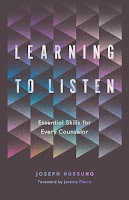
Learning to Listen

Learning to Listen: Essential Skills for Every Counselor, Joseph Hussung (New Growth Press, 2025)

Hussung has provided a short, easy-to-read resource that is applicable for counselling and pastoral care, as well as everyday life. Focusing on the importance of listening, he explores the purpose, posture and practice of listening well.

The practical tools at the end are useful, but I found the first two sections the most valuable. We all know we are to listen well; it is loving and essential for relationships. However, we rarely explore a Christian reason for why.

We listen, because God listens. “God stoops down to us and hears our cries, and that is remarkable!” He listens to us because he knows us and he loves us. 
“If we move toward the practice or posture of listening but forget that we were created by a God who listens and loves, then we will never fully grasp the complete scope of God’s vision for the care of his people. We listen to others because God listens to us. We love others because God loves. We need to constantly remind ourselves of God’s love for us and his expression of that love to us in listening as we hear the stories of others.”
But we don’t only listen to the people we counsel, we listen to God and encourage them to listen to him. Hussung observes that empathy is uniquely human because its starting place is from ignorance. 
“God knows, but we do not. We engage to know someone more deeply while God engages so that we know him more deeply. Empathy says, “Only you can tell me about yourself, and I will wait patiently and try to be a safe place to hear your story so I can help you.” In this way, empathy serves as the posture of a people who listen.”
Yet, sin mars our ability to listen and to love. “Sin cuts us off from the source of love, puts us at the center of our universe, and puts us in opposition to others.” So we speak too soon, we minimise suffering, give simplistic answers and think we know better.

Turning to section 2, the posture of listening, Hussung starts with Jesus, who was humble, gentle and patient. Our posture should be the same, “as counselors, we must exhibit Christ’s heart for our counselees, rather than our naturally hard hearts that makes it so difficult to listen.” So we move away from judgmentalism or defensiveness, we recognise our limitations, we are slow to speak, and we are compassionate to those who struggle with sin and suffering.

These first two sections were the real strength of the book - because we have a reason to listen well, a motivation for our actions. We don’t just do it because it is good practice, we do it to honour the Lord we are serving, and to love those around us. It’s yet another outworking of “Love the Lord your God with all your heart and with all your soul and with all your strength, and love your neighbour as yourself” (Luke 10:27).

He finishes with some practical tips for listening well:
  • Prepare to listen. This means being aware of our body language, how we are feeling, and awareness of the gaps in our knowledge (perhaps context, such as culture, values and perspective). 
  • Actively listen - aware of our tone, using questions well, and reflecting back what we have heard. 
“It is an active process that first allows the physical hearing to take place, then ponders and interprets what we hear, and finally communicates that we have heard and what we understand.”
  • Respond, always with affirmation (of their inherent value, and their story) and sometimes with empathic confrontation (What can they not see that perhaps we can help them to see?)
Many of these practical skills should already be known to someone who is counselling or caring in any format. It’s the framework that underpins them that is the most helpful.

He finishes with a logical conclusion: keep reading about Jesus (let his character shape yours), keep practising (we can improve these skills with time) and keep listening.


I received an ecopy of this book in exchange for an honest review.

Thursday, May 8, 2025

A Seasoned Marriage

A Seasoned Marriage: Living the Gospel in the Middle Years and Beyond,  Larry E. McCall (New Growth Press, 2025) 

I really like the title of this book. McCall has managed to incorporate two key ideas about long-term marriage:
  • It seasons us. A long-term marriage is a major shaper of our character and actions. 
  • It has passed through the seasons, not only of marriage, but of life. Pain and joy, heartache and rejoicing, birth and death, closeness and distance. 
Aimed at those in the “second half of life”, he suggests it’s for those over 40. Yet, since the first life stage mentioned is launching kids into adulthood, it’s more for those 50+. It becomes increasingly applicable as the years go on - addressing challenges of retirement, ageing and preparing for death. That’s potentially another 40+ years for some couples! It’s also not assumed that every marriage at these ages will have been long-term, perhaps due to remarriage or a later start.

McCall underpins every chapter with a solid gospel foundation. He points the reader to God’s character, to what Christ has done, and encourages us to mould every aspect of our maturing years to it. While this is somewhat simplistic, the application of almost every chapter is: pray, review God’s teaching on the topic, discuss it, and make wise decisions together. See the opportunities God has given you and continue to serve him faithfully as you are able.

Considering the amount of material covered, it’s relatively short (160 pages). McCall writes clearly and succinctly, enabling him to address many topics in a digestible way. These include: 
  • Building strong relationships with adult children, and being intentional grandparents (McCall has already written a great book about grandparenting) 
  • Considering the purpose of retirement? “What are you working toward? What are you retiring to?” 
  • The challenges of caring for aging parents 
  • Facing the reality of aging bodies with grace and acceptance, in ourselves and each other 
  • Opportunities for developing purposeful friendships - with peers, those older and younger, and unbelievers 
  • Being faithful stewards with our money, and moving from anxiety to contentment with our finances. 
  • Preparing well for the end of life. 
As such, the content will have different relevance over the decades - first, when you have young adult children, later when thinking about retirement, and then again as you get much older. While it is succinct and clear, some areas seemed quite prescriptive and perhaps too detailed, such as how to balance a budget and manage your debt, what types of help aging parents might need, and what to organise for your funeral. Yet for those who do not already think about these things, perhaps they are helpful prompts. Note that if neither of you has children, the chapters about adult children and grandchildren will not be as relevant, although could be adapted for other important relationships.

The practical details of later years aside, the early chapters provide a solid foundation for the years ahead: 

1. Reflect on why you got married and the purpose of marriage. Our vision of marriage is to showcase Christ, and love our spouse, rather than to be happy. 

2. Be ready for change - in ourselves, in our spouses, and in our relationship. Yet, 
“Let us anchor our souls in this glorious, reassuring truth: “Jesus Christ is the same yesterday and today and forever” (Hebrews 13:8). We are safe in his hands.”
“I may not know what the future holds, but I know who holds the future.”
3. Resist marital monotony. Continue to prioritise one another, confessing and forgiving one another, listening, honouring and delighting in one another.

I also appreciated the encouragement to use the moments of life transitions well: 
“Major transitions in life — such as entering the empty nest years — provide wonderful opportunities to slow down and evaluate who you are and where God might be taking you in the years ahead. Take time to prayerfully process these relationships.”
McCall highlights your relationship with God, with your spouse, with your adult children. I would also include relationships with living parents and siblings.

This is a helpful encouragement and guide for those in their “second half of life” about how to have a God-honouring, other-person-focused marriage.


I received an ecopy of this book in exchange for an honest review. 

Monday, April 7, 2025

Some new children's books

New Growth Press has sent through some of their new releases - all fun offerings for families to enjoy. 

My First 123 Book of Bible Numbers, Jonathon Gibson 

This is a colourful, fun book for little ones to engage with numbers and Bible stories. It introduces numbers 1-12 and 100, linking them to bible facts and including extra items to search for while counting. Illustrations by Mike Mullan are bright and clear. While there might have been other ways to use the numbers (eg Jesus appearing to the 11 disciples, rather than 11 being the number of stars in Joseph’s dream), all are accurate examples of how numbers are used in the bible. A cute little book for those who are learning to count.


A Wonderful Surprise, Sally Michael

This is well-timed for those looking for an Easter book in the next few weeks. Anchored around Luke 19:38a (Blessed is the King who comes in the name of the Lord), Michael tells the story of Jesus' final week, from his arrival in Jerusalem to his resurrection (and then ascension). It's a clever and engaging way of teaching children that Jesus is indeed the King who came and who will come again. Soft, colourful, and detailed illustrations by Sengsavane Chounramany will delight many. 

At the end, there are two double pages of instructions and recommendations for parents /guardians. I increasingly find these prompts in children's books rather condescending to parents. Yet, some may find them helpful. However, the story is a lovely addition to the series, three of which I reviewed previously. 


Coop Learns He Can, Sarah Reju

This is the third book in the Wheelies series about Coop, the youngest car in a family of seven. Sarah Reju has created a fun world of cars and trucks, all with different skills and personalities. Coop has been told he is fearfully and wonderfully made, but he's not quite sure how that can be when he feels unable to keep up with his sister. Yet, it turns out that his ability to zip around and fit through small spaces is exactly what she needs when she gets into trouble. Tania Rex's colourful illustrations show a fun world and expressive faces on the cars. 


Ecopies of all of these were received in exchange for an honest review.  

Wednesday, October 2, 2024

Reaching Your Child's Heart

Reaching Your Child’s Heart, Juan and Jeanine Sanchez (New Growth Press, 2024) 

This is a good book for Christian parents who seek encouragement and advice as they raise their children to know Jesus. The Sanchezs write with humility and grace, hoping to pass on their wisdom learned in raising five daughters.

Each chapter starts with an overarching principle, helpfully defining the content, which incorporates a biblical framework and suggestions on how it might look, without being too prescriptive. Each chapter finishes with questions to apply it to your situation.

The overarching goal is that we should have the same aim as God does: 
“Our desire for our children should be the same as God’s: that they would be children who reflect God’s image and display his glory in all they think, say, and do."
But we need to remember the reality of sin: 
“One of the greatest dangers in parenting is the temptation to settle for well-behaved children who don’t see a need for Christ’s redeeming love. We are parenting children born in sin, and they need to be rescued out of the kingdom of darkness and transferred into the kingdom of God’s Son, just as we were (Colossians 1:13–14).”
As we parent, we remember that our parental direction naturally gives way to personal responsibility as they mature. “In other words, when your children are young, you will provide clear and firm direction, but as they grow in wisdom and experience, you will free them to be responsible for their choices.” Not enough parenting resources stress this essential transition.

There is a strong encouragement to pray and be examples for our children to follow, in areas of personal devotion, personal holiness, having hard conversations and seeking forgiveness. They encourage setting biblical parenting goals to reach biblical goals, with lots of practical ideas of how this may look as we read God’s word and model Christ in our daily lives. 
“God does not expect us to be perfect parents. They have a perfect Father in heaven, and they have a perfect Savior in Jesus. What they need from us is to be humble, repentant, faithful, and godly parents.”
The chapter on discipline is the one many parents will turn to for guidance. It is structured around three principles: prioritise positive instruction (teaching about appropriate and inappropriate behaviours and their consequences), shepherd their hearts, and practice corrective discipline. Corrective discipline is broken down into: gentle exhortation, gentle rebuke, and chastisement.

And here is my one major issue with this book. Chastisement is an all-encompassing term they use for punishment, which while defined broadly and with numerous caveats, clearly includes spanking. They are careful to lay out numerous conditions: it should not hurt, must be done in context appropriate for the child, and so on. However, using the term chastisement actually makes it much less clear - what are they really talking about? When they later say (for 13+) that chastisement is no longer appropriate, it appears they are talking about physical punishment, because other options may still be appropriate. It’s confusing, but more so, spanking is contentious (rightly so) and rarely achieves its stated goals. I had concerns with this in Shepherding a Child’s Heart years ago, and this book raises some of the same issues such as how Proverbs has been interpreted, and my lack of conviction that hitting a child changes their heart, let alone it being considered inappropriate (and in some cases, illegal) today. (Without these concerns, this book would have been fantastic and very highly recommended).

The final three chapters explore the different stages of parenting children aged 0-5, 6-12, and 13+. These are helpful, practical, and detailed, with the encouragement that laying a strong foundation early makes a massive difference later. I appreciated their positivity about how enjoyable the teen years can be.

They finish with three things to remember:
  • “Your parenting will neither save your children, nor will it condemn them to hell 
  • Your children don’t need perfect parents who have it all figured out. They need humble, faithful, and repentant parents who continually point them to Christ. 
  • Let your home be characterized by joy, encouragement, grace, truth, and, yes, fun!” 
Overall, this has many helpful encouragements and suggestions for Christian parents. 


I received an ecopy of this book in exchange for an honest review. 
Monday, March 11, 2024

Transformative Friendships

Transformative Friendships, Brad Hambrick (New Growth Press, 2024) 

Have you ever wished that your friendships were deeper? That you were able to share more honestly with each other, both the joys and the challenges that you each face?

Our inbuilt human desire for connection with others means that many of us do probably desire closer, more trusting and open friendships. But, we may not know how to move a friendship in this direction. We may have discovered that praying with a friend can strengthen a relationship, as we share more openly about the matters on our hearts and bring them to the Lord together. But, even a friendship that includes prayer may not always consider areas of sin, struggle, ruts, or future goals.

In Transformative Friendships, Brad Hambrick provides a simple yet effective guide to deeper friendships - through the use of seven questions: 
  1. What’s your story? 
  2. What’s good? 
  3. What’s hard? 
  4. What’s bad? 
  5. What’s fun? 
  6. What’s stuck? 
  7. What’s next? 
Each is broken down further into five depths of growth, starting with more surface knowledge to very deep and honest sharing. For example: in ‘What’s bad?’ (i.e., what’s sins are you struggling with, Depth 1 is our about respectable sins, Depth 3 is about your go-to escapes, and Depth 5 is about the sins most likely to shipwreck your life). 

He emphasises that this is designed for mutual friendships, where both are committed to deepening the relationship. This is marked by proportional voluntary knowledge of each other and shared investment in the relationship. “Growing deeper in a friendship must be mutually desired and mutually engaged. It cannot be compelled.” (148) As such, this is not intended to be a resource for counselling or mentoring relationships, for they are purposefully one-sided in disclosure. He also cautions - not every friendship will move to the deepest level. It’s appropriate to have numerous friends, all at different levels. Ideally, though, there will be some where both share deeply.

The breadth of questions and the various depths to which they are explored is quite extensive. Pretty much all aspects of our lives are covered. Some quotes that struck me along the way: 
“As you read your Bible, ask yourself, “Am I as honest with my friends about my life as these people were about theirs?” (21)
“Write a list of your primary roles: student, employee, boss, son, daughter, sibling, spouse, parent, teacher, friend, etc. Chances are, at least 80 percent of God’s will for your life is simply fulfilling these roles with excellence.” (37)
“There are mild life challenges and severe life challenges. But while one is heavier, neither is light….To appreciate this, we must remember that suffering is not a competitive sport.” (53)
“Identify your top three idols and you’ve probably found the root of 90 percent of your sin.” (73)
It is aimed at Christians, and assumes knowledge and understanding of the gospel. There is no overarching theological framework of friendship and how it could look. It assumes you are a Christian who wants to deepen your friendships with other Christians and dives right in at that point. This keeps the book short (150 pages) and easy to read, with each mini chapter being only about 3 pages. Of course, enacting it will take much longer with considerably more effort!

While Hambrick is keen to focus this resource toward the development of friendships, I can see other applications for the content. Increasing depth in sharing does apply in other settings. I think it could be used wisely by counsellors and mentors, to scaffold the process of more deep work (preventing perhaps diving too deep too soon). Hambrick does not talk about marriage in friendship, but I can imagine this being of great value to married couples, as they grow their friendship and are intentionally more vulnerable with each other. Finally, the questions and topics raised would bring helpful self-awareness even in personal private reflection and before God.

Hambrick’s goal however is to produce friendships “that enrich our lives a little more each day”. With some friendships, you might start by sharing a little bit more and allowing space for them to do the same. With others, you might choose to read this book together and intentionally plan to utilise it. However you use it, this book will give lots of prompts and encouragements to invest in good, supportive, honest friendships.


I was given an ecopy of this book in exchange for an honest review.

Monday, March 4, 2024

My First ABC Book of Bible Verses

My First ABC Book of Bible Verses, Jonathan Gibson (New Growth Press, 2024) 

This is a lovely picture book that uses the alphabet as the springboard to explore different truths about God through bible verses and simple explanations. Full of God’s truths, it will be a good introduction to his word for young ones, using bible verses from the full bible, rather than a simplified kids’ version. As such, there may be a little too much content for very young ones, so you could dip in and out of it with toddlers, rather than read it cover to cover. Older pre-schoolers will likely appreciate the ABC structure, finding the letters on each page and how the bible verse matches with them.


The illustrations by Mike Mullen are fun and varied, with city and country scenes, and lots of different people. He cleverly utilises each letter, but keeps simplicity for younger ones. 


Gibson also authored The Moon is Always Round, which is an excellent kids’ book about God's goodness in the midst of hard times. He has also written a series of three rhyming acrostic books, so he clearly enjoys making things work around the alphabet.

However, there were two things that I noticed:

1. The ABC structure has driven the choice of bible verse whereas it would have been better to have the story of the bible drive the order. So, it oddly starts with Isaiah 53:6 - with sin, before God’s goodness or creation. The order feels haphazard throughout.

2. Three bible translations have been used: ESV, NIV and CSB, with the default being the ESV. This is an odd choice for young children, because the ESV's intention to retain Greek word order does not always correlate with the most natural English reading. The risk of including three translations is that it gives the impression of just picking the one that suits your purpose (like how to include a “Z”). Following on from this, verses weren’t always referenced quite right when the whole verse was not included (which is traditionally indicated with a letter, e.g., Romans 5:5b).

All in all, it’s a fun book that will engage parents and children alike to embrace, love and learn God’s word.


I was given an ecopy of this book in exchange for an honest review.  

Wednesday, December 6, 2023

You are welcomed

You Are Welcomed: Devotions for when life is a lot, Trish Donohue (New Growth Press, 2023)

This new devotional for women has been both an encouraging balm and challenging prompt to me over recent weeks. It’s structured to last for 10 weeks and is for women feeling burdened, overwhelmed and that life is all a bit too full. Which these days, is most of us! Each day starts with a prompting question, has a short bible reading, two pages of comments, and three questions to consider in more depth. It’s a simple, yet remarkably effective format. It’s also a visually attractive book, which would make it a very nice gift.

Donohue is a skilled communicator, bringing God’s word to bear to our current experience. My daughters and I have previously appreciated her insights in Between Us Girls. In You Are Welcomed, it is clear she knows the challenges of women’s lives today, and is also is honest about our sinful struggles, temptations, and areas where we need to be pushed a little. The overarching message was of the grace and rest offered to us in Christ, coupled with a desire for sanctification and godly growth.

In God’s providence, I have found the opening question of each study to be quite pertinent. The first three days are:
“Which of the following feels overwhelming in your life right now: tasks to accomplish, emotions to manage, choices to make, or relationships to tend? Or is it all of the above? (11)
“Have you considered that productivity can be an idol when it promises peace and joy? Have you found that it delivers the joy it promises?” (15)
“What self-help strategies and books do you tend to rely on more that God and the Bible? What do they promise you?” (19)
I am only a few weeks into this devotional, so I cannot speak with knowledge to the rest of it’s contents, but so far (and with a skim forward), I am very impressed, and thankful for Donohue’s wise use of God’s word in helping us to examine our lives and consider areas for change and growth.

“A life meaningfully engaged with pursuing Jesus and loving others is rarely simple or tidy, but it certainly can be beautiful” (11). Donohue helps to point us again to the beauty of Christ. 
 

I received an ecopy of this book in exchange for an honest review. 

Wednesday, November 22, 2023

Something Scary Happened

Something Scary Happened: Comfort for Children in Hard Times, Darby A. Strickland (New Growth Press, 2023) 

This picture is for a specific situation - when something scary has happened to a young child and you want to help them process it and understand that God and his good shepherd Jesus are with them in their pain. 

Miles the lamb has lots of fun in the meadow with his other lamb friends: they play soccer, they eat, and they all sleep in a pile together. But one day something scary happens, and Miles is so scared that he doesn’t know what to do, and pretends it didn’t happen. 


But he can’t really forget, and he gets mad at his friends, and then he cries, and he can’t sleep - he feels all alone. But then the good Shepherd comes and promises Miles that he is with him - when he is scared, when he is mad, when he can’t sleep. 


All of this in anchored around Psalm 23, and beautifully illustrated by Carlotta Notaro. It’s a gentle book, introducing helpful concepts for little ones (2-5s) about how our bodies, emotions, and relationships can all be affected when something scary happens. Because the “scary thing” is not specified - it could be used for numerous scary circumstances or traumas, e.g., a car accident, cases of abuse, seeing a confronting thing, or challenging events in a family. There are also helpful guidelines for carers in the back of the book.

One of those books that you hope you don’t need, but will be helpful if you do.

Wednesday, November 15, 2023

You are still a mother

You are still a mother: Hope for women grieving a stillbirth or miscarriage, Jackie Gibson (New Growth Press, 2023)

In this heartfelt and honest book, Jackie Gibson reaches out to mothers who have lost a child due to stillbirth or miscarriage, and shares the comfort and love of God who is with them in their pain. She begins by sharing the devastating story of the stillbirth of her daughter Leila, and so forms an immediate connection with the reader - this is someone who knows this sadness.

Each brief chapter brings a truth about God to the fore, in light of such loss. These include:
  • Cling to God’s truths - we believe in the darkness, what we have seen in the light. 
  • We turn to Jesus, the man of sorrows, who wept at death and knows what it is to suffer. 
  • God is sovereign, even in this. This can help with the ‘what-ifs’, for God numbered this child’s days. 
  • Questioning whether God really is good, if he allowed this to happen. As Job conceded, there are things too wonderful about God for us to grasp, and sometimes we have to live with not knowing the why. 
  • The child is safe in the arms of Jesus. 
  • The child is precious in his sight (and what has happened is not a punishment for any sin). 
  • In time, you may see that God has not wasted your suffering. 
  • Suffering makes us groan for our home in heaven. 

Gibson also addresses other aspects of loss:
  • You are still a mother, for motherhood begins at conception 
  • She notes that there is a particular complexity to grief with a miscarriage before a baby’s gender is known. 
  • The pain and grief will change, but be aware of symptoms of trauma and stress. 
  • You have had a significant loss, don’t allow our society to minimise it. 

I realise starkly writing the topics out above has unhelpfully reduced them to simplistic points. While the chapters are short, there is nothing simplistic about the content. Gibson has carefully worded everything she says to represent gospel truths with compassion and care. Because it is both very short and very caring, it could be read soon after a grief. The rawness may assist some to express their own pain. It’s clearly aimed at mothers, but fathers will also find much to help them process their loss as well. It is also for Christians. I wouldn’t give this to an unbeliever with such a loss. Partly because it is only through the gospel that the truths of God’s goodness and sovereignty in this context are a comfort. But also because while she is confident that the unborn children of believers are safe in the arms of Jesus, she does not comment about the unbeliever, leaving this unspoken question unanswered.

I particularly liked her comments about the everlasting arms (from Deut 33:27).
“There was only one pair of arms that could hold me through the worst moment of my life—the everlasting arms of an eternal God.”
And the reminder from an anonymous author:
“Suffering is not a question that demands an answer. It is not a problem that requires a solution. It is a mystery that needs a presence.”


I was given an ecopy of this book in exchange for an honest review.  

Monday, October 23, 2023

Caring for Families Caught in Domestic Abuse

Caring for Families Caught in Domestic Abuse: A Guide Towards Protection, Refuge and Hope, Chris Moles (ed) (New Growth Press, 2023) 

This is another excellent resource, but one we all wish didn’t need to exist. Sadly, the stain of domestic abuse (or intimate partner violence, or family violence) spreads throughout families, and Christian homes are not untouched.

It is edited by Chris Moles, who is a pastor, biblical counsellor, and works with perpetrators. He has brought together very experienced people in this field, providing a guide to care for families caught in domestic violence.
“My hope is that this book will help pastors, elders, deacons, counselors, and other church leaders move toward greater unity in how they respond to domestic abuse, and thereby prevent or lessen some of the potential conflicts and missteps.”
I am not going to write a detailed review. It’s something that needs considered reading and thought, and my summary won’t do it justice. Responding to domestic violence is a specific ministry area and one that requires skills, training, time, and energy. I suspect that few of my readers or their churches will get deeply involved in this space in a structured way. Not for lack of desire or a belief that it’s unimportant, but due to lack of skills, training, and resource allocation. However, it’s so important that I want to flag this book’s existence for those for whom it may be helpful.

I will provide some summary points and some quotes:

Regarding the church:
“My prayer is that the church of Jesus Christ will be the safest place on the planet for women and children. I pray that the church will lead the way in not only providing compassionate care, but also in developing best practices to address the needs of victims and confront the abusers. We represent an army of responders who can effectively, graciously, compassionately, and firmly confront the evil of domestic abuse. As we do so, we will simultaneously promote healthy, God-honoring relationships.” (Chris Moles)
A church needs to consider what they can offer with the resourcing they have. This is not an area that you can partially help in, you really need to be there for the family for the long-term.
“My desire is … to encourage you undershepherds as you seek to minister in a complex, confusing, time-consuming, and redemptive ministry. I want to help you think through how to address domestic abuse in your church in a biblically faithful, organizationally sustainable, and practically helpful way.” (Kïrsten Christianson)
They propose a team-based approach to domestic abuse, requiring numerous people (e.g., victim counsellor, crisis counsellor, victim advocate, perpetrator counselor, pastor). My overwhelmed thought was: this is a massive undertaking for a church. Of course, worthwhile and needed, but I don’t know many churches who could even attempt to do this well (knowledgeably and skilfully) with one couple, let alone numerous couples.

Caring for survivors:

Is long term care, needing awareness of the impact of trauma.

It was openly acknowledged that this is “likely the most complex and difficult problem most counselors will ever face” (Joy Forrest). Few women realise they are experiencing abuse, and abusers are often charming, confident and convincing.

Confronting and counselling abusers: 

The most important rule of engagement - safety - the victim must give consent and advice. This would be an area where churches need to be very careful, for the increased risk if this goes wrong can be devastating.

“One way of thinking about abuse relative to other relational sin is to say that most relational sin is competitive, while abuse is parasitic or predatory.” (Greg Wilson) Relational is me before you, abuse is me over you.
“Working with abusive people often feels a bit like the work of Jeremiah or Isaiah—you care in grace and truth as well as you can, but in the end there is a high likelihood that they will reject you and/or your message.” (Greg Wilson)

There is a helpful chapter about how to discern true repentance (godly sorrow, not worldly sorrow).

Impact on children:

Two initial priorities for working with children who have lived or are living in homes with domestic abuse:
  • determine whether they blame themselves 
  • discover how the distress impacts them and what coping strategies they employ. 
“Several factors can influence the severity of the impacts (age, socioeconomic status, birth order, frequency and form of abuse, duration of exposure, existence of supportive relationships, and cultural beliefs). Generally, preschool-aged children tend to have physical and anxiety-based symptoms. School-age children tend to show stress along behavioral and emotional dimensions, and teenagers tend to be at risk of seeking relief destructively (drugs, sexual activity, running away).” (Darby Strickland)

Appendices include a safety plan and basic abuse screening questions (a much more comprehensive list is in Darby Strickland’s Is It Abuse?)

A very worthwhile resource for anyone in Christian churches who is counselling or working with families affected by domestic violence, or looking to establish a ministry to do so.


I was given an ecopy of this book in exchange for an honest review. 

Monday, October 16, 2023

Moving Forwards after Abortion

Moving Forwards after Abortion: Finding Comfort in God, Camille Cates (New Growth Press, 2023) 

This book completes the newly released additions to the Ask the Christian Counselor series by New Growth Press.

Camille Cates has written this caring, gentle yet honest book for women who have had an abortion. It is aimed at Christian women, but does spell out the gospel for those who are unbelievers. I’m not sure if an unbeliever would pick it up - but God does indeed work in mysterious ways.

Cates is uniquely equipped to write this book, both having had an abortion herself, and having worked with women since 1999 “who have been left with hurt, confusion, and unanswered questions after an abortion.”
“I hope and pray that you feel comforted as you read this book, not only by my words as a woman who has had an abortion, but by God’s Word. The Bible truly has answers for aching hearts and mixed-up minds.”
She starts sharing her own story, full of sadness, grief and shame, and how she then found a bible study for women struggling with post-abortion trauma. Her openness can help other women acknowledge their own experience. So many in our churches find this so hard to talk about, yet many are sadly dealing with their struggles alone.

She addresses common questions women are dealing with:
  • Is God going to punish me for this? - No, Christ has borne the punishment of all sin, and now is the time to draw near the God for healing. “God, in his mercy and kindness, doesn’t waste the pain and suffering that his children endure….He uses both our sin and suffering to reveal more of himself to us.” 
  • Why is it so hard to move on? - You need to acknowledge your sin, idols and trauma. 
  • What do I do with my thoughts about the baby? - Acknowledge it was your baby, take time to grieve, consider memorialising in some way. 
  • Why am I struggling with forgiveness? - There are helpful comments here about the myth of forgiving yourself - for only Christ can atone, redeem and forgive. 
  • Will I ever stop feeling this way? - Need to work through the guilt, grief, anger, anxiety, depression and numbness. 
“Processing your thoughts and emotions after an abortion can be daunting. You may have felt like it’s all too much to work through on your own. Yet, you may not have asked for help, believing no one could possibly understand what you’ve been through. Maybe you’re scared to lift the lid off your heart, afraid of emotions boiling over and spilling out into your life, making things messy. However, God wants you to understand why you feel the way that you do, especially if it is hindering your relationship with him or other people.”
There are self-reflection questions at the end of each chapter, and many recommended resources throughout. It is strongly encouraged that one reads this alongside a trusted friend, pastor or counsellor. Cates encourages women to talk about their journey, to help others who are going through the same thing, and to share how Christ’s redemption has worked in their lives. We want to be communities who walk alongside each other sharing our struggles, pain, regrets and griefs, and rejoicing in the healing and forgiveness that Jesus offers.


I received an ecopy of this book in exchange for an honest review.