Showing posts with label books - Christian. Show all posts

Wednesday, May 27, 2026

Connilyn Cossette

I have recently enjoyed some historical, biblical-era fiction by Connilyn Cossette.

The Out from Egypt series spans the time of the Exodus, through the years in the wilderness, and the beginning of Israel’s entry itno the Promised Land. The reader is invited to imagine what it would have been like to be a slave fleeing alongside the Hebrews, to live in the camps as God provided for his people, or as conflict with neighbouring peoples unfolded. Across the three books, three different women’s stories are told and their growing faith in the God Most High.

In Numbers 35:6, God decrees that when they enter the promised land, the Levites were to put aside six cities of refuge where someone who had accidentally killed someone could flee. The four books in the Cities of Refuge series build on this idea, starting with one woman, Moriyah, who urgently needs sanctuary. The series follows passing decades as the cities prosper and thrive, providing safe haven as needed. Yet, by the time of the Judges, the Hebrews have been opressed by the Arameans. Will the rise of Othniel be enough to inspire the Hebrews to reclaim their land and towns?

Each book offeres a vivid sense of life in those times and provokes the reader to think more deeply about the biblical world and its context. There is a persistent encouragement to be faithful. The characters have depth, and as expected for this genre, there is a chaste love story in each.

I enjoyed them and found myself thinking more about life under God in those times. Cossette is an author whose work I will happily return to.

Tuesday, April 7, 2026

Sex and Self-forgetfulness

Sex and Self-Forgetfulness: Honoring Each Other in Marriage, Doug Hanna (New Growth Press, 2026)

Hanna’s goal is to apply Jesus’s vision for the Christian life to sex within marriage - that is, his call of self-forgetful discipleship and serving others. 
“Sexual satisfaction is found by serving your spouse, not by insisting on your own way. The way to find real joy in bed is laying your life down, thinking less about yourself and more about your spouse.” (p2)
He is clear that this book is neither a detailed theology of sex nor a how-to manual. Others like Weerakoon, and Gregoire have done these well. Rather, he wants readers to understand God’s design for sex and marriage to approach it in the right way (p3). He also strongly recommends couples read it together, so they can talk it through and be unified.

It’s divided into three sections:

1. Understanding God’s Design

Chapters explore how sex is for marriage, pleasure, serving and women. Key ideas like safety, consent, enjoyment, and caring for the other are all explored here: 
“If you are struggling to make sex a pure, unifying, fulfilling, satisfying, and really, really pleasurable experience in your marriage, safety may be the missing ingredient.” (p20)
Hanna strongly counters what he calls “sex-is-for-men theology”: that men need sex, it’s the wife’s responsibility to provide it to enable his release, which is an obligation on her. He labels it a lie from the pit of hell, more attributable to atheists like Freud, but still misused by some Christian teaching today, “This flies in the face of the Bible’s teaching that sex is meant to be mutually satisfying, not a demand from a husband to a wife.” (p33)

2. Responding to Sexual Brokenness

Hanna then explores how strongly the fall, our sin and the sins of others have impacted our sexuality. He is open and direct about the struggles faced in different areas, whether through selfishness, pornography, adultery, or hard-heartedness. He urges openness, confession, and working towards forgiveness. He also compassionately addresses those who have been sinned against. These are challenging chapters, but for those who are willing to explore them honestly, they could provide a path of hope moving forward.

3. Pursuing Sexual Satisfaction

This is about half of the book. Hanna wants to broaden the understanding of sex and intimacy, as well as to encourage each partner towards serving the other lovingly and joyously: 
“In every sexual encounter with your spouse, your focus should be on closeness and intimacy as you celebrate what God has done in bringing you together, rather than on a particular physical act.” (p92)
“All of your readiness to serve your spouse in your bedroom is worthless if you aren’t also serving your spouse in the kitchen and the living room. You can’t have heat in the bedroom without warmth in your marriage.” (p113)
“When we genuinely adopt self-forgetfulness as our attitude and understand our spouse’s sexual satisfaction as our obligation, it motivates us to grow. If sex isn’t amazing for your spouse, that should bother you.” (p120)
“As you seek to forget yourself and pursue your spouse sexually, you need to devote yourself to studying the primary source (your spouse). Truthful secondary sources (helpful books) aren’t enough and false conspiracy theory propaganda (pornography) is downright harmful. You aren’t sleeping with the idea of sex; you are sleeping with your spouse.” (144)
He encourages self-awareness, willingness to learn from each other, and lots of conversation & honesty. Some chapters are specifically about intimacy, others are broader (e.g., about communication). All of them weave together well, and if couples are reading it together, the conversations would build on each other as they progress.

The book is quite short, and each of the thirty chapters is only about 5 pages. Each has a bible verse, an example, some application, things to talk about together, and things to pray about. Appendix 2 (52 conversation starters for discussing sex with your spouse) is excellent and would be a great way in to many of these conversations.

While I didn’t agree with everything in it, it’s a good resource that could help many. Recommended for couples who want a biblical foundation for their marriage, who want to serve one another, and who are willing to be open and honest with each other as they move towards greater intimacy.


I received an ecopy of this book in exchange for an honest review. 

Monday, March 16, 2026

Plagues and Papyrus

Plagues & Papyrus, Christine Dillon

I have long been a fan of Christine Dillon’s Grace series. They are a six-book fiction series, set in Australia in the 1990s. Dillon weaves bible storytelling, evangelism, and realistic life challenges into believable stories with likeable characters. The whole family enjoyed them, teens and adults alike.

In recent years, she has been writing a Light of Nations series, all set in Old Testament times, and five of a potential 15 are published. I have read many books of a similar genre over the years, some I loved, others opened up biblical times in more detail, and others prompted me to open my Bible and check them for accuracy. Biblical era fiction can prompt different responses in people, and Christine has addressed that directly in this blog post.

I was keen to turn to Dillon’s Plagues and Papyrus, set in the events of Exodus 1-17. Kheti and his family have farmed papyrus along the Nile for generations, with Hebrew slaves as part of their workforce. He is confident in his gods and in the mighty Pharaoh. But his beliefs are challenged as the river turns to blood, his crops fail, and financial ruin threatens. The Hebrew God wants his people released from slavery. What will Kheti, his family, and his neighbours do - will they heed the warnings or try to continue in their own strength? Would the God of the Hebrews even welcome any Egyptians into his chosen people?

Dillon’s bible storytelling skill is again apparent. She weaves scriptural accounts and promises into the narrative. She has made the plagues last about eight months, and presents a realistic picture of what it would have been like to experience them as an Egyptian. She has used slightly different names for key characters (e.g., Mosheh for Moses, so that readers familiar with the biblical spelling might approach it differently). A believer is likely to come away with more insight into the Exodus account. An unbeliever would hopefully have questions about this Elohim who has such power and caused such destruction to save his people.

If you like quality biblical fiction, this is a great read. If you are uncertain about the genre, this just might convince you that it can be very good.
 

(You can buy Dillon's book direct at www.storytellerchristine.com)  

Monday, January 26, 2026

Loving your adult children

Loving your adult children, Gaye B. Clark (Crossway, 2024)

Last year I read two books about parenting adult children, both of which prompted my thinking about this life stage.

This one, by Gaye Clark, was the most challenging and my favourite. She’s pitching it for those with slightly older adult children, that is those over 21, living outside the home, and financially independent. While the other books focused more on how to parent at this stage, she offers “an invitation to renew your love for Christ and shows how that love can inform your parenting” (p3).

She starts through the lens of the key components of the gospel - faith, repentance, grace, hope and church. Each is addressed in own chapter, and points the parent to consider their own relationship with God, with the goal of ongoing refining ourselves. As parents, we are to put Christ first and not let our children be idols. To truly repent of our sins, especially as they have impacted our children.

The chapter on grace was explored through the parable of the prodigal son, and asks “Are you willing to endure humiliation for the well-being of an adult child, even an unrighteous one?” The challenge extends further: our child may treat us like an ATM, but do we treat God the same way? I have often been challenged by the proposition that perhaps our children are here to change us more than we are here to change them: “Remembering the cost of your salvation may not transform your adult son or daughter, but it can change you” (p41). I really liked the honesty of this chapter and the call on parents to be the ones to extend grace, time and time again.

Clark is honest about the pain and grief of unreconciled relationships some have with the children, and at the same time encourages parents to analyse their own role in that: our pain can blind us to our children and our children can feel judged by us. She challenges parents to consider their own commitment to Christ and his church, “If we have not taken the church seriously or been fully committed to it, we can repent and change course. We can talk openly about those changes which may speak volumes to our adult children.” (p69)

The second half of the book considers the role of the fruit of the Spirit in enhancing our relationship with Christ and our children. I found these chapters so helpful - both instructive and challenging. Patience “is a key ingredient in healthy relationships, especially with our children” (84). So we need to be wary of “grumbling which is a form of impatience, will involve the judgment of God. It feeds resentment, bitterness, and anger.” (86). Practical advice included:

Remember, others need to have patience with us
  • Be careful not to think too highly of yourself 
  • Get a grip on your anger 
  • Guard your speech, and 
  • Watch out for growing bitterness
Our goodness and kindness speak volumes, even when not reciprocated. Gentleness may mean choosing not to speak or at other times, choosing to speak. Self-control can be a challenge: “When you see your adult children engaged in sinful patterns, it may be time to consider whether they are simply modelling your behaviour.” (p113-4). Faithfulness, joy, peace and love - all challenging but how we are called to live, and we grow in Christlikeness.

I found this to be a biblically faithful exploration of what it means to parent adult children with love, grace, and gentleness. Clark was serious and honest about the challenges and how they can impact our relationship with God and our own godliness. Her encouragement was to consider your relationship with God and your own attitude and behaviour, and let that frame the person you are and the parent you are. She doesn’t dismiss the pain some parents face in these years, but also invites reflection on the part that parents might play in restoring and improving relationships with their children. Recommended reading.

Monday, December 1, 2025

Fear is not a sin

Fear Is Not a Sin: It is a Call to Action, Edward T. Welch (New Growth Press, 2025) 

This new offering by Edward Welch might be better thought of as a one-to-one mentoring workshop rather than a book. It’s very short (easily read in an hour), but if the prompts at the end of each chapter are done with consideration and time, it becomes an in-depth bible study and personal reflection.

Welch addresses the misconception that to have fear (or anxiety) is sinful. So, he writes for those who have concerns that somehow, for Christians, it is wrong to worry. He states from the outset that “fear and anxiety are not sinful. Left unattended, however, they can be dangerous.” (p3). And that’s the point. As believers, it’s what we do with fear and anxiety that matters: 
“When you hear the “commands” about fear and anxiety
Scripture, at least do this: Stop and listen. Jesus cares deeply about your fears, and he is going to say something important to you.” (p6)
The reality is that God knows that we have fears and concerns: 
“Scripture assumes that we live with fear and anxiety. We are weak people who can control very little. Our reputation, finances, loved ones, and even our lives are at risk every day. The Psalms are filled with human fears and anxieties—and these are words that the Lord asks us to speak to him. He actually wants to hear about our fears.”
God meets our fears with compassion and invites us to grow in faith, which will include having the courage to step forward in faith, confidence to trust that Jesus cares, and resting in him.

At the same time, periods of worry are also times to be alert. We can ask ourselves, in this situation, did I turn to the Lord or not? Turning away may look like disobedience, complaining or silence. Are these worries a sign that my desires have become too big? Are they turning into idols?

The book presents a mini-theology of worry and how to think about it. As it is so short, it stays at a general level and there aren’t many practical examples of what it actually means to live this way. I found it hard to grasp onto at points. Therefore, the real benefit would be the time spent in the exercises at the end of each chapter, which lead you to reflect on scripture and write responses to it.


I received an ecopy of this book in exchange for an honest review

Monday, November 24, 2025

Prayerfulness

Prayerfulness, Peter Adam (Matthias Media, 2025)

Peter Adam has drawn on his years of experience in biblical teaching, pastoral ministry and personal prayer to create a wonderful resource for Christians wanting to grow and deepen their prayerfulness. His main encouragement is to have our prayers anchored in God’s word. To let the bible shape our praying, whether it be praise, thanksgiving, confession, lament, or supplication. 
“Prayerfulness is a sign of a healthy life of faith, of trust, of dependence on God’s grace, of gospel clarity, and lifelong learning from the BIble. Most of all, prayerfulness, enriched by the BIble, demonstrates a rich relationship with God the Father to whom we pray, God the Son our Saviour through whom we pray, and God the Holy Spirit who teaches us to pray in the Bible, and who prompts us and helps us to pray.“ (p7)
I really appreciated the Trinitarian perspective throughout: 
“God is our loving heavenly Father who loves to hear our prayers. His son, the Lord Jesus Christ, prayed to his father when he was on earth, and now prays for us at God's right hand. The Holy Spirit reminds us that we are children of God, prompts us to pray to our Father, and covers our ignorance in praying.” (p27)
We can pray God’s promises back to him, and ask him to act on them. Therefore, our view of God will influence our prayers: 
“Little God, little prayers. Big God, big prayers.” (p38)
Adam first explores what prayer is - our communication with God. Some may have appreciated a clear, short definition at this point. However, since the whole book expands our definition of prayer, maybe that would be too simplistic. He then turns to some of the reasons we don’t pray, including overconfidence in ourselves, cultural challenges, internalising reality, and sin. These were helpful prompts to consider the multifaceted factors that can lead to prayerlessness and how to address them personally.

The majority of the book encourages the reader to pray biblical prayers. This includes writing prayers responsively to reading God’s word, and using it to shape our confessions, lament and praise. He reasons that God loves and hears all our prayers, including the simple, cautious and uncertain ones, but he also wants us to grow in our prayers and communication with him, to go deeper. He comments that “God loves you as you are, but he loves you too much to leave you as you are” (p178). What a great mix of comfort and challenge! For, as Adam says, “If you can’t turn a bible passage into prayer, you probably can’t put it into practice.” (p105)

Chapters further explore the practice of praying the bible, the Lord’s Prayer, and Jesus and the apostles’ model of prayer. He covers lament, repentance and confession, as well as praying for spiritual protection, and how to think about unanswered prayer. He addresses corporate prayer and confession, and gives guidance to those who pray publicly. Woven throughout, and collated into one chapter at the end, are lots of practical ideas and tips to help the praying person who wants to learn and grow in this discipline.

About half the book contains content - Adam’s input and thoughts. The other half contains numerous prayers that Adam has written. These could be used as they are or could prompt one to write their own prayers. Some may feel long, but they are a great resource and encouragement to have higher expectations of our prayers. I would have loved to see these available as a digital version, especially so that people could adapt them to their own purpose (practically for copyright reasons, that could be tricky). They also have a wide usage: there were individual prayers, corporate prayers and even suggestions for services of lament.

I had only two niggles. One is that it was on the long side and felt repetitive at points. Yet, some parts felt generalised and could have been more specific or illustrated further. However, this does allow the reader to adapt it for themselves. The second was that there was a lot of “should” language throughout. It could have been worded more encouragingly and less like a command at points. Other language (like: we want to, it is useful to, it is of benefit to, etc) is perhaps more inviting.

This is certainly not the first book I have read on prayer. Over the decades, I have been encouraged by many, including Praying the Scriptures for Your Children (Berndt), A Praying Life (Miller), and Prayer (Keller). Each of these challenged me to grow in my prayer life and to put the time and effort into that process. Therefore, Adam’s comments that we must learn how to pray and we need training with it struck me. We should be teaching one another how to pray better, both new believers and seasoned saints. I can’t imagine anyone who thinks their prayer life is as rich, varied or scripture-focused as it could be. For those who want to explore this more and learn practical ways to do so, this book is an excellent step in that direction. 

Friday, October 17, 2025

Getting Over Yourself

Getting Over Yourself, Caroline Spencer (Matthias Media, 2024) 

Caroline Spencer has provided this helpful resource to encourage Christians to self-reflection. The purpose is not navel-gazing or rumination, but rather to become more like Christ and more effectively serve others:
“Self-reflection is a structured, deliberate, disciplined activity where a person aims to learn, change and grow as a result of past experience.” (p16)
The book was originally developed to teach self-reflection skills to theological college students. As such, it is certainly a tool that those in ministry would benefit from using personally. However, as Caroline notes, the application is much broader. All of us (and those around us) benefit from taking time to thoroughly examine how we think, feel and act, and then to consider how biblical principles lead to opportunities for growth. It could also be a useful tool in mentoring, discipling and coaching relationships.

The model is helpfully simple and easy to understand, with four main steps:
  1. Describe what happened 
  2. Explore what was going on for you 
  3. Assess to identify opportunities for growth 
  4. Enact by putting into practice. 
I appreciated the summary that parts 1 & 2 are about acquiring self-knowledge, whereas 3 & 4 are about moving towards self-regulation. Each step has different questions or aspects to consider in more depth, and they are further explained and illustrated using detailed examples, varying from ministry contexts to personal life and church settings. Caroline addresses the problems some may have with the concept of self-reflection: that it is selfish, self-help or scary, and deals with each graciously while encouraging a mindset that is keen to grow in godliness.

Blank worksheets that can be copied are generously included to fill out. A link is provided to download digital worksheets from the Matthias Media website, where you can also read the beginning of the book for free. There is also a guide for how to use it in a group setting. It’s a short book at <100 pages, and can easily be read in one sitting. Obviously, it would take more time to effectively and wisely apply it.

One almost throwaway comment was that while prayer is not included in the model, the assumption was that everything we do should be undergirded by prayer (p26). It led me to wonder if prayer could have been included in the model, or perhaps more attention given to the role of prayer over this process of intentional growth and change.

Overall, this helpful book provides a resource that will be of great benefit to those who make the effort to apply it.

Monday, October 13, 2025

After Sexual Trauma

After Sexual Trauma, Camille Cates (New Growth Press, 2025)

Having previously read another of Cates’ books, Moving Forward after Abortion, I was already aware of her compassionate and gospel-focussed approach. Her vulnerable honesty about her own experiences gives her unique credibility to write both books.

This one is in a similar format, with each chapter addressing common questions, including:
  • Did that really happen? 
  • Was it my fault? 
  • Why me? Am I damaged beyond repair? 
  • How can I trust again? 
  • Will justice be done? 
Cates wants readers to know that their trauma experiences are understood, seen and recognised. Biblical accounts expound the points, mostly sourced from the Old Testament, such as Hagar, Dinah, Tamar and Joseph, all of whom were awfully mistreated by others, but seen and cared for by God. She then leads the reader to see how Christ is the one who truly understands, knows, heals, and redeems. For the Christian who wants to find their comfort in God’s work and promises, there is much here that is helpful. She explains some of the physiological, psychological and emotional impacts of trauma. She is honest about the failings of the criminal justice system and is clear that churches cannot handle these things alone; they must bring in civil authorities.

While there is much here that is of great benefit, I had two hesitations.
  • Deut 22:25-27 was used to prove that a woman who has been assaulted is not at fault. However, Deut 22 also addresses other circumstances, including stoning a woman who is not a virgin, and requiring a man to marry the woman he has raped. Those who look up the passage may find they are more confused and less comforted. 
  • Chapter 2 focuses on Dinah’s rape (Gen 24). Most comments were helpful: highlighting the power imbalance (he was a ruler), his attempts to downplay it, her brothers’ outrage and retribution. Yet, oddly it was used as an example against victim-blaming. There is no victim-blaming in the passage, but Cates refers to a 300-year-old commentary that does (Matthew Henry’s, published 1706). There would have been simpler ways to talk about victim-blaming, without making such an outdated link. 
Despite the above, this is a supportive resource that will provide help and comfort to victim-survivors while encouraging them to find their true value, worth and healing in Christ. 
“This journey towards healing and renewal after sexual trauma begins with seeking…the God who not only sees your past and present suffering but also holds your future. You are not unseen. You are not alone… God sees you and is ready to meet you where you are - to comfort you, restore you, and lead you into the future he has planned for you.”

I received an ecopy of this book in exchange for a honest review. 

Monday, October 6, 2025

Do I Need Boundaries?

Do I Need Boundaries? Jim Newheiser (New Growth Press, 2025) 

Do I Need Boundaries? is a new addition to the growing Ask the Christian Counsellor series by New Growth Press, many of which I have reviewed. Helpful overarching principles are outlined in the opening chapters. He is rightly concerned that boundary language is overused, often to justify cancelling people or cutting off relationships. Yet, God calls us to sacrificial relationships, where we are to love and please God, and love others. Of course, some boundaries are needed for safety, and we all have limited time and resources. But we need to be aware of the risk of erecting boundaries with the sole goal of meeting our own needs.

Nine brief chapters then provide case studies to explain his principles, covering topics like workaholism, extended family, finances, sexual boundaries, failure to launch and screen addiction. As such, numerous life stages and relationship complications are included. Each provides biblical wisdom and insights into how one might approach the situation, often allowing for the freedom to choose different responses.

However, there are limitations to instruction through primarily short, specific examples. Some may find it hard to transfer to their situation if it doesn’t match their circumstances. In addition, the language used throughout was often “we must”, “we need”, “we must not”, suggesting a directive counselling approach. However, the primary concern is that because each chapter was so short, it felt like the issues were simplified. For example, the few pages on boundaries with a family that perpetrated abuse did not mention the possible major trauma impact on the survivor. Case-study solutions were presented as if they were relatively quick to determine and enact, but in reality, they may be very difficult and often not resolved for years after much counsel and prayer. It felt that the real-life complications of the proposed situations were not adequately acknowledged.

For those who want to think about boundaries, it’s a helpful starting point. For a quick summary of his thinking, see this blog post. Newheiser also provides a critique of the Cloud and Townsend boundary books, which some may find interesting.


I received an ecopy of this book in exchange for an honest review. 

Saturday, September 27, 2025

Your Only Comfort

Your Only Comfort: Devotions for Hope in Suffering, Charles H. Spurgeon (edited by Geoffrey Chang) (New Growth Press, 2025)

I loved the 30 days I spent in this book. Chang has collated readings from Spurgeon that speak about the reality of hardship and suffering in this life and the comfort we receive from Christ. The thoughtful order takes you on a journey that begins with how much Christ loves us, through honest theology and encouragement from God’s word, and ends with focusing one’s hope on the resurrection to come.

I have little more to say. Spurgeon’s words speak so powerfully that I need not add to them. Below is a selection for your encouragement (I could have included so many more!):

Day 1 - The Unchanging Christ 
“Beloved, you conceive how much Christ will love you when you are in heaven? Have you ever tried to fathom that bottomless sea of affection in which you shall swim, when you shall bathe yourself in seas of heavenly rest?”… Well, pause and remember, that he loves you at this hour as much as he will love you then; for he will be the same forever as he is today, and he is the same today as he will be forever.”
Day 9 - Job’s Regret and Our Own 
“… it is wrong to compare the early zeal of the young Christian with the mature and mellow experience of the older believer, and make preferences. Each is beautiful according to its time. You, dear young friend, with your intense zeal, are to be commended and imitated; but very much of your fire I am afraid arises from novelty, and you are not so strong as you are earnest; like a newborn river, you are swift in current, but neither deep nor broad. And you, my more advanced friend, who are much tried and buffeted, to you it is not easy to hold on your way under great inward struggles and severe depressions, but your deeper sense of weakness, your firmer grasp of truth, your more intense fellowship with the Lord Jesus in his sufferings, your patience, and your steadfastness, are all lovely in the eyes of the Lord your God. Be thankful each of you for what you have, for by the grace of God you are what you are.”
Day 11 - Jesus wept 
“You and I take losses and crosses with Jesus, we share the tears of his eyes, and we shall share the diamonds of his crown. Wear the thorn crown here, and you shall wear the crown of glory hereafter.”
Day 19 - For the Troubled 
“Now, child of God, if you are suffering today in any way whatever, whether from the ills of poverty or bodily sickness, or depression of spirits, recollect there is not a drop of the judicial anger of God in it all. You are not being punished for your sins as a judge punishes a culprit; never believe such false doctrine, it is clean contrary to the truth as it is in Jesus. Gospel doctrine tells us that our sins were numbered on the Great Scapegoat’s head of old, and carried away once for all, never to be charged against us again (Leviticus 16:10).”
Day 25 - The True Christian’s Blessedness 
“We know right well that there are many things that happen to us in our lives that would be the ruin of us if we were always to continue in the same condition. Too much joy would intoxicate us, too much misery would drive us to despair: but the joy and the misery, the battle and the victory, the storm and the calm, all these compounded make that sacred elixir whereby God makes all his people perfect through suffering, and leads them to ultimate happiness. “All things work together for good.”
Each reading is only 3-4 pages, making it very accessible.

A wonderful selection that explores suffering and grace, instruction and comfort, from a man who truly lived and experienced what he wrote about.


I recevied an ecopy of this ebook in exchange for an honest review. 

Wednesday, June 4, 2025

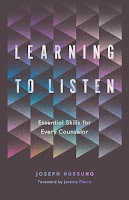
Learning to Listen

Learning to Listen: Essential Skills for Every Counselor, Joseph Hussung (New Growth Press, 2025)

Hussung has provided a short, easy-to-read resource that is applicable for counselling and pastoral care, as well as everyday life. Focusing on the importance of listening, he explores the purpose, posture and practice of listening well.

The practical tools at the end are useful, but I found the first two sections the most valuable. We all know we are to listen well; it is loving and essential for relationships. However, we rarely explore a Christian reason for why.

We listen, because God listens. “God stoops down to us and hears our cries, and that is remarkable!” He listens to us because he knows us and he loves us. 
“If we move toward the practice or posture of listening but forget that we were created by a God who listens and loves, then we will never fully grasp the complete scope of God’s vision for the care of his people. We listen to others because God listens to us. We love others because God loves. We need to constantly remind ourselves of God’s love for us and his expression of that love to us in listening as we hear the stories of others.”
But we don’t only listen to the people we counsel, we listen to God and encourage them to listen to him. Hussung observes that empathy is uniquely human because its starting place is from ignorance. 
“God knows, but we do not. We engage to know someone more deeply while God engages so that we know him more deeply. Empathy says, “Only you can tell me about yourself, and I will wait patiently and try to be a safe place to hear your story so I can help you.” In this way, empathy serves as the posture of a people who listen.”
Yet, sin mars our ability to listen and to love. “Sin cuts us off from the source of love, puts us at the center of our universe, and puts us in opposition to others.” So we speak too soon, we minimise suffering, give simplistic answers and think we know better.

Turning to section 2, the posture of listening, Hussung starts with Jesus, who was humble, gentle and patient. Our posture should be the same, “as counselors, we must exhibit Christ’s heart for our counselees, rather than our naturally hard hearts that makes it so difficult to listen.” So we move away from judgmentalism or defensiveness, we recognise our limitations, we are slow to speak, and we are compassionate to those who struggle with sin and suffering.

These first two sections were the real strength of the book - because we have a reason to listen well, a motivation for our actions. We don’t just do it because it is good practice, we do it to honour the Lord we are serving, and to love those around us. It’s yet another outworking of “Love the Lord your God with all your heart and with all your soul and with all your strength, and love your neighbour as yourself” (Luke 10:27).

He finishes with some practical tips for listening well:
  • Prepare to listen. This means being aware of our body language, how we are feeling, and awareness of the gaps in our knowledge (perhaps context, such as culture, values and perspective). 
  • Actively listen - aware of our tone, using questions well, and reflecting back what we have heard. 
“It is an active process that first allows the physical hearing to take place, then ponders and interprets what we hear, and finally communicates that we have heard and what we understand.”
  • Respond, always with affirmation (of their inherent value, and their story) and sometimes with empathic confrontation (What can they not see that perhaps we can help them to see?)
Many of these practical skills should already be known to someone who is counselling or caring in any format. It’s the framework that underpins them that is the most helpful.

He finishes with a logical conclusion: keep reading about Jesus (let his character shape yours), keep practising (we can improve these skills with time) and keep listening.


I received an ecopy of this book in exchange for an honest review.

Monday, March 24, 2025

Doing Life with Your Adult Children

Doing Life with Your Adult Children, Jim Burns (Zondervan, 2019) 

After decades of reading parenting books for babies, toddlers and teens - I have arrived at the final stage - parenting adult children. This stage is longer than all the others and often has larger issues at stake, yet there aren’t many resources about it. I’m going to tell you about some in the coming months.

Jim Burns’ offering is summarised in the subtitle “keep your mouth shut and the welcome mat out”. He wants to help parents by giving “perspective, insight, and practical guidance you need to move your relationship in a positive direction” (p16). He challenges parents to acknowledge that at this stage many lose the part of parenting they like - the control - but it’s time to relinquish them to God and let go.

Some of the big ideas that overarch the book are included in chapter 1: 
  • Be encouraging but not intrusive. That means hold your tongue, encourage what you can, and develop the right to be heard. 
  • Be caring but enable independence 
  • Invest in your own emotional, physical, and spiritual health 
  • Have fun with your kids 
He has structured the book around 9 core principles, which address a few main themes: 
  • Recognise our children are adults and treat them that way - with respect (for no adult wants to be told what to do), with grace, with the view to being an available mentor when sought, and trusting that they need to learn from experience. 
  • Awareness of the culture our children have grown up in: one that delays maturing to adulthood, is shaped by technology, seeks life/work balance and adventure, and is morally aimless. 
  • Entitlement and failure to launch. A parent’s role is to proactively move adult children towards independence, which may require tough decisions and boundaries about living at home and financial provision. Some families may need to develop specific timetabled action plans for this. 
  • Supporting children through regrettable choices. Adult need to bear the consequences of their actions, so parents love them but do not bail them out. Find support for yourself through tough times, so that you don’t dump your frustration on them. 
  • As families change, work hard to develop strong in-law and stepfamily relationships, and use the amazing opportunities of grandparenting seriously. 
A few things stood out:
  1. Unsolicited advice is often taken as criticism. 
  2. The great, honest comment from a pastor about his son: “most of the time, he didn’t want my advice. I’m a pastor, and frankly, I give good advice”! 
  3. When in doubt, remain silent. Ask yourself, “Will what I am about to do or say improve the relationship?” 
  4. Allow them to control the amount of time they spend with you 
“For many parents, it’s this final stage of trying to balance care and concern with respect for privacy and individuation that truly is the most difficult stage of all.” (p98)

A very helpful and practical guide to think about the longest stage of parenting you will ever do.

Monday, March 10, 2025

Reading the Times

Reading the Times, Jeffrey Bilbro (IVP, 2021) 

This book is an excellent prompt to think more deeply about the news, the information we consume, and how and why we do so. God’s word calls us to an eternal perspective that places Jesus Christ as the turning point of history. Yet, in an age surrounded by newsfeeds, social media, opinions, tweets, and videos, it is hard to remember this eschatological vision. As Thoreau said, “Read not the Times. Read the Eternities”.

Bilbro helps us consider how we might do this. His purpose is to think theologically about how Christians should consume the news. But thinking leads to action, and he encourages the reader to use the news in ways that focus us on the work of the Word and loving our neighbours. He explores three areas - attention, time, and community. In each, he considers the current landscape, proposes a theological answer often using examples from history, and provides some practical ways to live it out.

Attention

In essence, our minds are being filled with numerous, trivial, and mostly unimportant pieces of information. This leads to boredom and dis-ease, makes us vulnerable to other strong opinions, and warps our emotional sensibilities - directing us to care about far-away events which do not impact us, while giving little heed to our close neighbours’ needs.

His solution - focus on one or two issues that strike you as important and that are important to God: 
“Perhaps we need to conduct an emotional audit and consider which issues or news items caused us to become angry, outraged, or excited: Are we grieving over what grieves God and rejoicing over what brings him joy? Or have we become emotionally invested in trivia while growing apathetic about matters of real import?”
“A contemplative response to the news, then, depends on eschatological hope, on fixing one’s identity in a victory that lies outside the vicissitudes of daily news and politics.”
His suggestions - read deeply, not shallowly. Focus on the things in your life that are important in the world that you inhabit. 
“Perhaps the news to which we most need to attend won't be found on social media feed or the front page of any paper. Instead, it's the cry of a baby who needs a diaper changed. It's the bubbles bursting from a pot that needs to be stirred… These are the news alerts, the “push notifications,” to which we can respond with skill. And such work inculcates a properly responsible attention, an attention that seeks to lovingly care for the needs at hand.”
Time

Using the different categories of kairos and chronos in time, Bilbro draws the distinction between two categories of time. Kairos is more rhythmic, cyclical and seasonal; it is more about time to act or time to plant. Chronos is more a quantifiable duration, something that is linear, and often is applied to the forward march of a society. 

Christians can risk conflating redemptive time with the advance of chronological time, leading some to identify with their values being on the ‘right side’ of history, yet, 
“the arc of history does not bend towards the Roman eagle or liberal democracy; rather, all its events relative to the crucified and risen Word. And Christians must learn to read the events of chronos in that light.”

“If your response to the news fits perfectly within any partisan narrative - whether a nostalgic longing to restore some idyllic time or a woke fury at those on the wrong side of history - it’s unlikely to be keyed to God’s eschatological victory.”
Bilbro encourages an appreciation of literature and art that incorporates a sense of God‘s timing rather than just human chronological timing. Such an approach requires depth and time which may be hard, but is worthwhile.

Community

News and information operate within the public sphere, and they have three prominent features being secular, metatopical, and market-based. The more fascinating concept was Bilbro’s assertion that a community formed through the digital public sphere is almost evitably a swarm, and 
“Because swarms simply respond to stimuli, they can't coordinate or sustain the patient, difficult work of love and care.”
Some proposed solutions have been fact checking and diversifying our news feeds, but these don’t make much difference for those who are well informed often remain one-sided and reading other’s opinions can just lead to confirmation bias. More importantly however, these don’t address core issues: 
“What we really need is to be shaped by embodied communities that are rooted outside the public sphere and its unhealthy dynamics”
He encourages adopting practices or liturgies that reshape our intuitions and belonging, giving two principles: faithful joining (be in your community, even just walking around it), and redemptive publishing (participate in media in ways that counter its warping pressures).

In some ways, the depth of his analysis leads to an expectation of more detailed and complex solutions. Bilbro’s way forward almost seems simplistic. Yet, I think they are designed to ground us and show us that it’s not that hard or overwhelming to change our perspective and approach.

I found myself pondering how many people today are following news or information. My observation is that many follow feeds that have no real content at all. Not news, but empty memes, jokes, personal anecdotes, and life hacks. Lives are filled with the emptiness of other people’s lives. This might make it easier to disengage from other people’s trivia, but it clearly has a pull on many.

This is intelligent and wise writing that prompts thoughtful action in a sphere that we are all continuously learning to navigate.

Wednesday, October 2, 2024

Reaching Your Child's Heart

Reaching Your Child’s Heart, Juan and Jeanine Sanchez (New Growth Press, 2024) 

This is a good book for Christian parents who seek encouragement and advice as they raise their children to know Jesus. The Sanchezs write with humility and grace, hoping to pass on their wisdom learned in raising five daughters.

Each chapter starts with an overarching principle, helpfully defining the content, which incorporates a biblical framework and suggestions on how it might look, without being too prescriptive. Each chapter finishes with questions to apply it to your situation.

The overarching goal is that we should have the same aim as God does: 
“Our desire for our children should be the same as God’s: that they would be children who reflect God’s image and display his glory in all they think, say, and do."
But we need to remember the reality of sin: 
“One of the greatest dangers in parenting is the temptation to settle for well-behaved children who don’t see a need for Christ’s redeeming love. We are parenting children born in sin, and they need to be rescued out of the kingdom of darkness and transferred into the kingdom of God’s Son, just as we were (Colossians 1:13–14).”
As we parent, we remember that our parental direction naturally gives way to personal responsibility as they mature. “In other words, when your children are young, you will provide clear and firm direction, but as they grow in wisdom and experience, you will free them to be responsible for their choices.” Not enough parenting resources stress this essential transition.

There is a strong encouragement to pray and be examples for our children to follow, in areas of personal devotion, personal holiness, having hard conversations and seeking forgiveness. They encourage setting biblical parenting goals to reach biblical goals, with lots of practical ideas of how this may look as we read God’s word and model Christ in our daily lives. 
“God does not expect us to be perfect parents. They have a perfect Father in heaven, and they have a perfect Savior in Jesus. What they need from us is to be humble, repentant, faithful, and godly parents.”
The chapter on discipline is the one many parents will turn to for guidance. It is structured around three principles: prioritise positive instruction (teaching about appropriate and inappropriate behaviours and their consequences), shepherd their hearts, and practice corrective discipline. Corrective discipline is broken down into: gentle exhortation, gentle rebuke, and chastisement.

And here is my one major issue with this book. Chastisement is an all-encompassing term they use for punishment, which while defined broadly and with numerous caveats, clearly includes spanking. They are careful to lay out numerous conditions: it should not hurt, must be done in context appropriate for the child, and so on. However, using the term chastisement actually makes it much less clear - what are they really talking about? When they later say (for 13+) that chastisement is no longer appropriate, it appears they are talking about physical punishment, because other options may still be appropriate. It’s confusing, but more so, spanking is contentious (rightly so) and rarely achieves its stated goals. I had concerns with this in Shepherding a Child’s Heart years ago, and this book raises some of the same issues such as how Proverbs has been interpreted, and my lack of conviction that hitting a child changes their heart, let alone it being considered inappropriate (and in some cases, illegal) today. (Without these concerns, this book would have been fantastic and very highly recommended).

The final three chapters explore the different stages of parenting children aged 0-5, 6-12, and 13+. These are helpful, practical, and detailed, with the encouragement that laying a strong foundation early makes a massive difference later. I appreciated their positivity about how enjoyable the teen years can be.

They finish with three things to remember:
  • “Your parenting will neither save your children, nor will it condemn them to hell 
  • Your children don’t need perfect parents who have it all figured out. They need humble, faithful, and repentant parents who continually point them to Christ. 
  • Let your home be characterized by joy, encouragement, grace, truth, and, yes, fun!” 
Overall, this has many helpful encouragements and suggestions for Christian parents. 


I received an ecopy of this book in exchange for an honest review. 

Monday, August 19, 2024

Hearing Jesus Speak into Your Sorrow

Hearing Jesus Speak into Your Sorrow, Nancy Guthrie (Tyndale, 2009) 

This book is for someone experiencing grief, loss or pain, yet wants to hear Jesus’ words in their situation. Guthrie writes from her personal experience of losing two children in infancy. Amid her grief, she also recognised that Jesus was the one she turned to, realising like Peter, “Lord, to whom shall we go? You have the words of eternal life.” (John 6:68). Yet, she could also see how others might reject him: 
“I could relate to those in the story who found some of Jesus’ words, difficult to understand and accept, and simply walked away. Perhaps you can too, as you have struggled to reconcile your understanding of what you’ve read about in the Bible, and your expectations of how God cares for those he loves, with your own difficult reality.” (xv)
In this book, she applies Jesus’ words in the gospels to those who hurt - both words of comfort and those that are harder to hear. Each chapter explores something Jesus said and what that means for us. Some examples are: 
  • I too have known overwhelming sorrow (Matthew 26:38). Jesus understands the crushing weight and agonising loneliness of grief. 
  • I, too, have heard God tell me no (Matthew 26:39). Jesus shows us what to do when God doesn’t give us what we want. 
“Faith is not measured by our ability to manipulate God to get what we want, it is measured by our willingness to submit to what he wants. (19)
  • I am willing to heal your deadliest disease - sin. (Mark 1:41). The challenge here is that if we are only after physical healing, we don’t think our sin is significant. 
“Jesus did not die on the cross to give you a certain number of days of health on this earth, but to fit you, body and soul, for eternity in a new heaven and a new earth.” (37)
  • I will save you from yourself (Matthew 16:23). Jesus saves us from a wasted life of always trying to get our own way. This chapter challenges us to confront why we think we should be exempt from pain and suffering. 
  • I have a purpose in your pain (John 9:3). Jesus gives us insight when we ask “why?” I appreciated her observation that people blame God when something bad happens, but actually we should be blaming sin. 
Other chapters focus on being empowered to forgive others, that God gives us grace in our weakness, and that death is not the end of life. We will grieve differently from those with no hope. Not less, but differently.

She finishes with the comforting truth that Jesus opens his arms to us and gives us rest (Matt 1:28).

Some books are about understanding grief and loss. This book is about experiencing grief and loss, and holding on to Jesus in the midst of it.

Monday, August 5, 2024

7 Myths about Singleness

7 Myths about Singleness, Sam Allberry (Crossway, 2019)

Sometimes when I write a review, I want to say: “Just read it”. This is one of those times.

This is a great book for everyone - single and married alike. Allberry notes we are in an era where marriage is held up as the model for Christians. That it somehow signifies completeness, maturity, and having made it. Singleness therefore is seen as deficient, lesser, and a second prize.

We forget that it hasn’t always been like this. Jesus was single - and in no way deficient or incomplete as a human. The apostle Paul presented lofty views of marriage as a symbol of Christ and the church (Eph 5), yet still suggested singleness was preferable (1 Cor 7). In past times, being single to serve Christ was an honourable choice.

Allberry’s purpose is to show again the inherent goodness of singleness. (He defines singleness as being unmarried and committed to sexual abstinence). It is not bad to be single, rather it is valuable and good. He does so by working through seven myths: 
  1. Singleness is too hard. One element of this is the perception that celibacy is too much to ask, yet sexual expression does not define our humanity. Allberry points out that marriage is also difficult. 1 Cor 7 argues that married life is more complicated, and singleness is more straightforward. 
  2. Singleness requires a special calling. This pushes back on the idea that the gift of singleness is given to some, and you need that special power to cope with being single. 
  3. Singleness means no intimacy. Great comments on friendships and their many benefits. Our culture has so raised the idea of romantic love to be the ideal form of expression, that we are unable to see the value of deep, close, intimate, yet non-sexual friendships. 
  4. Singleness means no family. As Christians, the nuclear family does not have precedence over the larger family of God. Allberry shares many stories of how he has been part of families’ lives, providing the reader with many practical ideas. 
  5. Singleness hinders ministry. Rather, there are benefits of being single in ministry, including more flexibility and responsiveness. At the same time, he acknowledges the costs, such as the time needed to run a household on your own. For those who think their single pastor cannot speak into their family life, he counters that pastors do not need to experience a life situation to be able to speak from God’s word about it. 
  6. Singleness wastes your sexuality. This returns to some of the ideas of chapter 1. The ongoing feeling of restlessness and longing for more can point us to our creator God and the reality of the gospel in fulfilling every need. “If marriage shows us the shape of the gospel, singleness shows us its sufficiency.” 
  7. Singleness is easy. Having taken six chapters to explore the benefits of singleness, this speaks honestly about the pain of being single and acknowledges that it can be very hard. For those who struggle, this gives voice to their pain.
Allberry is balanced throughout. This is not a book that upholds singleness at the expense of marriage. Both are honoured, valued, and esteemed. I appreciated his conclusion. Yes, singleness is good. But, really the main point is that God is good, and we can trust him to care for us and be with us, whatever our relational situation.

Monday, July 22, 2024

Saints and Scoundrels in the Story of Jesus

Saints and Scoundrels in the Story of Jesus, Nancy Guthrie (Crossway, 2020)

After hearing Nancy Guthrie give an excellent seminar recently, I grabbed a few more of her books. I have always enjoyed her writing, and have reviewed some books before (on grief, on praying for your children, and on biblical theology). Saints and Scoundrels in the Story of Jesus is another one in the biblical theology realm.

Each chapter considers someone in the biblical accounts who interacted with Jesus - both those who came to love him and serve him, and those who turned away from him. From there, Guthrie encourages the reader to think how they too might react to Jesus and respond to his call on their life.

Every chapter is like a sermon, and as such was engaging, easy to read, and very applicable. At the same time, it was biblically saturated and drew links from the Old Testament through to Jesus, providing connections that might otherwise have been missed.

Some of the ‘saints’ and ’scoundrels’ are: John the Baptist, Jesus’ family, Peter, the Pharisees, Zaccheus, Judas, Stephen, and Paul. Each brought out a different aspect of following Jesus and what it means today. While I learned from them all, some stood out: 
  1. Jesus family. Exploring his family line, his parents and his siblings, Guthrie posits that the family of Jesus is made of people from less respectable backgrounds, who have a less than complete understanding of who he is, and whose belief in Jesus is better later than never. It’s a comforting encouragement to those who think they could never measure up and an assurance that they don’t have to. 
  2. Peter. This was a more balanced and nuanced take on Peter than we sometimes get. She compared Peter in the gospels with Peter in the letters, to show how God works change in people’s lives. 
  3. The Pharisees and Nicodemus. This contained helpful cultural explanations and powerful observations. Have you ever stopped to think what it meant physically and emotionally for Nicodemus (and Joseph) to take Jesus’ body off the cross and to the tomb? 
The real strength of this book is the way Guthrie applies biblical theology to each story, giving it more meaning, deeper context, and more appropriate application. What’s interesting is the wide range of people this book is suitable for. It would introduce new believers or inquirers to Jesus and how he changes lives. It would help established Christians to see links across the biblical accounts that they might have missed. It brings fullness to the story of Jesus and our understanding of him. I learnt a lot and appreciated how Guthrie drew threads together that I had not previously seen. Highly recommended.

Monday, May 13, 2024

True Friendship

True Friendship, Vaughan Roberts (10 Publishing, 2013)

You may have noticed I’ve read a few books about friendship recently, and I think this one is probably the best. It’s straight to the point, clear and direct with solid suggestions and implications, all while being Christ-focussed and God honouring.

Roberts says that true friendship is crucial - we all need it - and it is close. If you are married, your spouse should be your best friend. But all of us should have truly close friends. It is also constant - we should challenge ourselves by asking “what kind of friend am I?”, rather than “who will be my friend?” or “where are my friends?” Are we the person they would turn to in a time of need? Close friendships require four things: for us to be selective, open, interested, and committed. It takes time and energy to grow and maintain friendships.

True friendship is also candid. Not only are we to be honest with others, but we are to allow others to be honest with us - including inviting challenge and rebuke. I appreciated his warning to those who are in Christian leadership - ensure you have some people around you who are willing to speak honestly to you about your faults and failings. It takes grace to respond to criticism, and Roberts suggests: expect it, examine it, and then endure it. Counter to this, true friendship is also careful. We are gentle and speak with love to each other as we walk together. I appreciated the included wisdom from Gordon MacDonald that while I want friendships where I can be myself, I also want to be encouraged to be better than myself, growing in Christ-likeness. Finally, true friendship is Christ-centred. In the end, our desires for friendships will never be met fully on earth. But they are met in Christ.

At under 90 pages, it’s quick to read and I got a lot out of it. There is much wisdom expressed very succinctly. Taking more time over it, talking through it with someone, or exploring the discussion questions at the end of each chapter would provide even more benefit.

Monday, April 22, 2024

No Greater Love

No Greater Love: A Biblical Vision for Friendship, Rebecca McLaughlin (Moody, 2023)

What is a friend? Is it someone who gets you, that you can hang out with easily, and who shares the same interests? That is a good friend. However, in No Greater Love, Rebecca McLaughlin suggests that Christian friendship is so much more. It is anchored in Christ, is missional, and can be extended to many. At the same time, close friendships will refresh, restore and challenge us, so that we can continue to serve Jesus more broadly in his world.

Basing the biblical study in the New Testament, McLaughlin focuses both on Jesus’ expressions of friendship and how it is shown in the early Christian community through the epistles. We act in love towards everyone, but we also share deeper relationships and more time with some. We can see this in Jesus’ life. He spoke of loving your neighbour and loving your enemy, and he both taught and modelled what that could look like. He also gathered friends around him (his disciples and other followers) with whom he shared life and ministry. He said that true friends would lay down their lives for each other, showing that true friendship in Jesus is sacrificial (John 15:13). Even within that group, it could be argued that Peter, James and John were his closest friends. Of course, his friends failed and deserted him, but Jesus’ forgiveness and understanding of their weaknesses acts as a model to us.

When we read the New Testament letters, it is clear that the authors had beloved partners in the gospel and dear friends (e.g., Rom 16:1-16, Philemon 1, 3 John 1). McLaughlin suggests that our closest friendships should not be about shared desire for time and fun together, but rather be gospel-spreading partnerships, where we spur one another on, have each other’s backs and care for each other in our pain. Many have experienced deep friendships with others because of shared mission or ministry service together.

I appreciated the reminder here that therefore, “we must be willing to express our deep attachment to beloved friends while also being willing to support them in the work God puts before them - even if it takes them away from us” (p. 61) This puts into words the deep sadness when ministry-minded friends leave, yet concurrent joy about their new path.

McLaughlin challenges the concept of the inner circle of friendships, ones that exclude others, in two ways. The first is that as Christians we turn towards those who are left out. We use the energy we gain from the close friendships that refresh us, to enable us to continue to welcome the lonely and unloved. The second is to consider relationships that care for others and their needs as chain mail (armour), rather than concentric circles. In this analogy, everyone is connected to numerous other people, and all are connected through each other. I found this idea incredibly freeing, for in a Christian community, I do not have to (nor can I ) meet the needs of all around me, but together we can make sure that everyone is included.

True friendship is that which encourages us, pushes us, and corrects us: 
“Friends need to know us well enough to be gentle in the places where we need gentleness and to challenge us in the places where we need correction.” (93)
“Delightfully in God's great kindness Christian friendship isn't just a diagnostic tool – it's also therapeutic. I don't just need my friends to tell me when I need to walk away from sin. I also need their arms around me when I've made that turn.” (96)
Some diagnostic questions throughout were very helpful. Do I encourage and exhort my friends: in their walk with God, in their marriage or singleness, as parents, in their workplaces, and their evangelism? Do we spur each other on, or pull each other back?

McLaughlin then explores how the differences between marriage and friendship make them vital to the health of both. There is a great chapter on male and female friendships, which addresses the challenges and opportunities they present, as well as single-sex friendships for those who are same-sex attracted. There was wise counsel here, with an awareness of individual preferences and personalities and ways to approach all friendships with sensible boundaries. In the end, whoever we are, we seek to love others with a sibling bond, caring for them and honouring them: “It’s vital as believers that we know ourselves and one another well enough to know what true love looks like in a friendship – whether with a man or with a woman” (130). 

When considering friendship with non-Christians, McLaughlin encourages hospitality, and attentive listening in areas that we disagree, for “they may be just as well-thought-out and driven by desire for good as we are” (133). While we will not worship their god/gods or expect them to live by Christian ethics, we can put aside our cultural differences, try to understand, and show love. Ultimately, we also long for them to love Jesus.

I only had a few minor quibbles. For me, there were too many Lord of the Rings references, and perhaps a few too many illustrations that weren’t essential to the point. This is very minor though. Overall, McLaughlin has very helpfully laid out a framework of Christian friendship that allows us to assess our current friendships, as well as to strive for friendships that are gospel-focused as they seek to love, encourage, and challenge one another.

Wednesday, March 20, 2024

Just Be Honest

Just Be Honest: How to Worship through Tears and Pray without Pretending, Clint Watkins (Good Book Company, 2024)

When suffering or deep pain strikes, how do you respond? Or, more to the point, how do you think you should respond as a Christian?

For many, we suspect we are supposed to push on, finding ways to rejoice and be thankful. We think we’re meant to declare God’s goodness and sovereignty, but in this awful situation we can’t see how God is good or could allow this to happen. We feel we should pray polite prayers for God to help us, yet our hearts are crying out, “Why me, God?” We gather with God’s people and sing triumphant choruses, but our souls are aching, wondering why there are no words to express the pain of this dark valley. Church can be a hard place to be, for “spiritual positivity dominates the landscape” and people “wrap up their stories of suffering with lessons and silver linings” (17).

Grief. Loss. Pain. Heartache. Despair. Are we allowed to express such emotions? In Just Be Honest, Clint Watkins asked these same questions amid the searing pain of losing his infant son, Eli:
I’ve never had such intense conflict with the Lord in that season. I still believed he was sovereign and good. But his good promises felt hollow and his sovereign plan seemed harsh … how could I find refuge in the one who had the power to heal my son, but chose not to? It was not well with my soul. (16)
He invites us to rediscover the language and practice of lament, which “was how sufferers in the Bible struggled in their tension between their pain and God’s promises” (18). Scripture is full of people who struggle with depression, despair and doubt, and bring their questions and uncertainties to the Lord. Think of Hannah praying bitterly over her infertility (1 Sam 1:10), Mary accusing Jesus of not saving Lazarus (Jn 11:32), or Paul’s unceasing anguish for others (Rom 9:2). Lamentations is the corporate grief of a nation in exile. Many Psalms detail the pain of their authors and their complaints to God (Psalm 13:1; 55:2; 142:2).

Jesus Knows Pain

Even more than the model of the saints in Scripture, we have the model of Jesus.

Jesus wept at Lazarus’ death. Watkins highlights that Jesus’ tears were unnecessary; he knew he was about to raise Lazarus from the dead. He didn’t need to grieve, but he slowed down and felt the pain of loss for himself and others.

Jesus wrestled with God before his own death with loud cries and tears (Heb 5:8) and was greatly distressed and troubled (Mk 14:33). On the cross, he cried out asking why God had forsaken him (Mk 15:34).

We are also allowed to question, weep, and mourn. But we don’t just respond like Jesus, we also respond alongside Jesus. He is with us:
And God will wait for you patiently, listen to you tearfully, and sustain you graciously, even as your prayers to him end in exclamation points and question marks. (48)
Learn to Lament

Watkins explores biblical lament and uses it to develop a framework of lament with four elements: 1) explained pain; 2) expressed protest; 3) earnest petition; and 4) eventual praise.

While we petition the Lord and we regularly praise him, explaining our pain to God and expressing our protest at him are often missing in our Western Christian climate. I wonder if we know that the Psalmists do it, but deep down we wonder—are we really allowed to do the same? It just seems risky. Therefore, Watkins’ exploration of the difference between grumbling and lament is very helpful. Lament is telling our troubles to God, whereas grumbling has three opposing characteristics. Firstly, you aren’t talking to God, only to others or yourself. Secondly, grumblers never get past the complaints, but lamenters fight to move beyond pain and protest to petition and praise. Finally, grumblers tend to walk away from the Lord, yet lamenters still seek him amidst their pain and confusion.

When we get this wrong and our lament turns to grumbling, we have the wonderful comfort of the Lord’s grace and mercy. He forgives our errors and continues to walk alongside us:
Suffering may cause you to entertain dark questions about the Lord. You might even say foolish things that you will one day regret and repent of. But God’s compassion does not depend on your ability to struggle perfectly … and if you cross the line, remember the cross. God covers your groans in grace. (80)
Walking Alongside Others

Watkins urges honesty with each other about our struggles and suggests adding lament into our corporate worship. This includes the songs we sing, but also how we preach about challenges and lead prayers and services. Let’s speak in ways that give permission to voice pain, confusion, and questions, and still lead people to Jesus as the source of all comfort.

He encourages allowing others to lament with us. We try to share honestly, wisely (perhaps with only a few in depth), and with hope. For those who walk alongside people in deep pain, we bear their burdens. Allow people to explain their pain and express their protest at God. Be okay with the theological tension. Let them sit in the confusion and uncertainty of what God is doing. Ask them how we can petition God for them. Help them walk towards praise.


Some books about pain and suffering are meant to prepare readers for future suffering, rather than intended for those who are in the midst of pain. However, I would offer Just Be Honest to someone in the middle of their own anguish. One possible limitation is how entwined the content is with Watkins’ own story. It fleshes out his content with personal experience, but it is only his own experience that is explored. The inclusion of other stories of different pain and loss may have helped readers find application in different circumstances. It may also be that Watkins’ r
aw and open emotion may be too confronting for those who are unable or unwilling to express pain or emotion. However, it could also be the catalyst that enables honest processing with God and others.


Watkins’ compassionate tone, biblical foundation, and clear understanding of pain and lament will help many to express their pain and protest and petition to the Lord, and God-willing, lead them to eventual praise.


This review was first published on TGCA.
I was given a copy of this book in exchange for an honest review.