Showing posts with label reading. Show all posts

Monday, March 10, 2025

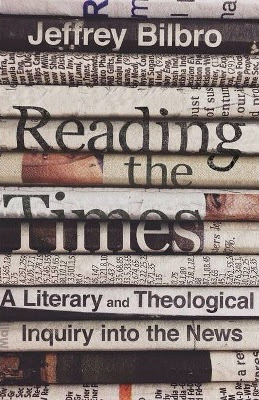
Reading the Times

Reading the Times, Jeffrey Bilbro (IVP, 2021) 

This book is an excellent prompt to think more deeply about the news, the information we consume, and how and why we do so. God’s word calls us to an eternal perspective that places Jesus Christ as the turning point of history. Yet, in an age surrounded by newsfeeds, social media, opinions, tweets, and videos, it is hard to remember this eschatological vision. As Thoreau said, “Read not the Times. Read the Eternities”.

Bilbro helps us consider how we might do this. His purpose is to think theologically about how Christians should consume the news. But thinking leads to action, and he encourages the reader to use the news in ways that focus us on the work of the Word and loving our neighbours. He explores three areas - attention, time, and community. In each, he considers the current landscape, proposes a theological answer often using examples from history, and provides some practical ways to live it out.

Attention

In essence, our minds are being filled with numerous, trivial, and mostly unimportant pieces of information. This leads to boredom and dis-ease, makes us vulnerable to other strong opinions, and warps our emotional sensibilities - directing us to care about far-away events which do not impact us, while giving little heed to our close neighbours’ needs.

His solution - focus on one or two issues that strike you as important and that are important to God: 
“Perhaps we need to conduct an emotional audit and consider which issues or news items caused us to become angry, outraged, or excited: Are we grieving over what grieves God and rejoicing over what brings him joy? Or have we become emotionally invested in trivia while growing apathetic about matters of real import?”
“A contemplative response to the news, then, depends on eschatological hope, on fixing one’s identity in a victory that lies outside the vicissitudes of daily news and politics.”
His suggestions - read deeply, not shallowly. Focus on the things in your life that are important in the world that you inhabit. 
“Perhaps the news to which we most need to attend won't be found on social media feed or the front page of any paper. Instead, it's the cry of a baby who needs a diaper changed. It's the bubbles bursting from a pot that needs to be stirred… These are the news alerts, the “push notifications,” to which we can respond with skill. And such work inculcates a properly responsible attention, an attention that seeks to lovingly care for the needs at hand.”
Time

Using the different categories of kairos and chronos in time, Bilbro draws the distinction between two categories of time. Kairos is more rhythmic, cyclical and seasonal; it is more about time to act or time to plant. Chronos is more a quantifiable duration, something that is linear, and often is applied to the forward march of a society. 

Christians can risk conflating redemptive time with the advance of chronological time, leading some to identify with their values being on the ‘right side’ of history, yet, 
“the arc of history does not bend towards the Roman eagle or liberal democracy; rather, all its events relative to the crucified and risen Word. And Christians must learn to read the events of chronos in that light.”

“If your response to the news fits perfectly within any partisan narrative - whether a nostalgic longing to restore some idyllic time or a woke fury at those on the wrong side of history - it’s unlikely to be keyed to God’s eschatological victory.”
Bilbro encourages an appreciation of literature and art that incorporates a sense of God‘s timing rather than just human chronological timing. Such an approach requires depth and time which may be hard, but is worthwhile.

Community

News and information operate within the public sphere, and they have three prominent features being secular, metatopical, and market-based. The more fascinating concept was Bilbro’s assertion that a community formed through the digital public sphere is almost evitably a swarm, and 
“Because swarms simply respond to stimuli, they can't coordinate or sustain the patient, difficult work of love and care.”
Some proposed solutions have been fact checking and diversifying our news feeds, but these don’t make much difference for those who are well informed often remain one-sided and reading other’s opinions can just lead to confirmation bias. More importantly however, these don’t address core issues: 
“What we really need is to be shaped by embodied communities that are rooted outside the public sphere and its unhealthy dynamics”
He encourages adopting practices or liturgies that reshape our intuitions and belonging, giving two principles: faithful joining (be in your community, even just walking around it), and redemptive publishing (participate in media in ways that counter its warping pressures).

In some ways, the depth of his analysis leads to an expectation of more detailed and complex solutions. Bilbro’s way forward almost seems simplistic. Yet, I think they are designed to ground us and show us that it’s not that hard or overwhelming to change our perspective and approach.

I found myself pondering how many people today are following news or information. My observation is that many follow feeds that have no real content at all. Not news, but empty memes, jokes, personal anecdotes, and life hacks. Lives are filled with the emptiness of other people’s lives. This might make it easier to disengage from other people’s trivia, but it clearly has a pull on many.

This is intelligent and wise writing that prompts thoughtful action in a sphere that we are all continuously learning to navigate.

Monday, November 24, 2014

Lit!

Lit! Tony Reinke

This book came across my shelf because of Jean’s high recommendation a few years ago. I read it and loved it. I chose it as the book I would go through with a Ministry Trainee group in an annual seminar. Then I turned it into a “Reading as a Christian” seminar and gave it to two different groups of women, one through a bible study group and one through a conference.

So it’s fair to say I am a big fan of this book. As you know, I am a reader - an avid, keen reader. But this books appeals to me as much as it will to someone for whom reading does not come so naturally - because it encourages you to read, gives you good reasons to read and helps you to think about how to read through the lens of your faith, using wisdom and discernment as tools to assess books and what we can learn from them.

This review is not so much a detailed review of the book, but a collection of thoughts as a result and the basis of my seminar.

My overall question is: If our lives are to be lived to the glory of God, how does that shape our reading?

Firstly, we start with a Christian view of reading:

1.  The bible is in a category all of its own - it is the Word of God

2.  Christians value words - we value the Word of God, his Son is the Word, we know words give meaning in a way that images cannot.
 
3.  Being a Christian brings wisdom and gives discernment
“Faith in Jesus brings with it a critically important benefit for the Christian reader – discernment. Discernment is the ability to do three things: the ability to “test everything”, to “hold fast to what is good,” and to “abstain from every form of evil (1 Thess 5:21-22)” (p35)

“Christians can read a broad array of books for our personal benefit, but only if we read with discernment. And we will only read with discernment if the biblical convictions are firmly settled in our minds and hearts. Once they are, we have a touchstone to determine what is pure gold and what is worthless.” (p59)
4.  There are great benefits to reading Christian books - both fiction and non-fiction

5. There are great benefits to reading non-Christian books - both fiction and non-fiction
‘In non-Christian works we discover what is so close, and yet so far away, from what we read in the Bible. The challenge is to make use of the “so close” for our edification and for the glory of God while being aware of the “yet so far away”.’ (p77)

Following on from this, there are some practical suggestions:
  1. Examine your heart - what do you read, why do you read, do you read widely but with discretion or is your reading divorced from your faith and godly living?
  2. Dwell in the word of God - as first priority read your bible.
  3. Have a balanced reading diet - include Christian growth and understanding, life stage and professional development reading and reading for pleasure/enjoyment.
  4. Guard your heart in your reading - be aware if there are some types of books you should avoid
  5. Be active in your reading - take notes, put aside time for reading, be willing to stop reading a book
  6. Read with others - in a bible study, with children, in a book group
  7. Consider whether reading can be a problem - when, what, how much, etc
  8. Be a mature reader:
“1. Mature readers prize wisdom
2. Mature readers cherish old books
3. Mature readers keep literature in its place
4. Mature readers avoid making books into idols
5. Mature readers cling to the Saviour” (p177)
In the end, I really enjoyed Reinke’s conclusion:
“Regardless of how many books we read, we cling to the old rugged cross. When books overwhelm us, and our intellectual limitations discourage us, we recall the gospel. In the good news of Jesus Christ, overwhelmed readers find peace, and joy, and the courage to keep reading.” (p185)

Friday, April 4, 2014

Plans for this year


So, you are up to date and musings is finally up and running again!

At this stage, my plan is to keep sharing with you about the good books that I am reading.

There may be other thoughts thrown in along the way, but books is where our attention will focus.

I’m aiming for a weekly book review at this point – we’ll see how we go! First one: Monday.

Monday, April 23, 2012

Reading - what and when?

A reader has asked me a question:
How do you decide what books to read? And how do you find the time to read them?
I thought I might take a little time to answer because other people have asked the same question over the last few years.

What to read?

It’s probably as basic as I choose to read what interests me. I have always been a reader, from childhood my nose was buried in a book. Usually fiction in the teenage years, but when I became a Christian it was a natural progression to read books that had a little more depth.

This blog started after an email book club disintegrated. When we left theological college almost 10 years ago, a group of the wives decided to have an email book club. We were scattering to 4 corners of the world, so email was the only way to do it. We decided on one book per month, often based on the list of all the books you know you want to read while at college but never have the time! We read quite a lot over a few years, all Christian books and ones we wanted to read.  Early on we decided we did not want to read rubbish, but good stuff.   If we were going to spend time reading, we wanted the time to be well spent.   At the end of the month, we would email around answering the following questions:
- What did you like?
- What did you learn/what challenged you?
- What did you disagree with/dislike, etc?
- Who would you recommend this to?

As time progressed, fewer and fewer of us had time to contribute. So, I decided to read the books on my personal list and review them on a blog.

When I read a review or hear about a book that interests me, I write it down straightaway. When a Christian bookstore has a sale, I go and buy up (or order online these days!)

For a while I was reading lots of blogs which highlighted books to read.  However, towards the end of last year, I found it overwhelming and I couldn’t keep up, so I cut right back on all the blogs I read.  My main blog sources for book ideas over the years have been:  Jean, Nicole and Meredith and Tim Challies.  There are many more out there, so if you are a fellow blogger, don’t be offended!  But these four have been my main source of reading ideas online.

Also, I follow through ideas relevant to our life:

I read marriage & relationship books – both because we think it’s important to continue to work on our own marriage, and because we do a lot of marriage preparation and enrichment with couples.

I read parenting books – because as a parent you are always looking for new ideas, and now friends ask for book recommendations.  I seem to have a revolving lending library of parenting books!

I read books about ministry and mission work – biographies and ‘how to’, both for interest but also because that is a key part of our lives and many people whom we love and support.

I read books about God, theology and the Christian life. I would love to read more in this category. Most of my sources here come from my husband, also a keen reader. He seems to always have some good theology books on the go.

I read non-Christian books – both fiction and non-fiction. Whatever takes my interest, what friends and family suggest, and authors that I like.

And I always am open to suggestions.  Now that people seem to know that I read, more and more people are suggesting books for me to read.  I love it, it's how I find our about many more books.  I don't guarantee that I'll review it, but I will probably try to read it.


When to read?

I read for about an hour every day.  We have had scheduled ‘rest time’ in our family since the children started dropping their day sleep.  After lunch ABC2 or a DVD goes on for about an hour.  It happens less now, as 2 kids are at school and our youngest is at pre-school.  But the understanding is that if you are home, rest time happens and it is also for Mummy who gets some quiet time then.  If we have plans that night, I also try to include my bible reading and prayer in that time, but more usually, I leave that for early evening, and put my feet up with a pot of tea, some dark chocolate and I read. These days I read about 30 mins of fiction and 30 mins of a Christian book. It’s not specified, I just find I relax with the tea, chocolate and fiction, and then am ready to turn my mind to weightier things after!


What about youHow do you choose what to read?  When do you read?

Monday, June 13, 2011

Benefits of literacy

I love it when my children learn to read and write. For my daughter, who would talk all the time if she could, it has opened up a whole new way to communicate with me.

This is the type of note that now greets me in the bathroom.

Can't underestimate the benefits of literacy, you might even get your hair done the way you like!

Thursday, June 2, 2011

5 books that changed who I am: meme

Nicole tagged me in a meme, started by Ally. To play along, I need to share five books that changed who I am. Rules are:

• Tag between 3 and 5 people
• link back to this post.
• call the post '5 books that changed who I am'
• enjoy.

I agree with Nicole, I really struggled to narrow it to 5.


1. The Bible - completely transformed my life with God's gracious offer of salvation through Jesus Christ, and continues to do so. It was the book of James from which I was converted and it still holds a special place in my heart.


2. Praying the Scriptures for your children, Jodie Bernt. This book helped me to think about better ways to pray and how to pray straight from the bible. It changed my whole prayer life.


3. The Busy Christian's Guide to Busyness, Tim Chester. This is a recent addition and it has really helped me at what I would categorise to be 'an extremely busy life stage'. I have had many misconceptions about the reasons for my own busyness torn down, and I still trying to think through much of it and how I need to deal with a tendency to overcommit for sinful reasons. (I recently blogged through this one in detail on in tandem).


4. Operation World, Jason Mandryk. While I don't read and pray from this nearly as often as I would like, I love what this book does. It's a prayer guide that covers every nation and contains a wealth of information to help you pray for the people of the world intelligently and informatively. It will broaden your horizons and make you realise how big God is, how large his church, and how small you are in comparison.


5. And for fiction, I can hardly choose. To sneak in a few extra titles, in the past year I have absolutely loved The Book Thief and The Time Traveller's Wife. However, for a series of books that I love and are my 'comfort' books - I read them when I need a break - I can't go past Diana Gabaldon's Outlander Series. They combine history, romance and a wonderful story of an entire marriage. If only she would finish the 8th in the series soon!


I am going to break the rules at this point, and not really tag anyone, but if you want to continue go for it. However, I do know 3 bloggers who are big book fans, so perhaps Meredith, Tamie or Jenny might be up for it? No pressure though...it is a little like a chain letter!

Sunday, September 13, 2009

Book ideas request

I pass on a request to you, the reader, from another reader of this blog.

Amy has asked me to recommend books for her written in an Australian context, keeping in mind the following:
  • she is new to Australia, from China (I hope I'm right there Amy!)
  • English is not her first language
  • she has recently been reading a few Alexander McCall Smith books (from the No 1 Ladies Detective Agency and 44 Scotland Street series) and has enjoyed them
  • she would like something that while fiction, still gives her some insight into Australian culture and/or history
Over to you readers - any suggestions??

Thursday, August 20, 2009

Reading, not writing

Things have been a little silent here of late.

The main reason is because I am reading lots of books, rather than writing about them!

I'll be back soon with their reviews...


Photo from stock.xchng

Thursday, July 23, 2009

Fiction reading

While recently on holidays I had a chance to catch up on some fiction reading that I had been looking forward to for some time. Gladly I was not disappointed.
A Thousand Splendid Suns, Khaled Hosseini What a great book. A very powerful and moving story of two women in Afghanistan, prior to and during the reign of the Taliban. I reviewed Hosseini's other book, The Kite Runner, a few months ago, having really enjoyed it. However I think I preferred this one. I felt (without any way of knowing how to judge it!) that this one was written better. Perhaps one is more comfortable with writing the second rather than first novel? (any novelists out there want to weigh in on this one?!) It is not a nice story, just as the story of women under abusive husbands and the Taliban is not a nice reality. However, there was something compelling about it. I enjoyed the whole book and highly recommend it. World Without End, Ken Follett A massive book, which makes me a very happy woman! Some may find books at 1200+ pages too long, but I love them. I think most books just aren't long enough. I had almost finished A Thousand Splendid Suns by the end of a day's travelling, so it was never going to be long enough to keep me going for a whole week of lazing by the pool. Thankfully World Without End was next on my list and it did the job admirably. It is labelled and marketed as a sequel to Pillars of the Earth (reviewed briefly here), also a great read. While having read Pillars will help with a few references in this book, it is not necessary to have read it first. This book is dated 200 years after Pillars. It charts the lives of 4 children in the 1300s in the cathedral city of Kingsbridge throughout war, plague and life in in medieval England. If you enjoy a glimpse into times gone by, how people really lived, what it was like for lords and peasants, what the plague did to society and how the church reacted to these events - this is a great read. A quote on the front cover "You won't be able to put it down" - was entirely true for me, as Husband will testify!

Monday, October 27, 2008

Books about Reading

Do you need to be convinced of the need to read aloud to your children? Read one of these two books and you will be entirely committed to doing so!

Reading Magic,
Mem Fox. This further confirms, if you need it, the reasons to read aloud to your children - they can start school reading and develop a love of reading which lasts a lifetime. Something which has been proven in my life and is starting to be in our children.

The Read-Aloud Handbook, Jim Trelease. This US author presents a convincing case of the need to read to children and develop the habit of reading. He used many statistics of the US Education System, which can both alarm and inform about the state of literacy in the US, and presumably things are not too different here. The last part of his book includes a "Read-Aloud Treasury", a list of books (mostly recent, but also includes a number of the classics), which he recommends being good for reading aloud to children. Jim Trelease's home page is here. - it's great, go straight to the source! He has a number of the books in the treasury also on his website.