Monday, July 29, 2019

Human Race

Human Race: Ten Centuries of Change on Earth, Ian Mortimer

Where do you learn your history? Do you read any history at all? As I get older I’m more interested in understanding the past and the world in which we live. I suspect this is common, for as we age, we start to realise how much we do not know. We also see in a small, personal way in our own lives how much we can learn from the past and how history repeats itself, and so we might also be intrigued about that on a larger scale.

This is a great, illuminating book. It’s a solid read and one that you will probably take a little time over, but if you are interested in learning more about the major changes of the Western World over the last millennium and how they impacted life today, Human Race is a great option.

The idea for the book started when Mortimer heard a TV presenter at the end of the 20th century claim that it was the century that had seen the most change. It prompted him to think, “was it really?” So he set about to analyse the last 10 centuries, considering the major changes that affected them. He has then drawn conclusions about each and tried to select one key agent of change (one person) that most affected that century. He has also limited it to the Western World, which for most of the book means Europe.

It’s a book well worth reading if the above interests you. For those that want a brief summary of some things he covers, here goes:

Starting with: “The human race in 1001 was not just illiterate, superstitious, ignorant of the outside world and devoid of spiritual supervision: it faced continual hardships and dangers.”

The church grew widely in the eleventh century, and ended in the call for crusades:
“Just imagine setting out from France today on foot for Jerusalem. Now imagine doing it without any guidebooks, phrasebooks or money, facing incredible heat and large numbers of heavily armed enemies. And imagine doing it without ever having travelled more than a few miles from your native village.”
One large change in the 12th century was the rise in medicine, “it marks the start of the process by which men and women came to trust their fellow human beings rather than God with their physical salvation, and systematically employed medical strategies to cope with sickness rather than relying on prayer or magic.“

The 13th century saw a shift to written records and the introduction of the Magna Carta, which was “indicative of a growing need for people to have a say in the government of the realm.”

Overwhelmingly the major agent of change in the 14th century was the plague. While the plague hit in a couple of major instances, it also returned every decade or so for hundreds of years. It’s first major wave killed 45% of Europe’s population over 7 months. "The 14th century thus heralds an age of fear. People went to bed aware that every night might be their last." This century also saw projectile warfare (arrows, guns and cannons) completely change the field of war.

In the 15th century clocks came into common use which meant that time was now secularised rather than set by the church and times of prayer. At the same time mirrors also came into regular use, increasing the sense of individuality and uniqueness of each person.

The sixteenth century saw "The combination of three things – the printing press, the use of the local vernacular and the spiritual significance of the Bible – that challenge the dominance of the pulpit and the marketplace and ultimately turned Europe into a literate society." Part of this was the Reformation which challenged the previous authority of the church.

The seventeenth saw multitudes die from famine, yet there were also medical and scientific revolutions as well as expansion by Europeans into the rest of the world. The eighteenth century had huge change in transport medication as well as agriculture practice and economic and social theory. By the 19th century, “life in Europe for the vast majority of its burgeoning population was no longer a matter of how to survive; it was a question deciding how to live.” There were major developments in medicine, photography, transport, communication and the concept of leisure.

Many of us know the huge changes of the 20th century, and Mortimer includes developments in transport, the increasing isolation of people with urbanisation, our reliance on electricity, and the media. The idea of total war (affecting an entire country or population) also defined the century: “The increasing deadliness of warfare is surely the greatest irony of human civilisation.”

The final two chapters is where analysis of the main question comes into play. He first tries to categorise the primary forces underlying change, and then develops a scale for how to measure each of the changes. Need for change is usually determined by basic needs: the need to eat, or the need for shelter. When basic needs are met then humanity turns to issues of security, law and order and health. Generally after all that comes ideology and personal fulfilment.

We also see that change is never just about technology:
"Breaking down the overall overarching concept of change into smaller facets has allowed us to glimpse the dynamics of long-term human development. We can see that not all change is technological: it includes language, individualism, philosophy, religious division, secularisation, geographical discovery, social reform and the weather."
Finally, he considers the future, and some of the major changes that might affect us in the western world in years to come. Considering energy consumption versus long-term supply, he raises the question of whether the world can continue to function as it does for much longer. Some of his conclusions are somewhat depressing but they are also informed and challenging.

I really enjoyed this book, and learning about change over history. I appreciated his analysis and have come away more informed about the last millennium.


Spoiler alert:

What I found fascinating was that in the final analysis, Mortimer came to the conclusion that the principal agent of change for the entire millennium was God. Now he openly acknowledges he does not believe in God and for him, God does not exist. However, he concedes what he thinks is irrelevant, because faith in God drove much, including changes in the church, and learning in medicine and science. Studying God in the written word gave people the ability to read, and a desire to understand God’s creation pushed people to understand the world better. Knowing God made all people equal also pushed various changes for equality. I was impressed with his analysis here, and wonder if he was himself personally challenged by it. I have already noted in his historical fiction novel that it is clear he has no faith himself, yet there is a humility that allows him to come to the conclusions that he has.

Friday, July 26, 2019

Palm Beach

This lovely new Australian movie is a story of friendship and family amidst the realities of getting older set against the backdrop of the gorgeous Palm Beach in NSW.

It is set over one weekend with three couples and their kids, all friends since the men were in a band together 40 years before. Frank and Lotti have invited Billy & Eva and Leo & Bridget to celebrate Frank’s big birthday at their picturesque home. It's a fabulous cast including Bryan Brown, Greta Scacchi, Richard E. Grant, Sam Neill and Jacqueline McKenzie.

The first half of the movie sets the scene, with the various relationships between the couples and their children, showing where tensions have grown over the years, and the history they all share. There are numerous references to the realities of aging; Lotti and Leo compare notes that cancer scares for both have brought ‘uninvited clarity’ to their lives. But there are secrets in the past, and this weekend is threatening to unravel them.

It is a beautiful setting, showing off the NSW coastline in all its light filled, eucalyptus back-dropped glory. [Husband & I joked afterwards it was just like seeing Crazy Rich Asians, except it was one big add for the NSW coast rather than Singapore].

We were lucky enough to see an advance screening and Bryan Brown introduced the movie. He made the point that they chose Palm Beach, not only for its beauty, but also to highlight that no matter how successful people are or seem, everyone has issues and problems they have to deal with. And that came through in the movie, there was great food, an abundance of wine, and stunning views, yet the problems of the people in it were the same as any – relationships, financial, growing older, and wondering whether you made the right choices along the way.

It really is a feel-good movie. There were significant points of tensions and drama, but the denouement was satisfying even if a little neat. For those that like to know: there are a fair number of f words dropped along the way and a couple of light sex scenes.

As we left, we found we liked what it said: what matters is what you have now in front of you and how you live with that, rather than what you once had or what you might have had. It’s a matter of being thankful for the present, while acknowledging the past.

We were guests of Universal Pictures Australia.

Monday, July 22, 2019

Winterhouse

Winterhouse, Ben Guterson

Miss 11 recommended this one and upon reading it, I fully agree with her. For his first novel, teacher Guterson has written an intriguing story full of word plays, anagrams and word ladders. Anyone who likes reading, puzzles and mysteries will enjoy it.

Orphaned Elizabeth Somers lives with her grumpy Aunt Purdy and Uncle Burlap. Surprisingly, they send her off for a trip for the Christmas holidays to the Winterhouse Hotel. Elizabeth is dubious, but once she arrives the charm of the hotel, its eccentric owner Norbridge Falls and the friendly staff win her over. She quickly makes friends with boy Freddy, who is as keen on world games as she is. The delights of the massive library and the various entertainments on offer keep them amused. Yet, an odd, mysterious and unwelcoming couple are also there, and they seem to be taking a close interest in Elizabeth.

Soon she discovers a magical book in the library that it seems will unlock some of the mysteries of the Falls family. But why do things keep happening around her? And why are others also searching for the same book?

It’s an enjoyable, longer read aimed at about 10-12 year olds. Guterson clearly has a love of reading and puzzles himself and there are many word ladders throughout, as well as references to numerous books loved by children, enough to encourage keen readers to try some other books afterwards as well. The illustrations (by Chloe Bristol) match the tone of the book well and help to set out puzzles and clues. There could be a few confusing or slightly scary moments for some readers, as there is also some dark magic and someone returns to life.

We then discovered that this is a planned trilogy, the second of which has also been published: The Secrets of Winterhouse. Both Miss 11 and I enjoyed that one as well, containing the same characters with another mystery and some odd people in the hotel who seem up to no good. We are both looking forward to the third instalment, planned for release later in the year.


Monday, July 15, 2019

The Outcasts of Time

The Outcasts of Time, Ian Mortimer

After enjoying Mortimer’s The Time Traveller's Guide to Medieval England, I turned to his historical fiction novel, The Outcasts of Time.

It is quite a different read, and while I thoroughly enjoyed it, I was left pondering aspects of it days later.

It is December 1348 and John of Wrayment and his brother William Beard are travelling near Exeter, and have been exposed to plague. John is the given the choice by his own voice to either spend his final seven days in his own time, or live his final seven days, each one consecutively 99 years into the future. John is told it is his conscience speaking, but he has no idea whether he is making a deal with the devil or with God.

However, in complete uncertainty about his state before God, and thinking he can save his own soul, and perhaps others, he agrees to the deal and go into the future. And so, Mortimer now has a way to bring a character from the Middle Ages up to 1944 in 99-year intervals. Each day, William and John awake in the same place they fell asleep, but almost a century later. Every time they feel more and more removed from their own experience, they never have the right clothes and are regularly mistreated. But they also experience the kindness of others and the cognition of humanity in each place. They become increasingly aware that the morals and beliefs they so strongly hold, are constantly being challenged and changed, as the ages pass. It seems England is always at war, there are always kings in power and poor who are downtrodden.

Throughout there are some very interesting comments on faith and belief, as their middle aged Catholic beliefs are challenged by Protestant Reformed and then Enlightenment thinking. Woven through it is all is the idea that it is a moral imperative for Christians to try to help others, and John keeps trying to do so. Yet, also woven throughout is the assertion that ‘man is a devil to man’, for men are often each other’s worst enemies.

Some of the comments throughout:
[In 1447, upon tasting sugar] “It tastes as if God had made it simply to make us smile.” 
[1546] “In this new century, people are all divided and unsatisfied, hoping that God will smile upon them personally.” 
[1744] “If Christ were living in this day and age, would He not have ended up on a workhouse? Yes, even He would have treated as a draught animal in this godless age” 
[1843] “These people are not my folk; they are strangers from a world of words and metal.”
He becomes aware that “men and women have a limited capacity for happiness and suffering. If you were to make their lives more luxurious, and to remove their pain, they would find other ways in which to be discontented. And if you were to make their lives miserable, they would find joy in the slightest delights.”

I liked the progressing through the ages, but I found the ending disappointing. I wonder if this was because it really represented the author’s views rather than John’s. There was language of belief, heaven and hell, repentance and sin throughout, through a Catholic humanist lens, but in the end, it was the triumph of humanity that won in the end.

Overall, it was an interesting read and an engaging way to show change over centuries.

Friday, July 12, 2019

Talk the Walk

Talk the Walk, Steve Brown

This challenging book by Steve Brown addresses the issue raised in his subtitle: How To Be Right Without Being Insufferable. From the beginning Brown fully acknowledges that Christians have the truth and as such we are called to share that truth with a world that does not always want to hear it. Yet there is a risk that those who hold this truth don’t always share it well.
“It is one thing to be right about the authority of Scripture, the incarnation of God in Christ, the resurrection, the Trinity, the substitutionary atonement of Christ, and eternal life, but at the same time, to miss the truths that have to do with humility, love, and forgiveness. Some of the meanest, most condemning and arrogant people on the face of the earth are Christians.”
He has a great starting point that sometimes we should be silent. We should not speak out of guilt, without permission, from self interest or ignorance, or even thinking we are helping God out.
“What if we looked at the pain of our neighbor and just loved him or her, instead trying to fix the unfixable? What if our response to confusion, fear, and guilt was simply, “I know”? There is a powerful witness in that kind of silence.”
What Brown refers to again and again in this book is that it really matters how we speak the gospel to people:
“I will say a lot about heart attitude because communicating and living the truth to people who do not want to hear or see it is 95 percent attitude and 5 percent technique, knowledge, planning, and training. Actually, attitude may be enough.”
We need to be very wary of self righteousness, hypocrisy, being selective to the truths we hold to and we must be open to some ambiguity:
“I cannot tell how many times I have stood before the grave of a child, cleaned up after a suicide, or told a terminal patient the truth. I had no answers to the questions that were asked. I had only tears. Those tears became a key to the communication. And my confusion became an open invitation to say more about a confusing but loving God.”
He also makes a helpful point about how as Jesus became a human through the incarnation and understood what it was like to fully experience human life, we too have the opportunity to share life with those around us. When we consider our fellow unbelievers we can identify with their sin and weakness, their needs, their doubts, the experience of death and just the ordinariness of normal life. We can be honest about the struggles we face when life is hard.

In addition, we should carefully choose when to speak and what we choose to speak about. Being right does not mean we need to comment on everything, correct everything or defend everything:
“One of the great hindrances to the Christian effort to share our faith is the horrible need to correct every error… there is hardly anything negative that one can say about the church that is not at least partially true, and there is hardly anything positive that one can say about the church that is not at least partially true. Christians are a bad bunch (the Bible is clear on that), and when someone points that out, a proper response should be “duh!””
He encourages believers to show up, to be part of their community, to show they really care about people.
“Let me suggest that believers do what they have been called to do: go out into all the world. The world is sometimes antagonistic and angry, but God calls believers to love people, love God, and speak truth. That sounds so simple and easy, but it is not. Just the opposite—it is really hard.”
As we do so, we remember who God is (our loving heavenly Father), who we are (sinners saved by grace), and who unbelievers are (loved by God also in need of grace).

Brown has written an insightful book that will help Christians reassess the way they speak about Jesus to an unbelieving world. It’s quite short at about 160 pages, so it’s a quite easy read with lots of illustrations and examples. At times I felt he was name-dropping with all the people he mentions, but actually I think it a way to honour the people he feels have learnt these skills well. If you are someone who struggles to share your faith, this will give you some wise ideas as you proceed into the world with love and gentleness and truth. If, on the other hand, you are very keen to share your faith, but tend to be a little forceful or strong willed as you do so, this might help you reconsider the way you go about it. Recommended reading.

I received an ecopy of this book in exchange for an honest review. 

Monday, July 8, 2019

Praying Through the Bible for Your Kids

The One Year Praying Through the Bible for Your Kids, Nancy Guthrie

If you are a parent, I highly recommend this devotional book by Nancy Guthrie. It combines a one-year bible reading plan with commentary and prayers for parents. So, not only are you getting your daily input of bible reading organised and suggested for you, she has picked something each day to comment on and respond to which is relevant to your life situation.

There are four bible readings each day: Old Testament, New Testament, Psalms (covered twice) and Proverbs. I was a little surprised by the decision to spread the Proverbs over the whole year, with only a verse or two a day. However, the decision to cover the New Testament only once over the year, meant it could be read in a little more detail than some other reading plans.

Increasingly, devotional books do not actually dwell in the bible, rather they dwell in the author’s thoughts about the bible. But here, if you take the time to read the assigned passages, much more time is spent in the actual word of God, which is richer by far.

Guthrie extends your thinking though, by offering a commentary on one of the passages, in a way that is applicable to raising children. There is much to ponder and reflect on here, as well as to be challenged by. Each day finishes with a written prayer to bring before God about the passages read, applicable in some way to parenting.

What I loved was that many passages were not so much praying for your children (although there certainly were those), but so many were praying about our parenting. Our sin, our failings, the grace extended to us, and the mercy that is new each morning. She applies the scalpel of God’s word to parents and challenges them to consider their own hearts and motivations. She reminds parents that God is also parenting them: loving them, caring for them and comforting them in their struggles. She exhorts parents to live godly lives that speak grace to their kids and to speak the gospel into their lives.

Yet, there are also numerous prayers to bring our children to the Lord, change their hearts, grow them in fruit of the spirit, change them to be like Christ, and prevent them from conforming to the ways of the world.

I did use it for a year and found it to be very encouraging and very challenging about our parenting, and I am about to start it all over again. It made me more biblically prayerful for my kids and it grounded me in God’s word. Highly recommended.

Monday, July 1, 2019

Yesterday

Just a short review for this movie we both quite enjoyed.

Imagine a world where no one (but you) has any memory of the Beatles, and you just happen to be a singer-song writer looking for your break. This is what happens to Jack Malik (Himesh Patel), who has been struggling to launch his music career for years. His faithful friends have remained by his side, most notably his manager and childhood friend Ellie (Lily James).

One night, a freak power outage across the globe removes all knowledge of the Beatles, for all but Jack. So, he starts to sing their songs, and interest immediately gathers. Ed Sheeran (playing himself) asks Jack to cover for him in a Russian show and after wowing everyone with his live performance of Back in the USSR, he soon has an American agent and is lined up for a double album that is likely to take the world by storm.

But how do you manage fame, especially when it is all built on a lie? Do you ever admit the truth of what you have done?

Alongside this story is the relationship between Ellie and Jack, and whether they can be anything more than friends. Some added fun is finding out what other things have also disappeared from world knowledge.

Obviously, it’s a great soundtrack, and Jack performs the songs well, even allowing some to take on different meanings. It’s amusing watching him try to remember the lyrics to many of the songs, as well as the suggestions his recording team make to change them.

You would probably enjoy it more if you have some basic knowledge of the Beatles, and obviously, the more knowledge, the more references you will pick up. I am sure we missed a few. But I imagine most people have at least some awareness of Beatles songs (or they will when they realise which songs are actually by the Beatles). As such, the music may attract an older audience, but I think the story itself is generally pretty appealing.

A fun and lighthearted movie option.

Monday, June 24, 2019

Parenting

Parenting, Paul David Tripp

I came to this book wanting to love it. I was ready to love it. After all, I have greatly appreciated much of Tripp’s other writing, notably Age of Opportunity (about teenagers), What Did you Expect? (about marriage) and Dangerous Calling (about ministry). Tripp has a lot of wisdom and he is skilled at applying the bible and God’s grace to many aspect of Christian living.

In the end, I liked it but I did not love it. Let me start with the positives.

Subtitled: 14 Gospel Principles that can radically change your family, he openly acknowledges this is a book that is meant to reorient us, to bring us back to the gospel in every aspect of parenting. He wants us to see our role as ambassadors, we are to represent Christ to our children.
“parenting is not first about what we want for our children or from our children, but about what God in grace has planned to do through us in our children”
He reminds parents they have a calling to introduce his glory and grace to our kids. We have been given grace, so that we move “toward them as a sinner in need of grace needing to confront a sinner in need of grace”. I appreciated the reminder that God is parenting us as we parent our children, we all still need encouragement, correction and growth in maturity.

He reminds parents that God is the one in control and God is the only one who can change their hearts. We are to see parenting as one unending conversation, with the chance to see many “mini-moments of change” along the way. Other gospel principles he addresses along the way include: identity, that they are lost, the idea of authority, foolishness, false gods and the desire for control.

He is frank and honest with parents, which, sometimes, we need to hear:
“What gets in the way of good parenting is the not a lack of opportunity. What gets in the way of good parenting is not the character of your child. What gets in the way of parenting is one thing: the character of the parent.”
However, as I said, I did not love it, and here are some of the reasons why. It would have been great to have some reflection questions and suggestions for prayer at the end of each chapter. This might have helped with focussing a response.

Secondly, the writing style is quite repetitious. He restates the same thing numerous times in various ways, presumably for emphasis, but it makes the book longer than it needs to be, and it feels long-winded at points.

However, the biggest issue I had was with the tone. It seems to be written because he felt people misunderstood what he was trying to say in Age of Opportunity. So, right away, there is an idea of ‘you’ve got it all wrong, and let me correct you’. This condescending tone continues throughout, with a lot of absolutes: “You cannot…”, “You must…”, “You must never…”, “You cannot allow yourself to settle for anything less.” So, while it is a book about grace in parenting, the book did not feel like it was written with grace for the parent who was reading it.

So, in my opinion, this book comes with a warning. Do not read it when your heart is wounded and you are struggling in your parenting. Rather, read it when you are open to challenge, and want to realign your heart and motivations as you parent.

Monday, June 17, 2019

For Young Women Only

For Young Women Only, Shaunti Feldhahn and Lisa A. Rice

We gave this to Miss 14 on her birthday, thinking it was time to start some conversations about how guys think and what might be is helpful for her to understand. I have done a very detailed book series review (10 years ago!) on For Women Only, so have looked at similar material in depth before. I have often found Feldhahn’s writing to be helpful and very easy to read and digest.

She has provided a simpler book here and covered six of the original topics about men in this book, and adapted them to be about young men, backed up with more research. These are:

  • Men value respect over love
  • Behind the bravado is a guy who’s insecure
  • Guys hide behind a tough exterior but are willing to open up
  • Most guys are visual
  • They value your inner beauty, but also appreciate your outer beauty
  • It takes work to control physical desire and they want help to do so


In For Women Only, it’s about husband and wives, so the focus in that is on your relationship and understanding each other better.

Obviously, there is application to boy/girl romantic relationships here, but much of it is how to understand the young men in your life better, be they guy friends, brothers, or indeed, boyfriends. As such it was still very applicable to Miss 14 as she thinks the young men around her. She really enjoyed reading it and devoured it over a few nights and then we were able to talk about it. It was helpful for her to consider many of these things and how she might interact with them. Respecting boys was one to consider, it’s easy to all just put each other down. Considering the visual nature of men too, helped us think about how what they see and imagine is not always what we think. In fact, every chapter had something we could talk about. We didn’t spend ages on it, but it was a good springboard for some thoughts to consider and there are lots of things we can come back to later. As an added bonus, it made me think again about how to interact with my teenage son in ways that are helpful for him.

They are pretty careful how they deal with the chapter that talks about how boys do care about how you look, not in terms of clothes and makeup, but more in terms of body health and weight and that the girl herself makes an effort. Both authors are honest about their own struggles in this area, so that is a note of warning if your ‘young woman’ has issues in this area.

Like all books for this age group, and on these topics, I highly recommend a parent reads it too and discusses it with them. I chose to read it and talk about it with her, but if would have worked if Husband had too.

Friday, June 14, 2019

The Time Traveller's Guide to Medieval England

The Time Traveller’s Guide to Medieval England, Ian Mortimer

If you like to learn about history, but wonder about how much truth is in historical fiction, yet struggle with a dry textbook format – this middle ground may be for you. Mortimer has collated historical information, but placed it in a present tense format in a guide book style, as if you were planning to visit 14th century England. It’s a clever idea, and one that has a lot of merit.

It’s interesting and amusing to read a list of the Top Ten places to see in London, how you might dress to fit in and what you might expect to eat while staying at an inn. Warnings about the dangers of travelling on the roads, or by sea, make ideas of medieval travel come to life; as do the descriptions of illnesses that affect people, most notably the plague as well as typhoid and leprosy.

He describes homes (from palaces to hovels), the range of food from pottage for peasants to banquets for lords, the justice system, what people wear and what they do for work. He considers how they greet each other, what constitutes humour and the games children play.

By writing a guidebook, Mortimer considers things that other historical writings may ignore:
“The idea of travelling to the Middle Ages allows you to understand these people not only in terms of evidence but also in terms of their humanity, their hopes, the drama of their lives.”
While the term medieval refers to numerous centuries, he has concentrated on the fourteenth for:
“It might be considered the epitome of the Middle Ages, containing civil wars … sieges, outlaws, monasticism, cathedral building … famine, the last of the crusades, the Peasants’ Revolt and (above all else) the Black Death.”
A trip to this time is incomplete without a visit to London,
“It is not just the largest city in England but also the richest, the most vibrant, the most polluted, the smelliest, the most powerful, the most colourful, the most violent and the most diverse.”
It’s a fair warning that “medieval society is more fearful, guarded and violent than that which you are familiar”, yet at the same time they “love music. It is – along with a love of good food, good jokes and good stories – one of those aspects of life which unites everyone”.

Consider, at the same time, the uniqueness of jousting:
“Where else, in all history, can you see the richest, most powerful and most privileged members of society risk injury for your entertainment? Where else in all history can you find rich and powerful men paying for the privilege of breaking their necks and goring each other in public?”
It did feel a little long and detailed at points, with possibly too much information about some aspects of life. Those who live in England might find all the pricing information relevant, but as I have no concepts of pounds and pence, all the ‘d’ and ‘s’ currency was virtually incomprehensible for me, let along comparative to current costs. So, even though it groaned at points under the details, it was always still interesting reading and while some sections lent themselves to a bit more skimming, overall it was curiously informative and well presented.

It seems Mortimer has written two other books of a similar format, The Time Traveller’s Guide to Elizabethan England and The Time Traveller’s Guide to Restoration Britain (1660-1700), as well as history books and some historical fictions. I may well turn to some of those now too.

Wednesday, June 12, 2019

Wild Rose

I had the privilege of seeing Universal Pictures new release last night: Wild Rose.

Starring the very talented singer Jessie Buckley, it tells the story of Rose-Lynn and her dreams of being a Western singer. Her location is stacked against her living in Glasgow, which hardly has a vibrant country music scene. Much more complicated through is that she has just been released from prison for supplying heroin, and she has two young children who hardly know her who her mother (Julie Walters) has been raising.

It's probably categorised as "gritty feel-good", a messy life story in which Rose needs to figure out what really matters most to her - her dreams or her family, and whether you chase your hopes or fulfil your responsibilities.

I found the first half hour a bit slow, as we adjusted to the strong Scottish accents and regular swearing and drinking. But once she sang the first song live and unaccompanied (Peace in this House), it took off.

On Rose's arm is tattooed "Three chords and the truth", being the heart of country music and each song she sings is strong, heartfelt and exactly right for the moment in the movie. The songs tell the story as much as the dialogue does and Buckley's singing is excellent, both with original prices and  covers by other artists. The final song Glasgow (No Place Like Home) is fantastic.

It's an enjoyable movie with strong performances by Buckley and Walter.

I was a guest of Universal Pictures.

Monday, June 10, 2019

Pressure Points

Pressure Points, Shelby Abbott

Shelby Abbott has worked with college students in the US for nearly two decades, and so has seen up close the demands and stresses for young people at university, and is well placed to offer his advice and wisdom to young adults. In Pressure Points: A Guide to Navigating Student Stress, he identifies that:
“This season of life is uniquely stress-filled, and perhaps even more so than any other life stage because of the amount of decision-making that takes place in such a short period of time. Your decisions as a college student can and will shape your future reality, making college time potentially the most stressful of pressure cookers.”
And while the heart issues that face us remain the same throughout the ages, the variance of them is different today:
“Our modern age—saturated with technology, constant cynicism, streamlined digital communication, heavy negativity, relationship status posts, and instant information access—has shaped the way many young people deal with the pressure points of life. It has constructed a culture unlike anything we have ever seen or experienced—a culture that promises joyful connection via ever-present social networks, yet in reality is associated with depression, common mental problems, and socioemotional difficulties.”
This complexity can only be met with the gospel, and Abbott skilfully brings that to bear while covering numerous issues. The book is divided into three parts, starting with “The Pressure of Finding Purpose”.

He begins by considering “Does God even like me?” and concludes that yes, God loves us because he sent Jesus for us. I thought this was an interesting place to start, but it introduced the gospel well and also reaches to the heart of the reader and their sense of value. Following chapters address the questions:
  • How do I decide my life’s direction? Here he addresses biblically and sensibly the idea of calling: “My calling is not a specific task, but who I am in Christ.”
  • What does God want me to do? Rather than asking the question “What is God’s will for my life?” we should be asking, “How does my life fit into God’s will?”. This also included thinking about how to make decisions.
  • What does God want from me? Obedience through faith and repentance.
  • How do I handle the void? What are the escapes we use to fill the God-shaped void in our lives? What idols do we allow?

The second part addresses “The Pressure of Relationships”. Every single chapter in this chapter was wise and highly practical. Diving into dating relationships first, Abbott addresses two realities of modern romance: it’s physicality and its ambiguity, noting that hearts are being trampled in our current age of poor communication and high physical contact. He talks about parents and how to continue to relate well with them and honour them as you get older; he addresses friendships and what true friendship can look like, and how young people should view their church community:
“when you plug in and commit to become a member of a church, you’re not committing to a place, but a body of believers. And a body of believers is made up of people . . . and people are messy.”
He looks in detail at FOMO (fear of missing out) and what’s it’s doing to relationships:
“I think if we were shown all at once what an overabundance of technology and social media usage could lead to (e.g., constant FOMO, deterioration of authentic relationships, loss of social “skills, depression, anxiety, etc.), we’d recoil in revulsion… People are essentially medicating themselves with cell phone usage, trying to avoid any bit of being left out, even for a moment. They would rather risk their own lives by texting while driving than feel alone for even a second.”
The final section is “Pressure Because of Difficulty” and he wants students to consider issues around immediate success, spiritual warfare, peer evaluation and where Jesus is in hard times. Again, all very helpful and instructive.

The chapters are not long (the whole book is about 150 pages) and each concludes with three reflection questions for the reader to ponder and so would be excellent for a young adult to read on their own. However, there would also be real benefit to work through it with a mentor, providing opportunity to talk through issues and pray together. It is written with a North American college context in mind, but I thought much was applicable to the Australian university context as well. I immediately recommended it to my own husband for his work with university students and intend to give a copy to my son in two years when he begins university.

I’ll leave Abbott with the final say and words of wisdom:
“The gospel is the only true solution to our struggles. Cling to it in times of sadness, heartache, loneliness, hurt, and confusion. Cling to it in times of jubilation, zeal, comfort, fulfillment, exhilaration, and success. We need the gospel when things are horrible and we need the gospel when things are wonderful. He is the ultimate solution, regardless of the pressures you may be facing.”
I received an e-copy of this book from New Growth Press in exchange for an honest review.

Monday, June 3, 2019

The Martian

The Martian, Andy Weir

You know a book is good when it completely captivates you, even though you already know what will happen. In an unusual twist for me, I had already seen The Martian movie. But, when Mr 16 came home with the book and raved about it, I thought I’d try it too. I’m so glad I did, as it kept me very entertained for a solid few days.

Mark Watney is on a mission on Mars with five other astronauts. They plan to be there for 31 SOLs (solar days), collecting data, doing experiments, and whatever NASA has set them up for. But on SOL 6, a major sand storm hits, threatening the integrity of their departure vessel. As per protocol, they prepare to evacuate early, but in doing so, Mark is hit by debris which pierces his suit and all life support monitoring shows no activity. Unable to find him in the storm, all evidence points to him having died and the crew depart mid-storm, dock with their space shuttle and turn back for earth, on a journey of over 100 days.

Yet, astonishingly Mark has survived. He manages to get himself back to the Hab (the large habitat and work station for the team) and give himself the medical care he needs. He then turns to consider the very large problem he is in. Stranded on Mars. No way to communicate with Earth (it was the satellite antenna that hit him). If the oxygenator breaks he’ll suffocate; if the water reclaimer breaks, he’ll die of thirst; if the Hab breaches, he’ll explode. If all equipment works, he’ll run out of food and starve.

It is mainly written in the form of his log entries charting each challenge and how he works through how to deal with it. His priorities are food and communication. In time, NASA gets some idea what’s going on, and then we are introduced to a whole team of people on earth trying to figure out how to rescue a man on Mars who cannot be reached before he starves to death.

It’s very well written. It’s tense when needed, humourous and heartfelt at other points, quick moving and creative. I loved the way it dealt with real scientific and engineering problems by explaining them and attacking them head on. All in a way that’s very readable and understandable, but not by making it too dumbed down. There is a some swearing throughout, but that’s pretty accurate as to how most people would respond to being trapped on Mars.

For those who might consider the visual option of the movie, I also highly recommend that. It is a great adaption of this book. It’s not identical, but very close to it. In fact, possibly seeing the movie first was better for me, because I wasn’t waiting for things to happen which they didn’t show, and the additional level of detail in the book made that captivating as well. As with the book, I loved the fact that the science was integral to it. In fact, it seems like space movies are about the only format remaining where you really can’t ignore the science and maths (eg. Apollo 13, Hidden Figures)

At points in the book, you stop and wonder (and some characters raise the same question): how far do you go to rescue one life? Financially how much is one life worth? Hundreds of millions are spent. Mark himself ponders the question and knows the answer: humans have a basic instinct to help each other out. Consider our own real life situations of miners trapped underground, children’s soccer teams trapped in caves and we know the concerted effort that people will go to and work together to save other lives. The flipside of this is how often (when lives are not at stake in these dramatic ways), we tend to forget this basic element of our God-given humanity and choose not to care, and rather to attack, to provoke and to hate. I find that sobering.

This is a great book, and a great movie. Both highly recommended.

Monday, May 27, 2019

The Hate U Give

The Hate U Give, Angie Thomas

Starr Carter is 16 and lives in Garden Heights, a black ghetto neighbourhood. With a close family and neighbours, it’s rough but it’s home. Her dad is an ex-con, ex-gang member who with his wife is lovingly raising their children to be above the violence and gangs, while still very aware of racist prejudice in their lives. When she was 10 best friend Natasha was gunned down in the street by a gang shooting. Now she goes to a private school on a scholarship an hour away in Williamson, and has white friends there and a secret white boyfriend, Chris.

Good friend Khalil has started to sell drugs to help his family, trapped in a cycle that many young men easily fall into. Starr and Khalil are on their way home from a party and are stopped by a young white police officer. Khalil is unarmed and while a bit stroppy is no threat, but one wrong move means that he is shot dead by the officer and dies in Starr’s arms.

As the neighbourhood starts to react to the news that yet another black life has been lost, Starr is torn. It’s easier to stay quiet and not stand up for Khalil, for they all know justice is rarely served in these cases. Does she tell the truth about what happened and risk the riots that will result in her neighbourhood? Does she name the drug kingpin who forced Khalil to sell for him? And how does she even begin to explain this part of her life to her school friends and Chris, who have no idea about where she lives or what it is like.

As she and her family ponder what to do, they are aware of the implications:
“The truth casts a shadow over the kitchen – people like us in situations like this become hashtags, but they rarely get justice. I think we all wait for that one time though, that one time when it ends right.”
This is a tense and challenging read about racism, inequality, policing and the legal system. It shines the spotlight on the issues facing poor black communities in America and champions the Black Lives Matter movement. Even the title is making a point; it originates from rapper Tupac Shakur’s “THUG LIFE” idea, which is an acronym for The Hate U Give Little Infants F… Everybody.
“Daddy once told me there’s a rage passed down to every black man from his ancestors, born the moment they couldn’t stop the slave masters from hurting their families. Daddy also said there’s nothing more dangerous than when that rage is activated.”
At the same time, there are really strong family role models for Starr, and a familial sense of love and protection for those you love. There is a fair amount of swearing and references to sexual activity ,but nothing that older teens won’t already hear at school. There’s also a fair amount of violence, mostly referred to rather than actively described, including beatings, shootings and domestic abuse. While I’m sure this book has great value to those living in similar communities, I can’t speak from that experience. What I can say is that this is a very worthwhile read for those not in these communities. Mr 16 found it interesting, challenging and eye-opening. We had resultant conversations about gun ownership in the US and the level of violence that exists in some areas.

I’m not sure how many schools will take this book on as recommended reading for teenagers but they definitely should consider it.

Monday, May 20, 2019

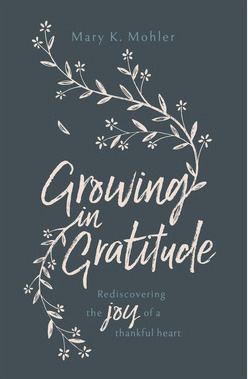
Growing in Gratitude

Growing in Gratitude, Mary K. Mohler 

How thankful are you? As you progress in the faith are you growing in gratitude? Mary Mohler wants to encourage Christian women to consider whether their faith in God results in overflowing thanksgiving, for it certainly should.
“Wouldn’t it be wonderful if gratitude was one of the first things that comes to mind when people think about believers in Jesus Christ... The world should be struck by how grateful we are for the gifts we wholeheartedly believe we possess from God alone.”

Mohler introduces us to two types of gratitude:

  • Natural gratitude: thankfulness for blessing received, for good gifts. This is often the reaction to good news, or a near miss, ‘Thank God!’ There is no real foundation for this thanks.
  • Gracious gratitude: thankfulness to God himself, for who he is. This focuses on praising God for his character and love, and that we can be in a relationship with him.

I found this to be a very insightful point, to consider whether you only thank God for his gifts or you truly thank him for who he is, that being one of the marks of true Christian gratitude. It has struck me as I consider some of the things we thank God for when we say grace before meals.

Over four chapters she then covers four life circumstances with hindrances to gratitude: a burden for the lost, busyness, discontent over circumstance or suffering, and doubt. All are good starting points for each topic, but I really felt each was a bit light, considering the subject matter. I did appreciate her dealing with our burden for the lost upfront, it’s not something that would always be mentioned in this context.

Mohler then turns to how we can thank God for the challenges of life as well as the blessings. Using the language of thorns, echoing Paul talking about the thorn that plagued him, she gives ten ways we can thank God for challenges. These are really helpful for they encourage us to see beyond our current situation and to what God might doing through it, through biblical promises. So we can thank God that whether or not we escape this affliction, our life is hidden with Christ in God, he will not leave or forsake us. We can thank God for the lesson we are learning, that God promises it will not overwhelm us, that it may encourage others, and so on.

The final chapter gives some practical ideas for thankfulness and encouraging others, including expressing thanks to your family members, general courtesy, teaching children to be thankful, and taking the time to communicate with people through written notes and proper thank you cards. Finishing essentially with letter writing seemed an odd place to end, and while she is correct at many levels (and I agree about the lack of effort people make with thank you cards, for mass produced cards are not a proper thank you), I found myself wondering, really, this is where you want to leave it?

Her concluding comments did bring it back to Christ again,
“As we grow in maturity in the grace and knowledge of our Lord Jesus, we will discover new reasons to praising even as we find new ways to thank God for characteristics he has held since eternity past.”
This is a short, primer book which starts the reader on the path of gratitude. It is by no means extensive, but it is a very helpful beginning point. Her biblical referencing points us to to God and Christ and the wonderful reasons we have to be thankful. She raises hindrances to gratitude honestly and carefully, and encourages us to think about our own gratitude, and why it may not be so strong at times. All in all, an encouraging little book for those that long to rediscover the joy of a thankful heart.

Monday, May 13, 2019

Temeraire

Temeraire, Naomi Novik 

After having enjoyed Spinning Silver and Uprooted, I then turned to Naomi Novik’s established nine book series, Temeraire.

It opens with English naval captain, Laurence, taking control of a French vessel in the Napoleonic Wars. The French have fought admirably, and it soon becomes clear why - they are in possession of a rare dragon egg intended for the Emperor.

Dragons are highly valued by by both countries, as they are used in the Air Command to control the skies of battle. The egg is about to hatch and all attention is focussed on it, for a dragon must be harnessed upon hatching or it will run wild. The value of dragons for England is so high, there is no question of not attempting the harness; yet for the person from whom the dragon accepts the harness, it means loss of all previous livelihood and a requirement to enter the Dragon Corps, a rough and undervalued legion of the armed forces.

When the dragonet hatches it’s eyes meet Lawrence’s and he speaks to him, forming an instant bond. Lawrence is initially horrified and distraught, for all plans of continuing in the navy are now dashed and he must make his way to join the Corps.

Yet it very quickly becomes apparent that Temeraire is no ordinary dragon. He is very quick to learn, understand and reason. His high level of language ability and relational skills mean a strong and permanent bond quickly forms between him and Lawrence.

As he moves to the training school and gets to know other captains and their dragons, it seems the rumours about these men are false, and these are good, honest men who truly love the dragons in their care.

The book charts their Lawrence and Temeraire’s friendship as well as those around them, as they train and prepare for a major battle against Napoleon.

It’s a great idea, introducing the concept of dragons into a world we are already familiar with and into a time of history that is already well documented. I have commented before (The Rain Wild Chronicles) on Robin Hobb’s books that I find the regular writing about dragons fascinating - why do they occupy such thought in human minds? In fact, these books would be enjoyed by anyone who has also enjoyed Hobb’s series. There are some strong similarities between them and there is an ‘old-fashioned’ style to both, that is: no bad language, really only allusions to sex, and the violence is all in acts of war. As such, they would be perfectly suitable to younger readers too (aged 14+) who enjoyed some old fashioned warfare ideas with a mythical element woven in. In fact the writing even feels like it was written at the time it is set, and there are strong elements of honour, valour and doing the right thing, even at great personal cost.

Later books include travel to China and amazement about the different dragons there. There are ongoing skirmishes with France in warfare, and travels throughout Africa, Australia and South America. As time goes on, Temeraire increasingly wants to fight for the rights of dragons, and there are parallels to the push to end slavery which is being championed at the same time by Wilberforce.

I really enjoyed this series, and each book captured my attention in different ways. Sometimes the battle scenes or warfare were extended, and at times the political implications were a little harder to grasp, but overall it is a wonderfully interesting and creative tale about the bond between Laurence and Temeraire and the choices they made as they fought for their country.

Friday, May 10, 2019

I Can Only Imagine

I Can Only Imagine

This movie tells the story behind the #1 single by Christian rock band, MercyMe. For those that know the song, you are already aware it talks about what it might be like when we meet Jesus in heaven:
Surrounded by Your glory
What will my heart feel?
Will I dance for You, Jesus
Or in awe of You be still?
Will I stand in Your presence
Or to my knees will I fall?
Will I sing hallelujah?
Will I be able to speak at all?
I can only imagine
I can only imagine
It’s a song that has resonated with many believers as they try to grasp what heaven may be like. Written by lead singer Bart Millard, apparently the song lyrics were written in about 10 minutes, but not surprisingly, there is a life of experience behind them.

At this point, if you want to just watch the movie for what it is, don’t read any further (I had no idea going in what it would be about). But if you want the same amount of information you would get if you read any other review online, here goes.

Millard had a very difficult childhood with his abusive father. His mother left when he was about 13 and it seems the only thing that held Millard together was his faith, having been part of youth camps and church. He left home as soon as he possibly could, joining with other musicians to create band MercyMe. His father however, is being challenged by his own life and is seeking redemption from Christ and his son. When he is diagnosed with terminal cancer, he and Bart are forced to confront the past and figure out their future.

It’s a very powerful movie, obviously with strong themes. Anyone with a history of domestic abuse should be warned that there could be triggers in this movie. Having said that, it is not shown too overtly (although it is present), and as such, we watched it as a family. While it was serious subject matter, and not a topic we have viewed on the screen as a family before, the representation of it was suitable for Miss 11.5 and up, with Miss 14 and Mr 16 grasping even more.

In the end, it’s a movie of great hope, with a marvellous reminder that God’s amazing grace is available for all who will receive it, and change in this life is truly possible for those that seek it.

Monday, May 6, 2019

Homes

Homes, Abu Bakr al Rabeeah with Winnie Yeung

Homes: A Refugee Story is written by now 18-year-old Abu Bakr al Rabeeah, with the assistance of his teacher Winnie Yeung, charting his childhood as a refugee. Born in Iraq in 2001, his memories of his homeland are happy:
“My childhood in Iraq was a sweet one. There was laughter and joy: rich, just like the syrupy knafa cheese pastries I loved so much. And my red bike… That’s what life was: friends and soccer.” 
Abu Bakr’s father’s family was Shi’a, but he raised his own family as Sunni, and “where we lived the divisions between the two denominations of Islam hung heavy in the air...He couldn’t ward off the disapproving grumbles of his own family; instead, he taught us to meet those painful arrows with love and acceptance, to leave it in God’s hands.”

When the neighbours started finding bullets taped to their front door, threats of beheading came to extended family, and finally a death threat that named Abu Bakr arrived on the doorstep, his father decided it was time to leave and they moved to Homs in Syria. Syria was an interim step assuming things were likely to get worse and the family applied for refugee status, and then opened a bakery in Homs.

The next four years were spent in Syria as things slowly unravelled. The family were there for massacres, bombings and multiple shootings:
“That’s how it was in Syria: when we heard an explosion, we ran towards the chaos. Often the police and ambulance was late arriving, if they arrived at all, so we took care of each other. After every explosion, streets were clotted with civilians doing whatever they could to help, binding wounds, driving the worst cases to hospital.”
“When most people hear massacre, they picture body bags and blood. But this is what massacres felt like for me: the tense, stale air of a bedroom with too many breathing bodies in it. Finding quiet ways to pass the frightful hours, trying your best to block the sounds from flooding your brain.”
The times of violence are intertwined with daily life: school soccer, video frames, mosque and family.  Cousins played FIFA 13 and Grand Theft Auto and texted regularly. There was a time he collected the bullet casings he found on the street. When his father found out he said “Do you know what this casing means? It means someone shot a gun. They shot at another person. That bullet might have hurt someone, or killed someone... I don’t want you playing with the anymore. I don’t want any of these in our home, in the bakery. This is not who we are.”

There is an honesty as he came to terms with what was around him:
“The sad truth was, you could not live in Syria and have a clean heart. How could you, when you live in a place where you’re randomly shot at and car bombs explode outside your home? I wanted my heart to be pure, but already I hated people and I hated parts of my life. Sometime I even hated my family. I questioned my faith and my religion.”
“Knowledge that we never really wanted to know filtered into our lives. Our ears could pick the out the differences between mortars, Grad rockets, and car bombs. We could tell the high notes of the metallic smell of fresh blood on the streets from the low reek of a corpse waiting for days to be found in the rubble… We became sensitive gazelles, always stopping to scan and listen. It wasn’t a conscious choice – it simply became part of our walking and being.”
In 2014, the family’s refugee status was approved and the UN arranged their resettlement in Canada. Their travel, new schools and language learning are described as the family tried to make a new home:
“Even though Father was doing his best to hold us together, we were each so wrapped in our own kinds of loneliness that we got used to our little islands of grief… It was a relief to be in a place free of the shabiha and snipers, but none of us had ever imagined the solitude we would face. We had traded the raucous, tearing war for a suffocating, quiet safety. No one could tell which was better, which was worse. It was both and neither.”
In Year 9, Ms Yeung is his ESL teacher, and having started to grow in his English language confidence, she asks him, “what is your secret wish?” After admitting it is to be a soccer player, he then confides, remembering “my friends, the soccer games, the bombs, my cousins who are my brothers. How they told me to never forget. I realize I carry Syria in my heart. I’m not sure if I’m ready to do this yet but I decide to trust and so, softy, I tell Ms. Yeung, “I want to share my story.””

This is an honest, raw, short, heart-warming account from the perspective of a boy growing up in a war-torn nation. As such, at times it was simpler than I was expecting when I started. Upon reflection though, he has provided just what we need to know – what life is like for children in these regions. For those of us (and our children) who have absolutely no understanding of what it would be like to live in a place like Syria, it is still a childhood we recognise, but through a very different lens of experience. He has written with a pervasive hope and optimism despite the situation, and portrays his own faith in a positive, tolerant way. I highly recommend this for young teens right up to adults, and I imagine it will soon be placed on many high school reading lists.

Monday, April 29, 2019

The Scarlet Thread

The Scarlet Thread, Francine Rivers

In this book, Rivers weaves together two accounts. First, set in modern times, is the account of Sierra and her husband Alex. Brought together as childhood sweethearts they have now been married 13 years with two children. Alex has taken a job without her knowledge and decided to move the family to Los Angeles. Sierra is unwilling, negative and complains constantly. Her mother, a faithful Christian, tries to encourage her along the way but Sierra’s discontent is persistent. As Alex’s job takes off with much more money and a whole new range of friends, it is clear their lives are taking different paths.

Woven throughout are the writings of Mary Kathryn McMurray, one of the family’s ancestors. It starts with her childhood learning entries as her mother taught her, and moves to a journal as she records her life losing parents and siblings, marrying, having her own children, and setting out across America headed to the west in 1847.

Rivers has done a good job of having two stories with similarities but that are different enough to be interesting. Both women were very negative towards God and did not think that he loved them. Over time their hearts were changed, but it took tough circumstances to refine them. Mary‘s accounts show what life was really like in those early days as pioneers moved across the country: there were hardships, death and uncertainty. While Sierra does not face life-threatening situations, her struggles as she and Alex move apart, and as she comes to re-commit her life to the Lord, echo elements of Mary’s life.

It was an encouraging read and one that brought home the cost of following Jesus and discovering what forgiveness really means, yet also seeing the great joy and delight he brings in all aspects of life. Both women learnt to trust in God in all situations and to truly see that in all things he was working for good. Both had godly older women in their youth who encouraged them and taught them the truth which bore fruit in later years. There is an encouragement in reading books like this: they strengthen your faith, challenge your own convictions and remind us of what truly matters.

Friday, April 26, 2019

The Librarian of Auschwitz

The Librarian of Auschwitz, Antonio Iturbe

It’s very hard to summarise this book, the simplest I have is: harrowing, yet hopeful. Iturbe has written a story based on the account of Dita Kraus, a fourteen-year-old girl who operated the library at Auschwitz Concentration Camp. As he says, “The bricks used to construct this story are facts, and they are held together in these pages with a mortar of fiction”.

Block 31 in the family camp in Auschwitz is unusual: the Nazis have agreed to allow children to gather in one place to play. What they don’t realise is that some enterprising adults, led by Freddy Hirsch, have surreptitiously started a school: “Each time someone stops to tell a story and children listen a school has been established”. Books are forbidden in the camp, because:
“Throughout history, all dictators, tyrants, and oppressors, whatever their ideology … have had one thing in common: the vicious persecution of the written word. Books are extremely dangerous; they make people think.”
Yet eight small volumes have surreptitiously made their way into Freddy’s hands, including A Short History of the World (H.G. Wells), A Russian Grammar, an atlas, and a Basic Treatise on Geometry. He gives Dita the responsibility of caring for them and hiding them from Nazi eyes:
“Dita caressed the books. They were broken and scratched, worn, with reddish patches of mildew; some were mutilated. But without them, the wisdom of centuries of civilizations might be lost … She would protect them with her life.”
They also have a few ‘living books’: adults who remember certain stories well enough to tell them to the children.

All residents of the family camp know they are part of some experiment, with a decision to be made about them in six months’ time, but no one knows what might be coming. Resident SS medical office, Dr Mengele, also known as Dr Death, may be wanting to use them in his terrifying experiments, or perhaps it is all part of the propaganda machine of the war.

Included are flashbacks of Dita’s earlier years and family life in Austria. There are moments of humanity as people care for one another and grieve their loved ones. There is also the horror of disease and permanent death, the threat of starvation, the choices people must make to stay alive and the sad reality of what some people must do to take care of themselves. There are awful descriptions of death by gas chamber, piles of bodies being thrown in mass open graves, and chilling accounts of what happens in experiments.

There are chilling matter of fact statements like: “during the night of March 8, 1944, 3.792 prisoner from the family camp BIIb were gassed and then incinerated in Crematorium 111 or Auschwitz-Birkenau.” Following this horrendous night, the remaining prisoners find a “black snowfall the likes of which has never been seen before” as the ashes of their friends and family members fall upon them: ‘“It’s our friends … They’ve come back”. They’ll never leave Auschwitz again.’

There is the recognition of humanity:
“If you look more carefully, all you can see is people, nothing more. Fragile, corruptible people. Capable of the best and the worst.”
This is highly recommended reading, while acknowledging it is also disturbing and confronting. I realise there are elements of fiction here, but there are also major aspects of fact, and it’s one way to be reminded of what happened in WWII to millions of people. As there is a continued rise in nationalism in many countries today, we need to remember what can happen when extreme versions take over: a truly horrific reality that many lived through, and even more died from.