Monday, March 1, 2021

Apocalypse Never

Apocalypse Never, Michael Shellenberger

This book got a fair bit of attention when it was released in 2020, for it seemed that an environmental activist was suddenly saying that perhaps things weren’t as dire as environmental alarmists have been claiming for years.

As such, I was intrigued to read it, having studied environmental science and worked in the field many years ago. I continue to wonder what it means to be responsible stewards of God’s creation, through measured rather than extreme responses to environmental impacts. Things are so much more complicated than simplistic headlines suggest. This is where Shellenberger provides insight, considering issues from multiple perspectives including energy usage and fuel density, land-use, wildlife preservation, industrialisation, poverty and economics. He notes how the developed world has tried to impose their newly established environmental morality on developing nations, preventing their progress in ways they never had to deal with themselves.

Shellenberger has been an environmental activist for 30 years, researching and writing on environmental issues.
“Much of what people are being told about the environment, including the climate, is wrong, and we desperately need to get it right. I decided to write Apocalypse Never after getting fed up with the exaggeration, alarmism, and extremism that are the enemy of a positive, humanistic, and rational environmentalism….Apocalypse Never offers a defence of what one might call mainstream ethics. It makes the moral case for humanism, of both secular and religious variants, against the anti-humanism of apocalyptic environmentalism.”
Over 12 chapters Shellenberger highlights an alarmist environmental issue and then seeks to interact with it from numerous perspectives, showing that it’s not as simple as suggested and often the proposed solution is actually harmful to the environment, people and the economy.

Many will be those that we are familiar with, including: 
  • that rainforest burning is destroying the earth’s lungs 
  • that plastic straws are overrunning the world’s oceans 
  • that sweatshops are destroying the planet 
  • that vegetarianism is the answer to climate change 
  • that sea level rises are killing the polar bears 
  • that fishing practices are a problem for oceans 
  • that renewable energy is the solution to all energy problems.
I am not all over each of these topics (as I guess few people would be), and at times I found it hard to figure out which direction each chapter was going; it started somewhere and ended up somewhere else. However I suspect this is the reality of the complex nature of issues when dealing on the world scale. Everything is multifaceted: the fuels people use and the way products are produced affects the world. Energy use has different impacts on different people, as do land-use and waste products.

Those in grinding poverty need reliable energy supply which would reduce charcoal production and land-clearing. In poorer countries, waste management needs to be addressed, but probably after sewer and stormwater systems are prioritised. He raises the question of whether the survival of animals that we deem attractive should be prioritised over the people struggling to live on the same land.

He looks at the higher land use required by renewable energy, bioplastics and other biofuel products. He talks about the advantages and benefits to wildlife of plastic replacements (eg. no more tortoiseshell or ivory since plastics took over). He is unwaveringly and overwhelmingly favourable about nuclear power as the solution to energy supply and production problems. He takes a close look at how oil and gas interests have been funding environmental groups to prevent nuclear power plant production.
“The fact that the energy density of fuels, and the power density of their extraction, determine their environmental impact should be taught in every environmental studies class. Unfortunately, it is not. There is a psychological and ideological reason: romantic appeal-to-nature fallacy, where people imagine renewables are more natural than fossil fuels and uranium, and that's what's natural is better for the environment.”
He notes that industrialisation is a good thing, and we should stop trying to prevent developing nations from doing so, for it takes people out of poverty. “Contrary to what I and others have long believed, the positive impacts of manufacturing outweighs the negative ones”. He wonders why we are trying to keep other nations from developing along the same path we have already done, noting our moral arrogance along the way.

I found the final chapters particularly interesting as he tried to bring together the reasons why environmentalism, particularly the extreme versions, have taken such a hold on the Western world. In the end, he concludes, it’s the secular religion of our time:
“Today is the dominant secular religion of the educated, upper-middle-class in most developed and many developing nations. It provides a new story about our collective and individual purpose. It designates good guys and bad guys, heroes and villains. And it does so in the language of science, which provides it with legitimacy.”
On one hand, he suggests environmentalism and vegetarianism is a strong break from the Judeo-Christian religious tradition, particularly because they reject the view that humans have dominion over the earth. But on the other hand, he proposed that it’s a new kind of religion, one that replaces God with nature:
“I believe that secular people are attracted to apocalyptic environmentalism because it meets some of the same psychological and spiritual needs as Judeo-Christianity and other religions.” 
Yet he notes, while religion provides people with meaning, purpose and a guide to positive, pro-social and ethical behaviour, on the other hand:
“The trouble with the new environmental religion is that it has become increasingly apocalyptic, destructive, and self-defeating. It leads its adherents to demonize their opponents, often hypocritically. It drives them to seek to restrict power and prosperity at home and abroad. And it spreads anxiety and depression without meeting the deeper psychological, existential, and spiritual needs it's extensively secular devotees seek…

negativity has triumphed over positivity. In place of love, forgiveness, kindness, and the kingdom and heaven, today’s apocalyptic environmentalism offers fear, anger and the narrow prospects of avoiding extinction.”
It’s a fact-dense book, with many quotes, figures and references. It’s hard to argue with such data, although we also know data can be used to say many things. He notes if he installed a battery and solar system in his home, it would take 17 years to pay off, hardly a great renewable investment financially. He has access to much cheaper power than we do, for a similar system in our home would be paid off in 6 years. At the same time, woven throughout are stories and anecdotes to illustrate his points. There is specific naming and shaming of various people and players, and he doesn’t hesitate to identify those who benefit financially from their stance, being quite harsh about some. Generally, I think it could have been edited better. A quick look at reviews online suggests he has ardent followers and harsh critics in equal measure, which is no great surprise.

I found it an interesting and thought-provoking read. It broadened my understanding of many environmental issues and provided angles to each that I had not considered in detail before. It is more optimistic and more favourable towards humanity than other writings in this field, which appealed to me. Lots of food for thought.

Monday, February 22, 2021

Mini-reviews

The Survivors, Jane Harper

I enjoyed this new offering by Jane Harper, and thought it was as good as The Dry and The Lost Man. It’s a similar style story, with a historical incident that has shaped a community, and a current crime that has occurred. In this case, Kieran has returned to his childhood home in a coastal Tasmanian town with his girlfriend and infant daughter, where the guilt that he carries resurfaces over the death of two men in a major storm years ago. When a girl is found murdered on the beach, tensions in the town start to rise, as people start to remember the past, and point fingers at each other. Harper is skilled storyteller, with realistic and multi-faceted characters, and a depth of narrative.


The Dictionary of Lost Words, Pip Williams 


This wonderful debut novel charts the history of the creation of the first Oxford English Dictionary through the eyes of Esme, the young daughter of one of the lexicographers. As a child she spends her time on the floor the scriptorium, where words are sorted and gathered. As the grows up, she realises there are words not included in the dictionary, those considered vulgar but also many that describe the experiences of everyday women. Williams has skilfully interwoven much of the actual history of the dictionary compilation, including the people involved, with the life experience, joys and struggles of Esme over the decades it takes to publish. What I enjoyed about this book is that is wasn’t predictable. There were a couple of points where I thought I could tell she would take the narrative, but it turned another (and in my opinion) better way. An impressive, enjoyable and insightful book.


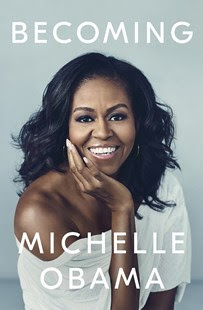
Becoming, Michelle Obama 

A couple of friends mentioned they enjoyed this and I was pleased to finally get to it. Broken into three
sections, Michelle Obama outlines her childhood (Becoming Me), her relationship with Barack (Becoming Us) and the years as First Lady (Becoming More). I knew very little details about her, for he came to office when I was in the midst of baby years, and it wasn’t really on my radar. She’s given a relatively open and insightful account, with details of her own childhood, loving family and early working years. She shares about their marriage, and the ups and downs of campaigning and life in the White House. It is generally gracious, with overwhelmingly positive comments about all her friends and family. It’s not particularly partisan, although as you might expect there are some digs at Republicans, especially Trump. I enjoyed the insight into life in the White House, and how they tried to care for their girls while living there. I appreciated some of her observations about people and relationships, especially marriage: “I understand now that even a happy marriage can be a vexation, that it’s a contract best renewed and renewed again, even quietly and privately - even alone.” Alongside the story, she weaves in her thoughts on race, gender, poverty, education, politics and numerous other topics. Keeping in mind this is an autobiography rather than an analysis, this is still an interesting and thought-provoking read no matter what side of politics you are on.

Monday, February 15, 2021

Anxious People

Anxious People, Fredrik Backman

Some may recall how much I enjoyed Backman’s writing last year. I was looking forward to reading his new offering, Anxious People. While it took me a while to get into it, it turned out to be enjoyable as well - in a different way.
“This story is about a lot of things, but mostly about idiots. So it needs saying from the outset that it's always very easy to declare that other people are idiots, but only if you forget how idiotically difficult being human is. Especially if you have other people you're trying to be a reasonably good human being for."
It starts with a bank robbery that goes awry, then the robber accidentally runs into an apartment with a viewing on, which quickly turns the whole situation into a hostage drama. That sounds dramatic and scary, but it’s not at all, because nothing is quite as it seems.
"The truth is that the bank robber was an adult. There's nothing more revealing about a bank robber’s personality. Because the terrible thing about becoming an adult is being forced to realize that absolutely nobody cares about us, we have to do everything ourselves now, find out how the whole world works… We look around occasionally, at our place of work or at parents’ meetings or out in the street, and realise with horror that everyone else seems to know exactly what they’re doing. We’re the only one who have to pretend."
There are numerous characters and a couple of timelines in this story and you have pay attention, because Backman doesn’t include things without a reason. So a reference to an event ten years ago and who was present is important, as are all the people in the hostage apartment. You need to keep track. But it’s worth it in the end. All the various threads start to intertwine and he cleverly brings it all together.

Each person is slowly revealed. You form an opinion of them, but then with more information are forced to change what you thought. As with Backman’s other books, he has great insights into life and people and a way of expressing them that just works.
“If you've lived with teenagers, you know they only exist for themselves, and their parents have their hands full dealing with the various horrors of life. Both the teenagers’ and their own. [About their grandmother:] They were pleased she answered the phone when they called on her birthday, but the rest of the time they assumed time stood still for her. She was a nice ornament that they only took out at Christmas and Midsummer."
“‘Grandchildren would make him feel important?’
Anna-Lena smiled weakly.
‘Have you ever held a three-year-old by the hand on the way home from pre-school?’
‘No.’
‘You’re never more important than you are then.’”
One of the lovely things about Backman’s stories is that he gives the full story, extending the telling into the future, so you get a sense of completion about how the characters lives will turn out. He did the same in A Man Called Ove, and the Beartown books, and it made the endings even better.

This is definitely an author I have come to appreciate.

Monday, February 8, 2021

A. J. Mackinnon

I discovered A.J. Mackinnon’s travel writing this holidays and loved both of his books. Mackinnon is an Australian high school teacher, mainly in English I think - I imagine if you had him as a teacher, you’d love whatever he taught. He had some of his childhood in Adelaide and is currently a teacher in the Victorian highlands. His writing is beautifully lyrical and descriptive as well as enjoyable and great fun.

The Well at the World’s End (2014) 

This enjoyable true diary is of Mackinnon’s travels from Australia to the Well at the World’s End on a remote Scottish Island around 1990. He decides to travel with virtually no plans and avoiding all air travel. So by yacht, train, bus, car, ship and ferry, he goes to New Zealand, back to Australia, up through Indonesia into Asia and onwards to Europe. He has a similar humorous and self deprecating style to Bill Bryson, but with more a lyrical, fantasy feel, and fewer reflections on culture. It’s a funny and enjoyable read, especially if you happen to have been to any of the numerous destinations he visits.

The Unlikely Voyage of Jack de Crow (2002)

This one charts Mackinnon’s decision to sail a small dinghy from the English / Welsh border down to Bristol in 1998. Of course, the excitement and joy of the whole exercise, plus the encouragement of others, leads him to go back up the Bath River across the canals of England to London. Not satisfied with traversing that country, he crosses the English Channel, and heads across France, Germany and finally ends up in the Black Sea. It’s fantastic. This one I read with Google Maps open in satellite view next to me so I could see exactly where he had gone, not knowing enough specific geography of the area to manage without. 

Both are treasures to read — enjoyable, clever, insightful and just plain fun.

If you just want a taste, it’s worth listening to his two part interview on the podcast “Life in Flux” from Nov 2018. There are a few different details there, as well as some additional pondering on humanity and the impact of great literature. He is a big fan of Narnia, Lord of the Rings, Swallows and Amazons and Dr Doolittle, and all of these have impacted his views of life and his travels.

Monday, February 1, 2021

Phoebe

Phoebe, Paula Gooder

This is a wonderful book that is a delight to read. New Testament scholar Gooder has brought to life, through an imagined story, Phoebe the church deacon referenced in Romans 16:1. Phoebe has just arrived in Rome, carrying Paul’s letter to the churches there, and quickly meets Prisca and Aquila, Andronicus and Junia, Herodion and others mentioned in Romans 16.

In doing so, she brings together facts from the bible, weaves in knowledge of early church life and the Roman world, and then creates a possible story around it all.

Gooder attempts to answer possible questions like: Who was Phoebe? Why was she so keen to come to Rome to start preparations for Paul’s planned trip to Spain? How do the Christians in Rome react to Paul’s letter? And what is life like for the average Roman, Christian, slave, and merchant?

Of course, much is imagined and needs to be read that way. However, it is also well researched and explained. In fact, one third of the book is Gooder’s extensive notes collated by chapter. These are excellent and give further explanation to references in the book. She explains what she has done and why, giving both biblical and doctrinal notes, and historical evidence about the time. I read the relevant notes after each chapter and it seemed a good way to balance the information she explained.

While it is an imagining, it is an encouraging one. People are converted, changed by the message of Jesus and the writings of Paul. You get an insight into what conversion meant in a society that cared about status - both for slaves and also for nobles. Peter makes an appearance, as does Timothy. Followers recount their memories of Jesus. The church meets, prays and cares for the needy.

Much of what concerns me about biblically anchored fiction is the way it draws the reader into a dramatic narrative based around bible characters, extending what we actually know into a drama. But the way Gooder has done this avoids all that: there is no intrigue, no arch enemies and no impossible love stories. As such Gooder has written a biblical fiction I am much more comfortable with, even while knowing it is is still fiction.

An encouraging and enjoyable book.

Monday, January 25, 2021

WonderFull: Ancient Psalms Ever New

WonderFull, Marty Machowski 


Marty Machowski, author of numerous Christian children’s books, family devotionals, and parenting books has now written WonderFull: Ancient Psalms Ever New with the aim of bringing the Psalms to life to children.

I’ve always been surprised how children’s storybook bibles cling to the narratives of Scripture, not even trying to include Psalms or wisdom literature. Thankfully, Machowski has tried to fill that gap. In WonderFull, he has logically included all 150 Psalms in order, simply yet profoundly displaying to children and parents alike the order of the five books within the Psalms, and the groupings within the actual Psalms themselves. Some Psalms are looked at it more detail, with a page or two of explanation. The majority are included within groups, with just a few sentences about each. 


The details may include the setting of the Psalm, further explanation, how the Psalm may point to Jesus, some encouragement and direction for response and prayer. Parents will definitely need to be reading this with their children (and possibly even young teens), to help them process the information. When only one point is summarised from a Psalm, there’s a fair chance a children will have questions about other parts of it. Yet, if parents (and their kids) were keen to make this book a priority, I could imagine there would be great benefit for both as they read the Psalms together. Many of the suggestions are responsive, such as writing a prayer, so the readers would want to have time without rushing. 


Woven through the reading of the Psalms is story of Oliver and his Grandpa. His Grandpa is sick and Oliver and his parents have come to visit, but Oliver has also had some problems at school. Grandpa and Oliver read the Psalms together, and over the course of the year Oliver is changed by God’s word and Grandpa goes home to be with Jesus. It’s a lovely overarching storyline that shows how God’s word in the Psalms can expose, sustain, encourage and comfort. 


Obviously as it includes every Psalm, and is designed for you to take your time, this is a large book and a long term undertaking. Even daily it would take almost 6 months. I think once or twice a week would be more manageable for many families, meaning it could take a few years to get through.

It is beautifully illustrated by Andy McGuire (like TheOlogy), and matches it in size and feel, making them feel like companion volumes. They are both hardcover, and wonderful to view. (Also adding to the price, in Australia it’s currently $40)

I am overall very positive about this book, but there were a few things that I wondered about:
  • It's a massive undertaking to comment on every Psalm in a way children across multiple ages can comprehend. Sometimes I felt it was excellent, other times I wondered if Machowski has bitten off more than he could chew. Every Psalm could have had more explanation, and some parents may be left wondering how to explain all the bits that are left out. 
  • Linked to this, as I have said, it’s lot of work for parents, and those who are not confident in reading the bible for themselves might be nervous. I’m always keen to encourage parents to read the bible with their kids, try to explain it and work it through together with them, but I wonder if some might find this a bit more than they can manage. 
  • There are very minor questions about some exegesis at points. eg. Ps 3 claims David prayed this prayer, and the next day he won against Absalom, this is not evident in the Psalm. Not major, but I noticed a few. 
  • I was surprised by the occasional switch from ESV to NIV. As this is a book that encourages you to read each Psalm yourself, I would have thought staying with one translation throughout would be better and reduce any confusion. 
  • I do wonder if it would feel repetitive after a while. Many of the applications and suggestions are similar, which is natural response to the Psalms, but it might be noticeable. 
I am encouraged by Machowski’s desire to bring all the bible to life for children. WonderFull helps children to dwell in the Psalms, see God is ever present and caring in their lives, and how they point them to Jesus, their true Saviour and Lord.


I was given a ecopy of this book in exchange for an honest review. 

Tuesday, January 19, 2021

Mini fiction reviews

When it drops, Alex Dyson

This is a great debut novel by former triple j presenter, Alex Dyson. Sixteen year old Caleb is a songwriter and nerd, and happy to be left out of the limelight. One of his songs is about the girl he has had a crush on for years, Ella. Of course, that’s just his secret, until his little brother grabs an opportunity to share it online. Is disaster looming? What if Ella finds out? When some in the music industry take notice, is it just possible this could be his big break? This is very fun. There are the usual amusing and awkward scenes in school and with friends, as well as humorous insights into the music industry. What took the cake for me though was the comments on the high school discipline system:

“RUB stands for Rough, Undisciplined Boys, which is one of many categories we utilise here at Riverview for administrative and disciplinary purposes. For example, occasionally we encounter a GIMP at this school, or Girl Initiating Malevolent Practices. Last week we had quite a serious outbreak of HERPES, or Hurtful Event Rendering Pupil Extremely Sad.”

Enjoyable for teens and adults alike.


Pandemic, A. G. Riddle

A fast paced action book following the events of a pandemic over about 2 weeks. Two young men in Africa present to a local hospital with symptoms suspiciously like Ebola. The CDC despatches their experts to assist with identification and management. But at the same time thousands of people across the globe are developing flu like symptoms. Could they be related? How could it spread so fast?

It might seem too close to home at the moment, but it’s not about what a pandemic does to people and societies. Rather, it’s a chase around the globe, as various characters try to solve this high stakes mystery, where nothing it quite as it seems. There appears to be a mighty shadow organisation managing everything, but to what ultimate end?

Riddle has blended actual history with fiction, and science with fantasy, and it’s a reasonably enjoyable mix. There are times where characters talk about having faith, or hope, but there’s no indication of what that faith or hope should be in - the ingenuity of the human race, the ability to survive, kindness of others? It’s unclear. He does seem to be raising the question of what the larger purpose of mankind is and why we exist, although comes to no answers, beyond perhaps is suggesting that without suffering and pain the world would be better.

Either way, it’s hard to tell because it leaves you hanging and having to read Book 2 - Genome, which I haven’t managed to get to yet.


Stoner, John Wiliams

Written in 1965, Williams tells the story of William Stoner, from when he first went to the University of Missouri as a freshman in 1910, where he stayed as a lecturer in the Department of English until his death in 1956. My understanding is that this is a literary classic. I enjoyed reading it and was at times reminded of the style of Gilead (link). There was a similar continuous storytelling with no particular climax, yet much of interest along the way. You see how his life unfolds, with marriage, a child, various university stoushes and friendships. However, in the end, I found Stoner a sad figure. He had a life of very little joy or purpose, as he himself pondered “He found himself wonderful if his life were worth the living, if it had ever been. It was a question he suspected that came to all men at one time or another; he wondered if it came to them with such impersonal force as it came to him.” Many of those around him were much more extreme characters that he was, I particularly found his wife hard to imagine in reality. Those with a broader understanding of literature may appreciate more of the references within the book itself.


The Evening and the Morning, Ken Follett

Follett has already written three books about Kingsbridge, set in the 1100s (Pillars of the Earth), 1300s (World Without End) and 1500s (Column of Fire). This fourth is a prequel, set around 1000AD and moves around the stories of a young shipbuilder Edgar, a Norman noblewoman Ragna who moves to England to marry, and brother Aldred, a pious monk. As per usual with Follett’s books, it's an epic tale told over hundreds of pages. It also fits his usual style, where the main characters are basically good, kind people who are stymied at almost every turn by the treacherous, violent leaders and churchmen who stand against them. As I noted with Column of Fire, there is a crassness towards women in Follett’s writing although I am still uncertain whether that it reflecting the setting or the author. I do enjoy his tales though, they bring aspects of the past to life. 

Monday, January 11, 2021

The Dingo's Got My Baby

The Dingo’s Got My Baby, Lindy Chamberlain-Creighton

Probably every Australian over thirty will have heard of the Chamberlains. (I have established my children had not). Michael and Lindy became household names when in 1980 their nine-week old daughter Azaria was taken by a dingo from a tent in a camping ground near Ayers Rock. While the initial inquest upheld the finding of death by dingo, the Northern Territory government later accused Lindy Chamberlain of murder, and she was sentenced to life in prison. After numerous appeals, she was finally remitted and released after about three years of imprisonment. Later followed a Royal Commission and finally an official acknowledgement of baby Azaria’s cause of death.

It was a case that caused strong emotion and opinions, with many believing the media coverage that Lindy had killed Azaria, while others campaigned for justice to a hostile audience. She notes later:
"Many people were not game to stand up and say what they believed. There was no sitting on the fence in our case, and people who had the guts to stand up and make a public stand for the Chamberlains’ innocence certainly needed the guts to live with the flak that came afterwards." 
I never knew much beyond the basic facts, being a child myself at the time. However, the phrase “a dingo’s got my baby” became part of the Australian lexicon and was often used to get a laugh, much to our shame. I remember it being a joke on a Seinfeld episode.

She is clear from the beginning this is her story, not Michael’s and his story is for him to tell. It’s very detailed, the ebook I read was 900+ pages. There are detailed sections on the camping trip itself and the first inquest, the second investigation and trial, the prison years, and then once she was released and the ongoing fight for justice. So it’s very long, and probably would have benefited from a stronger edit. However, I can see why it was kept as is - this is her opportunity to say everything she wants to say. She was denied justice, falsely accused, treated dreadfully by the Northern Territory government and police, and was talked about in virtually every household in Australia (and many overseas). This is one opportunity to put everything in one place and make it her record. She has no hesitation with fully naming and including photographs of everyone on both sides - lawyers, police, forensic scientists. She wasn’t nasty, but didn’t hesitate to name incompetence, unkindness and mismanagement. She is open about prison, both the kindness of some guards and the sheer unpleasantness of others, as well as the variety of prisoners she lived with.

Even with the length, it is an engrossing read. I read it solidly for a week on holidays and struggled to put it down.

Lindy is a Christian, a seventh-day Adventist, and that shines through clearly. There are numerous times she refers to her faith, or her reliance on God. She has confidence that God has been with her through this time, and how crucial that has been.
“It is only when your faith is tested that you know whether you have any or not. It is only when your temper is teased and provoked to the limit and you manage to control it, that you know you have succeeded. It is no use saying, ‘I have got self control’ when there is nothing to provoke it."
“I thought of Job, who suffered horribly without knowing why, only remaining faithful to God, his Lord and Master. God rewarded him in the end, but still he did not know why. Maybe we will never find out in this world either. I'm sure Job has many questions to ask God when he sees him. I have a few to ask Him, too. Maybe we can queue up together. But suffering is not God's will. He will help us to bear what we must, and to hang on until the end, but it's not something he delights in."
Reflecting on prison:
“When the doors clang shut behind you, locking you in, and you have nothing to rely on except your own strength of body and mind, it can be terrifying if you let it. At a time like this, if you thought God was a figment of your imagination, He now either becomes a very real and personal friend, or is totally disregarded as a mirage only relevant to a distant Biblical past. Like others before me, I came to that knowledge while in prison. There is no way that one can put this into words, it is simply something that slowly but surely happens. Time and time when there was no one else to turn to, nowhere else to go, I could turn to God and say, ‘Lord you've got to help me here. I can't manage on my own’.”
“There is no doubt in my mind that if it hadn't been for God's help and strength, plus grit and determination, I would have landed up in a mental asylum. At times I felt myself so low I knew I was losing my grip, not only on life but on reality. I knew I had to find it again in a hurry; only God could give me the strength and courage I needed for that and calm me down." 
There are strong words throughout about the problems with the justice system, and the pointlessness of much incarceration: “I believe the only thing ever taught in prisons is the perfecting of old and the learning of new criminal skills."

Throughout is woven the story of the family and how they were affected: the two older boys, baby Kahlia born while she was in custody, her and Michael’s divorce and then her marriage to Rick, about whom she fondly says:
“To have a supportive man who is both gentle and strong behind you who loves you for who you are without a desire to change you is the most empowering thing I know. To know you are loved and supported even when you make mistakes and are no longer young or glamorous lets you become a whole person."
The book was first published in 1990, but it’s had later additions and the version I read was published in 2015, as more things have happened in the case and to this family. Azaria would have been 40 this year, and this case is still fresh in many people’s minds and part of public life. Yet, as Lindy says:
“People forget that my family has a private life. We have gone through a private hell as well as a private happiness in our battle to survive the last twenty-four years and most of our biggest battles have been fought in private."
No matter what you think of the Chamberlains or the case, this is a book well worth reading. This is part of our nation’s history, and not a proud one, and these are real people who have gone through immense suffering, yet have come out of it stronger and completely reliant on God.

Monday, January 4, 2021

I Still Do

I Still Do, Dave Harvey 

As far as I can tell, there aren’t many marriage books that focus on later life. For that reason, I was very excited to read this book and see how Harvey addressed the challenges that marriages face over the long haul.

While it is good and helpful, it isn’t as strong a treatment as I was hoping for. Harvey has also written When sinners say "I do", and this appears to be partially a corrective, noting that yes, two sinners are living together but that not all struggles in a marriage can be narrowed down to sin. 
"I want to help you identify profound factors that shape your marriage – influences that can’t so easily be traced back to sinful desires. We often encounter weaknesses or personality differences in marriage and instantly try to moralise them. We assign motives and then ascribe sin to spouse’s actions and omissions. But cultivating a durable marriage involves recognising that our brokenness is broader than sin."
"To thrive in marriage over the long haul we need to care for our spouse as a whole person. That means seeing how God’s good news speaks not only to their sin but also to their suffering, weakness, family history, disappointed dreams, physical limitations, and changes in sexual appetite."
He breaks the books into three sections: starting together, sticking together and ending together. He has structured chapters around the idea of ‘defining moments’, when you realise something crucial about your marriage, yourself or your partner.

Early chapters consider the realisation that our brokenness (and our spouse’s) is broader than sin and how we need to see our spouse as a whole person:
“The need to see our spouse as a whole person – a person full of sin and grace, weakness and strength; a person with a broken and beautiful human body wrapped around an eternal soul.”
He then looks at how we manage and accept blame and weakness in marriage, as he says: “Marriage is the union of two people on a journey to discover their weakness.”

The central section considers the moment when you realise family can’t replace church, which was helpful but focussed on the nuclear family (how you manage your children etc). It would have been interesting to see this extended to parents, in-laws and extended family and what it means to for us to prioritise the family of God.

I found this section the most helpful including how you face your spouse’s suffering, what it means for sex to change with age, and what it means to really understand mercy,
"Marriage, particularly an ageing one, becomes an awakening to the mercy of God. A place of safety where we see each other as God sees us (as we are, without any masks) and where we learn to respond to the way he does (with kindness and compassion). In this way, marriage becomes a sanctuary. For two people growing older together, it’s a reprieve from the world, a place of refuge – a home where two sinners can dwell peaceably in the comfort of mercy."
The final section considers when dreams disappoint as well as when the children leave. It was a shame that the focus in this chapter was on children who leave to marry, it could have been written in a way that made it broader, rather than just passing references to single children also moving out. Many couples have children leave home long before they are married, if they ever do, and it seemed a missed opportunity to consider that it more depth.
"Letting go of a son or daughter is a significant test. It reveals how much we trust God’s sovereignty in our kids’ lives; it reveals where our own emotional security is rooted; and it reveals, in a significant way, what we truly understand about leadership."

He finishes with the idea that closure is overrated.
“What does a married couple do when hard things continue, when the problems seem hopelessly open-ended? How do we make sense of situations where resolution would appear to bring so much glory to God? How do we go on when that experience remains elusive and unreachable, taunting our hopes? How should we respond when a lack of resolution becomes so oppressive and burdensome that a marriage risks collapsing under the strain?”
There is an honesty here about the struggles that some face over the course of a marriage, and an encouragement to realise some things never get tied up neatly in a bow.

In the end, there are good things covered here and these are certainly issues long term couples need to consider, but I felt the way it was written at times hindered rather than helped.

Firstly, while there are good principles, I felt the whole book stays one step away from hard practical application. The tables at the end of each chapter help to consider the content of each chapter, but there could have been more questions or things for couples to work through together. For example I think many readers would want more detail about the implications of their sex life changing, what it might look like and what continuing to love and serve each other with grace could look like in later years.

Secondly, while the topics he covers are good, I’m not convinced the wording used is the most helpful. I wonder if some Christians looking at the chapter headings might not immediately see the relevance for themselves.

Thirdly, there is an over-reliance on illustrations, and they often muddy the application rather than clarifying it. At one point over about five pages, he references King Tut’s beard, a hurricane, Star Wars, Hillbilly Elegy, CS Lewis, King Lear and John Owen. The final chapter is an extended retelling of Leo Tolstoy’s The Death of Ivan Ilyich, which seemed a convoluted way to finish. It might be readily applicable if you have read it and appreciated it but otherwise you have to do the work to understand that story and then figure out why it is being used. It would have been much more powerful and helpful if numerous illustrations and stories were dropped and instead direct use of God’s word and then application to marriage was prioritised.

This is a helpful treatment on marriage into later life, and one I will probably return to again in future years. Harvey has certainly emphasised the gospel of grace and mercy and how that can affect all aspects of marriage and life together. Taking time to identify and work though some of the defining moments of a marriage will have benefit for every couple, whether they have been married five years or fifty.

Monday, December 21, 2020

Being Mortal

Being Mortal, Atul Gawande

Gawande has written this sobering, honest, critical and yet hopeful book “about the modern experience of mortality - about what it’s like to be creatures who age and die, how medicine has changed the experience and how it hasn’t, where our ideas about how to deal with our finitude have got the reality wrong.” 

As he says:
“Our reluctance to honestly examine the experience of aging and dying has increased the harm we inflict on people and denied them the basic comforts they most need."
He considers the medicalisation and institutionalisation of dying, and how it comes at cross purposes to what many want in their final days and years: choice over whether to remain in your own home, freedom over what you eat & drink, how we socialise (or not) with others, and the ability to make your own decisions about care, treatment and death.

He moves through topics considering how independent we are through most of life, but things start to fall apart as bodies decay and age naturally. We become creatures who need more help, and who become more dependent on others.

He consider what he terms the failure of the nursing home experiment, noting they were never designed for the purposes to which they have been put, with the three things that plague them: boredom, loneliness, helplessness:
“Our elderly are left with a controlled and supervised existence, a medically designed answer to unfixable problems, a life designed to be safe but empty of anything they care about.”
Gawande uses personal stories to illustrate many of his points, including very sad situations of people over-treated with increasingly painful and pointless procedures, and given false hope, who, along with their family, were never properly prepared for their inevitable death. He contrasts this with well done hospice care. He also weaves the story of his own father’s decline and death, and the choices they had to make along the way.
“Our responsibility, in medicine, is to deal with human beings as they are. People die only once. They have no experience to draw on. They need doctors and nurses who are willing to have the hard discussions and say what they have seen, who will help people prepare for what is to come - and escape a warehoused oblivion that few really want.”
He notes how hard it is for patients, family and doctors to have these hard conversations, but having them helps everyone to process the reality, and to be clear about when they want, can expect and what is possible. He suggests some of the things we should be talking about at this stage are:
  • What do you want? (eg to be at home, to manage the pain, enjoy remaining days) 
  • What are your biggest fears and concerns? (eg to not be able to go home, to be ventilated) 
  • What goals are most important to you? (eg. being able to walk, care for yourself, eat, have autonomy over day) 
  • What trade-offs are you willing to make, and which ones are you not? (this can help with risky surgery decisions, etc) 
Personally, I would have loved some consideration about how faith affects people’s view about these last days, but that was not where this book was headed.

He touches on assisted suicide, and in the end is not greatly supportive of it: “Our ultimate goal, after all, is not a good death but a good life to the very end.” As he notes, “assisted living is far harder that assisted death, but its possibilities are far greater, as well.”

I appreciated some of his final comments:
“Technological society has forgotten what scholars call the “dying role” and is important to people as life approaches its end. People want to share memories, pass on wisdoms and keepsakes, settle relationships, establish their legacies, make peace with God, and ensure that those who are left behind will be okay. They want to end their stories on their own terms …the way we deny people this role, out of obtuseness and neglect, is cause for everlasting shame. Over and over, we in medicine inflict deep gouges at the end of people’s lives and then stand oblivious to the harm done.”
“If to be human is to be limited, then the role of caring professionals and institutions - from surgeons to nursing homes - ought to be aiding people in their struggle with those limits”.
This is an excellent, thoughtful analysis that could help many start these important conversations with those they love.

Sunday, December 13, 2020

God Made Me for Worship

God Made Me for Worship, Jared Kennedy 

This new volume in the God Made Me series helps young children to understand the purpose of church and what happens when we are there.

Like others in the series (God Made All of Me, God Made Me AND You, God made Boys and Girls, and God Made Me Unique) although all have different authors, they have a similar feel, both with way they have been collated, and with the eye-catching illustrations of Trish Mahoney.

It starts with a group of children talking to their pastor and wanting to understand why they do the things they do in church.


Then young readers are introduced to various parts of a worship service: the call to worship, praise and adoration, confession and lament, assurance, welcome (or passing the peace), ministry of the word (reading and preaching the bible), communion, giving, and the benediction. Variations between this expression and your church’s own would be easy to explain (eg. in our church no-one shouts out “That’s right! Amen!” during the preaching). And, of course, whether you have all these elements in your own church service will reflect your own churchmanship. Frankly, if some key parts are missing in your church, even parents should start to ask why. 

All of these are explained through the lens of the gospel, showing how what Christ has done for us is reflected in a worship service. My guess is, that this is a step many of us miss when we explain church to our children, for we may not have fully grasped it ourselves. 


I would have liked to see a bit more on prayer, because I hope a church would be praying more broadly that only in confession. I also felt bringing Isaiah 6 in was probably a bit more complicated than was necessary for this age group. I think this may be the first in the series with a parent that is not a believer, the father picks up the little girl and her mother after, and she is keen to tell him what she has learnt. That’s a helpful addition and reflects the reality of numerous families.

Another solid addition to the God Made Me series, aimed at those who are 4-8.


I received a pdf copy of this book in exchange for an honest review. 

Wednesday, December 9, 2020

Grace in the Desert

Grace in the Desert, Christine Dillon

Christine Dillon returns with the fourth book in her great series of Australian Christian fiction. I have not come across another author who so clearly explains the gospel, has strong Christian characters with real struggles and challenges, and has such relatable storylines.

In this volume the focus of the story returns to Rachel, and how she is managing with the changes life has presented to her in recent years. She is growing in her faith, but struggling with what forgiveness really means.

Pete also enters this story in more depth, who has suffered his own personal tragedy and is still coming to terms with loss. It is pleasing to see more strong Christian men in the later volumes.

Familiar characters from previous books are also still present: grandmother Noami, Blanche and William, the young man Josh with Down Syndrome who works at the nursery with Rachel and Pete, and Pete’s parents who were key in Rachel’s conversion.

Dillon writes very encouraging characters, who grow in sanctification, who are changed by God’s word, and who pour out their hearts to God in trusting prayer even in the midst of very challenging circumstances. She doesn’t shy away from the realities of life, the effects of sin, and the sadness that many live with. I found myself caught up in the characters’ lives and was moved to tears at numerous points.

My only concern is that for some it will feel like a high bar for comparison. There is almost no backsliding, no significant falling back into sin. While this is obviously the goal for us all as we continue to live faithfully in Christ - to be on an onward path of growth, I wonder if it may be disheartening for some who struggle to make such progress in their own lives. The challenges that beset many are not obviously present: be they laziness, struggles at church, finding it hard to love others, battles with addictions, or just persistent resistance to change. It’s also surprising that almost all of the characters are Christian, so there are much fewer evangelistic conversations than in previous books.

I suspect Dillon has chosen to have the focus more about what it means to continue to live in Christ, and that will be a help and encouragement to Christian readers. This book give us something to hope for and characters that we could model ourselves on. There is more practical theology and guidance for godly living here than in many non-Christian ‘how to’ books.

Again, my children (aged 17, 15 and 13) really appreciated it. Our Miss 13 has recently read all four for the first time and loved them. Compared to the light fluffy other ‘Christian’ fiction our children read, these are a wonderful way to explain the gospel again, to have characters that are real Christians living faithfully, and a way for them to consider their own growth in Christ. And they have been the same for me.

Monday, November 30, 2020

The Croods: A New Age


After watching The Croods in preparation for this review, we were a little surprised by the decision to produce a sequel. While it was visually very impressive and had a strong theme of ‘family sticks together’, there really wasn’t much of a storyline.

The Croods are a family of cave-people, who just try to survive each day. Father Grug (Nicholas Cage) protects his family from all the dangers that the world throws at them, and regularly cautions his family not to do anything new or different, because everything adventurous can lead to death. But his daughter Eep (Emma Stone) feels trapped and longs to explore the world. Sneaking out one night she meets Guy (Ryan Reynolds), a young man who is completely alone, yet searching for tomorrow.

By the end of The Croods they had all travelled to safety away from the impeding dangers of tectonic shifts, and were finally in a place where they could ‘follow the light and find tomorrow’. That was just one of numerous illogical ideas in the movie.

So, in a turnaround of the usual scenario, we were pleased to discover that the second movie is better than the first. The Croods are still searching for a good place to live, and enough food to eat. Eep and Guy are in love and considering what it might mean to be together, just the two of them. Grug however is desperate to keep the family together. Grug happens upon a wall, and when he breaks through discovers crops and ample food all owned by the Betterman family. It turns out that Phil and Hope were close friends of Guy’s parents, and they are thrilled to have Guy back, especially as he makes such an obvious partner for their daughter Dawn. It did seem a little odd for a movie, presumably aimed at under 10s, to make teen love, with parents trying to set it up, a key focus. And some humour was clearly for adults, with references to man-caves, and being passive aggressive.

After that, the story goes a little haywire and changes tack quite dramatically as the men are captured by Punch Monkeys and the women have to come to their rescue.

Some things we appreciated were:
  • The imagery is striking, with bold colours, imaginative creatures and creative landscapes. It feels like a technicolour Dr Seuss world. Nothing is quite the same as our world, but much is still recognisable, such as the wolf spiders: fluffy wolves complete with 8 legs and eyes, and spinnerets.
  • Dawn seems to have no idea that her parents are trying to set her up with Guy and no romantic interest in him. She is just keen to be friends with Eep. Eep and Dawn realise how much they have in common, and are both excited to finally have some company their own age. 
  • There were very few negative body image messages at all. How anyone looked was not really referred to, which is refreshing. In fact, Dawn is envious of Eep’s numerous scars from the dangers she has encountered. 
  • The strong family theme was again evident. Both fathers wanted what they thought was best for their children, and tried to get it, even if later it made them realise they had been “two profoundly foolish fathers”. 
  • In the end, the Bettermans and the Croods were able to look beyond their surface differences to find their common humanity. And a final happy medium was found with the families choosing to stay and live together, but Eep and Guy also able to explore the world on their own. 
I’d give this one 3 stars.


I saw an advance screening thanks to Universal Pictures Australia.

Tuesday, November 17, 2020

Building Bridges

Building Bridges: Biblical Counseling activities for Children and Teens, Julie Lowe 

A few months ago, I reviewed Caring for the Souls of Children, and concluded it was an excellent tool for biblical counsellors, parents and mentors as they reach out to children pastorally and biblically.

This new book by Julie Lowe (author of Child Proof) is an excellent companion volume to that book, focussing on assisting those who want to provide more specific counsel to children and teenagers:
“This book aspires to help counselors, families, and other caring adults to build bridges—life-giving, gospel-infused connections—with young people in our sphere of influence.”
Young people need people who will love them, listen to them and then offer a wise path forward:
“Young people … need wise adults who are willing to enter their world and experiences. They need us to sit with them and feel what life is like in their shoes, and they need a vision for something beyond such experiences. They need hope that there is more to their lives than their current circumstances, and they need us to find winsome ways to point them to the Lord.”
Lowe addresses different stages of development and how we need to be aware of them as we talk to young people. She makes some helpful observations on character and temperament, with temperament being more innate characteristics, and character being more learned moral behaviour.
“In seeking to understand and help a young person, it is prudent to ask when issues are developmental and when they are moral (sin) issues. Is a challenging behavior a result of willfulness and sinful desires, or just immaturity? Initially it is not always obvious. But with wisdom, time, and a willingness to engage with a child’s struggles, clarity will often develop.”
Chapters also address the importance of involving parents, and a biblical rationale for using expressive activities with children:
“Expressive activities are demonstrative, winsome ways to draw out what is going on in the heart and mind of an individual. Each activity is both expressive (meaningful and communicative) and projective (symbolic of their inner world) and seeks to find ways to understand individuals and help them grow. The activities are used to help uncover a person’s thoughts and feelings in a nonthreatening, indirect fashion.”
“I like to think of expressive therapy as “creational counseling”—using things in nature to remind us of biblical truths and point us to the Lord. It would seem both winsome and wise to use his creation to woo those we counsel to what is true, right, and good.”
Lowe then turns to practical principles and application, the skills needed to draw out children, and ways to engage well, such as giving instruction one at a time, being simple and clear, asking open questions and letting children explain what they have done in an activity. All reasonably basic reminders of things many will know but sometimes forget to practice.

The second half of the book gives many examples and activities of ways to interact with children. Starting with methods for drawing them out, she covers strategic use of storytelling and books, talking about superheroes and villains, role playing, sand trays, art and other activities.

Then follows numerous activities to understand children, their families, their heart, relationships, and challenges. All are very helpful and will be a springboard for many to assist with their own resources. Those in professional counselling will already use or be aware of versions of these, and will find them easily adaptable to their own purposes.


Then there are numerous expressive activities that speak into children’s hearts and challenges, bringing God’s word to bear in ways that are understandable, relatable and applicable. Those familiar with the idea of fruit & thorns from How People Change or any of the CCEF courses will recognise elements. 


She concludes by encouraging readers to unleash their own creativity, adapting these resources for their own use and in their own ways. Those who buy the book, will also find they have access to pdf downloads of all activities for their own use.

A comment I found helpful throughout was the reminder that those who have skills working with young people are not necessarily inherently gifted to do so, but rather it comes through hard work, persistence and a desire to care:
“Working with young people may appear to be an innately God-given gift, but it is really a fostered expertise and aptitude that grows when we commit ourselves to knowing and loving this community well. Let’s lean into the truth, wisdom, and encouragement of God’s Word as our foundation as we seek to best steward the ministry he has given us. It is a privilege to serve on the front lines of ministry as a counselor, and to seek to winsomely connect a struggling young person to the heartbeat of Christ.”
As I said with Caring for the Souls of Children, you shouldn’t read this and then expect to be fully equipped to counsel children. Rather, this would be one of many resources you would want to have before you proceed. But the wisdom and insight contained within will encourage those who counsel children (both ‘officially’ and ‘unofficially’) to consider creative ways of doing so as they reach out to young people with hope.


I was given an ecopy of this book in exchange for an honest review.
Note: I use the Australian spelling for counsellor myself, but when quoting the book, use the American spelling counselor


Wednesday, October 14, 2020

The Pop Culture Parent

The Pop Culture Parent: Helping Kids engage Their World for Christ, Ted Turnau, E. Stephen Burnett, and Jared Moore


How do you deal with popular culture in your home? Do you all rush to watch the new series of Agents of Shield? Do you anticipate the reset of Minecraft? When Peppa is a bit rude to her parents, do you point it out? Do you love listening to the creative lyrics in Hamilton with your teens, or ban it because of the explicit language in some songs? Do you comment when the heroine is always stunning, skinny and kick-fighting impossibly in heels? What about when the hero saves the day by laying down his life for others?

In essence – how equipped do you feel as a parent with connecting popular culture to Christ? If you are like me, you find it tricky at times. The Pop Culture Parent is an excellent resource to help you out. While also approaching parenting in general, it specifically focusses on how to interact with popular culture, teaching kids to do so with appreciation and an awareness of the good, yet aware of the idols within.

Popular culture includes human-created works that occupy common spaces, and so we start to appreciate its extensive reach into our lives via TV, the internet, music, advertising, movies, video games, books, social media, and so on. So, the authors encourage:
“As parents, we need to understand popular culture and parenting according to God’s Word. Only then can we avoid both (1) fearing popular culture and (2) embracing it with little discernment. And only then can we apply this truth to our parenting and to the entertainments our children love. That way, we can best glorify God as we fulfil our incredible and biblical calling as parents.”
They consider the purpose of popular culture as being the way humanity expresses the world and how they view it. As such, we shouldn’t dismiss it for it presents a serious view of the world, reflecting both the wonder of the creator and the reality of sin; “culture is inevitably a complex, messy mixture, and this mixture is our world as we have (re)made it”.

The authors then turn to considering what gospel-centred parenting looks like, contrasting it with hands-off parenting and endless child-proofing. They have five questions to assist families as they engage popular culture:
  1. What is the story?
  2. What is the moral and imaginary world?
  3. What is good, true and beautiful In this world? What are the common grace elements that are present? 
  4. What is false and idolatrous? What are the idols in this story, what does it suggest is the best way, or the way that wins?
  5. How is Jesus the true answer to this story’s hopes?
As they work through this, they raise some of the errors parents can make in this area, such as forgetting to respect the style and excellence of human art, and having an overly narrow view of God’s common grace. They encourage parents to discern their child’s heart as they are influenced by popular culture, like watching for mood swings and what they become obsessed about.

Then they dive into how to explore popular culture with children of different ages, giving a worked example for each. In each, they outline the main areas to consider when engaging culture with children, lining them up with the physical, mental and social changes they are undergoing. This includes being aware of the messages about physical bodies and sexuality, how it encourages them to think and feel, and what it suggests about the community around them.

With young children, it’s mostly about celebrating the way God makes people in all their variety, helping them think about what they see, and encouraging contentment. The example for this age group is Frozen and the reader is led through a detailed analysis of how to consider their five questions.

With older children and preteens, we want to consider the messages given about physical appearance and sexuality, to think deeper about morality and consequences, and how to help them as they interact with friends and develop their own identities. The practice session for this age group is Star Wars - The Force Awakens.

Finally, they turn to older teens and young adults:
“At this age, popular culture carries huge weight, and teaching kids how to think it through as Christians helps bolster their faith.”
Again, the developmental changes of this age and how culture speaks to them are addressed, including changes in sexual awareness, including body image dissatisfaction, pornography, sexual orientation, and gender identity. These were all wisely and sensitively addressed. In the end, we want to help teens celebrate creation and inner beauty. Then they consider the changes in mental processing and their social interactions, including helping them to seek health and peace, getting to know their friends, letting them make their own cultural mistakes, and valuing their cultural tastes and choices. The worked example here is the video game Fornite Battle Royale. There were some great questions at the end of this chapter to encourage children to analyse video games and similar entertainments.
“In following Jesus, we participate in and even speed along the renewal of creation that God will, in his time, bring to fruition an earth that will flow with more color and energy than any computer game. This doesn’t mean we should tell our kids “Never play entertaining computer games,” but rather, “Always remember where your true hope lies; don’t ever make entertainment an idol.” The gospel offers something better than entertainment. It offers the new creation to which entertainment gestures.”
These sections are incredibly helpful and the examples given likely to be immediately relevant to many parents who will likely already be familiar with the chosen case studies. Each time the analysis was much more than I would have come up with on my own, and gave helpful pointers to further conversation. We have already used some of it in discussions about the things that we watch or listen to as a family.

Some parents may find the level of detailed analysis overwhelming, but the authors are clear to point out that you don’t have to talk like this with your kids all the time, and in fact that would be counterproductive. No one wants to finish every movie, song or video game and be asked how the gospel speaks to it. They are giving parents tools to start and then further the conversation as works for them. For me, I wish I had this book ten years ago. It’s not too late now by any means, but it is harder to have these conversations with older teens when you haven’t done so in a particularly structured way that much before.

I really appreciated the authors’ willingness to engage with popular culture, not shutting it down and refusing to interact with it, but also neither embracing it wholeheartedly without analysis. Parents are helped to develop and implement wise principles that apply across the range of parenting, as your family interacts with popular culture. Highly recommended.

Review first published on The Gospel Coalition Australia website. 
I received an ecopy of this book in exchange for an honest review.

Thursday, October 8, 2020

Gospel-Centred Life in the Bible Study Guides

New Growth Press have been publishing a series of bible study guides under the banner The Gospel-Centred Life in the Bible. 

I have recently worked through three: Titus, Ephesians and Revelation. It’s worth noting I did this myself as part of my own personal bible reading, rather than in a group setting. But it’s easy to see how they could work for two or more people. 

Each book has a similar format, with each lesson containing: 
  • Big Idea - the summary of the main point 
  • Bible conversation - a chance to read the passage and then talk about it 
  • Article - a main teaching section of the lesson, written by the author 
  • Discussion - a few questions to help you interact with the article 
  • Exercise - some things to consider yourself and then to discuss as you apply the teaching to your own life 
  • Wrap up and prayer 
It is expected that each lesson would take about an hour, although groups that have extensive discussion would go for longer.

There are a few leaders notes provided at the back of each book, but these are by no means exhaustive, rather just a prompt.

The strengths of these studies are the articles and exercises. The articles point the group to the key points of the passage and the exercises really direct individuals to consider how it applies to them. They are gospel focussed bringing the reader back to God’s grace, how the gospel speaks from the passage, and then makes it personal as you consider your response. I found many of these very helpful as well as challenging. As the Revelation study says:
“Like the other resources in this series, this study is gospel-centered. This means the study begins with an assumption that you have a daily need for the gospel. You have fears and insecurities and sins that the saving work of Jesus addresses, and by looking to the gospel you grow in love for Jesus and, in turn, a desire to love others and take the gospel out to them. With this in mind, the group will be a place to be open about sins and struggles with the goal of growing in Christ, gaining confidence as you see how he saves you in every way from that sin.”
The weakness in these studies is the lack of exegesis or even pointing toward learning good exegesis. There is very little time spent in the actual text and nutting out what it means. There are two problems with this, one theoretical and one actual. The theoretical problem is that you are reliant on the author’s exegesis and interpretation as you move through the study. I say theoretical in this instance, because I felt the authors did a good job of explaining the text in most cases. Of course, that may not always be the case. My real and actual problem was that it does not teach the reader how to exegete the bible for themselves: how to consider the context of a passage, the flow of a passage, what the author intended, and how it links to other parts of scripture. Therefore, I think the format has a weakness in not spending more time in the actual text. 


So, these are useful gospel-centred studies that will encourage people to apply God’s word to their lives, but a bit light on teaching people how to read the bible for themselves.


These ebooks were provided by New Growth Press in exchange for an honest review.