Monday, October 17, 2011

The Next Story - #4

Mediation (Chapter 5: Life in the real world)

We live mediated lives. Something is in the middle or between much of our relating, usually a screen. Yet the best relationships are face-to-face. No one longs to Skype a loved one when they could have seen them in person. A text does not communicate like a conversation does.

Challies makes an interesting theological observation that at the beginning of time, Adam and Eve’s relationship with God was unmediated, yet sin stopped that. Since then we needed mediators to speak to God, first priests, and now through Jesus’ death on the cross. At the end of time, our relationships with God will once again be unmediated. We will speak with God and worship him ‘face-to-face’.

Some of the results of a mediated existence include:

1. As our relationships become more mediated, we lose the skills to interpret meaning. When we email or text, there is no tone or body language to read. Interestingly, emails are misunderstood ½ the time.

2. We can break out of our bodies and their limitations, and have a “full life” online. We can have a fluidity of identity, our virtual world identity is just another expression of us, another type of mediated communication.
“In the cyberworld I can be popular. I can be powerful. I can be a somebody. Yet I do it all at the expense of who I really am” (44:08)

3. It has redefined community. We used have relational closeness with people near to us. Now geographic boundaries no longer define us, for digital communities bring people together apart from their bodies. The internet has enabled us to connect over shared interests rather than shared space. We now consider a community what is actually only communication.

4. We are more individualistic. We are more concerned with our interests than those of others. We have less reasons to care for our online communities (without genetics or location tying us together).

5. What about cyber-church? “The virtual church is not the real church” (~54:35). In Acts 2:42-47, the new community of believers lived together, worshipped together, shared together and took care of one another. They were a community built on a shared love for God and one another.
The diversity (of the local church) “gives just a glimpse of what God is doing in the world. He is building a community of people from every nation, tribe and tongue and bringing them together in a family that spans the globe and the ages. Each local church is to be a localised manifestation of what he is doing. The diversity of this mysterious body is a reflection of God’s own love of diversity and his commitment to save men and women from among every people group in the world. In theory and in our hearts we know that Christ is doing all of this, but in practice, many of us prefer to be individual and to surround ourselves with others who are as much like as possible. (1:00:47ff)
Technology encourages us to customise our churches to our individual preferences. We don’t choose our brothers and sisters in Christ, God does. God is choosing a community that is involuntary. In this community we need to learn to love one another, on the basis of our shared kinship in the family of God, rather than perceived compatibility. No mediated church can provide this type of community.


Mediated relationships

What is it about mediation that gives it such strong appeal?
“We’ve lost the big picture. Even Christians have become pragmatic when it comes to communication. We allow what is convenient what may be better or best. We have not thought carefully and deliberately about issues related to mediation.” (~1:09:30)
  • “Mediated communication is easy and safe. As our communication with one another becomes increasingly mediated, communication that involves more of us feels too intimate, too intimidating, too difficult.” (1:10:30ff)
  • Mediated communication requires less focus and time.
  • Mediated communication gives us greater control. We want to keep the control.

So, how do we live?
“We need to see the superiority of face to face communication, and prioritise it above what is mediated. We can not afford to become lazy, to allow pragmatism and convenience and ignorance to define the ways we communicate with one another.” (1:14:45ff)

As Challies says “Let’s not forget our responsibility to be real people in a real world.”


Things to think about (based on Challies’ questions):
  • In what situations do you find you are prone to rely on mediated communication rather than immediate?
  • Do you agree the best relationships we can have are those that are face-to-face? Which face-to-face relationships are you migrating away from? Why?
  • In what ways do you prefer your online self to your offline self?

On Wednesday: Distraction (Chapter 6)

Radical Womanhood - Chapter 2

Chapter 2: Men aren’t the problem

In each chapter McCulley addresses different aspects of women’s lives and how competing definitions of womanhood have shaped them.

In this chapter she shows how feminism came to view men as the chief problem of women, by profiling 3 leading feminists, their attitudes towards men and how their ideas contributed to the rise of feminism.

  1. Elizabeth Cady Stanton embodied the first wave of feminism (mid-late 1800s). She fought for women’s suffrage and marriage reform, in the midst of what seems to have been an unhappy marriage. She was also anti-Christian and had a very patriarchal view of Scripture which impacted her negatively.
  2. Simone de Beauvoir headed up the second wave of feminism in Europe (1920s-1980s). Her book, The Second Sex (1949) is the seminal work of modern feminism. She argued women were imprisoned by the roles of wife, mother and sweetheart. She had a life-long relationship with Jean-Paul Satre that influenced the entire concept of modern marriage – they decided not to marry, but rather have an open, non-monogamous union with complete transparency. McCulley shows how de Beauvoir is a paradox, claiming women were oppressed by men, yet continuing to live in a relationship with a man who seduced women and treated them with contempt.
  3. In the US, the second wave of feminism really arrived by Betty Friedan’s book The Feminine Mystique (1963). In it she articulates a feminine dream that suburban housewives try to live up to but cannot and therefore find themselves trapped, bored and depressed. She transformed the women’s movement. Friedan was also unhappily married, although later softened her stance against marriage.
These two waves of feminism are well noted, there is a third wave which started in the 1990’s which many of us have grown up with and our daughters will do so as well. We’ll comeback to that in chapter 7.

Sin is the problem

McCulley acknowledges that Stanton, Beauvoir and Friedan were bright, articulate women. However, she asks “were they good at comprehending their situations?”
There is real tension…the reason is sin. Our sinful actions, thoughts, attitudes, and words are the reasons for the chasm between God and human beings. Sin also separates us from one another… Being male and female is not the problem. In fact, when God created man and women, He called it very good... (p45)

women do have a problem. But it’s not men. It’s sin. Sin warps everything, including the good that God has designed in being a man or a woman. Women sin against men and men sin against women, and everyone sins against God… Sin is the reason men have oppressed women and women have usurped men….

As a movement, feminism arose because women were being sinned against. I think that is a fair argument. But feminism also arose because women were sinning in response. That’s a classic human problem: Sinners tend to sin in response to being sinned against. (p46-7)

After each chapter, McCulley includes a personal story of a woman who has worked through the issue she has presented. They add a personal touch to each issue and help us to see a way forward as the gospel impacts people’s lives.


Some things to think about:
  • Do you agree with McCulley’s assessment that men are not the problem, but rather sin is?
  • What do you think of McCulley’s statement that feminism arose as a sinful response to a sinful problem?

Next week: Chapter 3: Did God really say?

Friday, October 14, 2011

The Next Story - #3

Now we move into Part 2 of The Next Story where Challies unpacks six ways life, churches and society have been changed by digital technology.

These 6 ways are in the areas of:
  • communication
  • mediation
  • distraction
  • information
  • truth & authority
  • visibility and privacy
I will do one post on each. WARNING for skim readers: it's worth trying to read the whole post. Some will be long, but there are good things to think about in each. If you can stick with it, I think you'll find it worthwhile.

You will find I have summarised each chapter. At the end of the series I will come back and draw some threads together, and share how this has made me think about technology and my interactions with it.

So, on to communication.

****
Communication (Chapter 4: Speaking, Truthing, Loving, Living)

In the past, much of our behaviour was modified because we knew people were watching us (neighbours, colleagues, family) and what we did. Challies notes that one of the greatest challenges of the digital explosion is that we now spend much of our lives beyond accountability though visibility. No-one sees what we look at, where we give our attention, and how much time we spend doing so.

Communication is a key part of life

We live in a world of constant, pervasive communication.
If it’s true that we can tell about a culture by what it’s people carry all the time, then the fact that there is a cellphone in nearly every pocket tells how much we value communication. (17:37)
Something is becoming an idol can be when it takes an inordinate amount of time and attention, and when we feel less than complete without it. The need to be in constant communication resembles a form of addiction: our inability to turn off the phone, feeling withdrawal without Facebook updates, the need to reply to texts immediately, etc.

Some of the idols we may have are related to communication:
  • Idol of productivity – the need to feel productive, answering work emails all the time, etc
  • Idol of significance - the number of Facebook friends, followers on Twitter, subscribers on our blog becomes a measure of our success. Popularity becomes something that can be measured.
  • Idol of information – as if it the key to a good life is to have more information, more news, etc.
  • Idol of communication itself – we love the the constant flow of words and information.

The decline of face to face

Many people engage online to a depth they cannot maintain in person.
In some contexts, digital communication has become the more natural form of communication. It feels easier, safer and more efficient than talking face to face. (29:55)
Do you find it’s easier to text than call someone? I often do. As time goes on, I am trying to call before email and email before text, but it’s a challenge.


Taming the tongue

Taming the tongue is even harder is this age of constant communication (hence my previous post!)

We must control our communication, be slow to speak (James 1:19) and tame our tongues. We want our conversation to be seasoned with salt (Col 4:6). All of this is especially relevant in our digital communication. Our tongues (and our typed words) show our hearts. (Matt 15:18)
The caution that marks our speech must also mark our texting, our emailing, our commenting, our blogging and our tweeting. The fact that we communicate at all should cause us to stop and consider every word. The fact that we communicate so often today and do so before so great an audience should cause us to tremble. As we communicate all day we give ourselves unending opportunity to sin with our words. (39:55ff)

Speaking, Truthing, Loving

Just as there is risk, there is great opportunity. It can be for evil and for good. So, Challies says: let’s take up the challenge to speak the truth in love. (Eph 4:15)

As Christians we have more reason to speak than anyone else. We speak because God has spoken. We are the speaking followers of the speaking God. We must continue to seek the truth of God, growing in our knowing of Him. At we speak of the truth of God, we must also speak of the love of God.
“Truth and love are the twin pillars that should uphold all of our communication” (56:44ff)
Some suggestions from Challies:
  • Be visible, no anonymity. Live a visible life. God sees everything.
  • Be accountable. Let friends/family know what you are doing online. Ask someone to watch your blog or Facebook status, and give them permission to ask you about what you are saying.
  • Be real. Don’t fabricate an identity that is different from your real-world identity.
  • Be mature. Commit to what God tells us to do and turn from what he tells us to avoid. Commit to bible reading and prayer, serving others, living in community.
  • Always distrust yourself. Check your motives. Be slow to speak. Think before you post. Consider your response to an antagonistic email.

Things to think about (based on Challies’ questions):
  • How much of your digital life is lived visibly?
  • What kinds of boundaries have you placed on your communication? Are you in constant communication?
  • Is your communication low in quality but high in quantity?
  • How could you communicate less in order to communicate better?
  • How can we intentionally use words in ways that really matter?

On Monday: Mediation (Chapter 5)

Wednesday, October 12, 2011

The Next Story - #2

For this post, I have covered both Chapters 2 and 3.

Chapter 2: Understanding Technology

Interesting chapter, but I only made a few notes.

Challies observes how technology interacts with society. Firstly, technology is ecological – it transforms society, rather than just adding to it.

But more than that: technology is also biological, our brains change in response to technology. People raised on books have markedly different brains from those raised on images and digital technology.

This made me ponder how much we need to continue to teach our children how to interact with the written printed word, yet also to interact with digital images and technology –so they can interact appropriately with both.


Chapter 3: A Digital History

This fascinating chapter covered the history of technology. Not from computers or phones as you might think, but much further back where for hundreds of years, the fastest any news could travel in the world was as fast as a horse could run.

The railways, followed by the telegram, the telephone and then the internet markedly changed the way information, news and data are communication and transferred.

He makes a fascinating comparison between a person bornpre-1980s and one born after. One born prior to 1980s is a digital immigrant they were “born and spent some of life pre-internet and pre-digital world” – you recall mailing letters, being out of touch because the phone was only connected at home, using printed encyclopedias,etc. You view a life offline very differently to an online life.

One born after 1980 is a digital native. You may see no distinction between line offline and life online. You can perhaps never recall a life without mobile phones. You may prefer digital interactions to personal interactions. A mobile phone is a part of who you are and you feel lost without it.

The internet dwarfs even the printing press in its impact on human culture, in its rate of adoption, in its immediate impact… (Chapter 3: 38:20).

Part 2 of the book (from ch 4 onwards) unpacks six ways life, churches and society have been changed by digital technology.

He finishes this chapter with a section called “Talk to your technology”. We should ask questions of technology, here are some he suggests:

1. Why were you created?
For military use? For hospital use? Mobile phones were created for business men in their travel, so it should not surprise us that it makes us always contactable. We often adapt it to fit our lives beyond what it was created for. A wise consumer will realise a technology has unintended consequences.

2. What is the problem to which you are the solution and whose problem is it?
It may be a solution to something that we would never consider a problem. (who knew it was bad to be out of touch with so many people? eg Facebook). Note also, it is may not be our problem at all. The new technology may just serve to raise the manufacturer’s profit margin.

3. What new problems will you bring?
Or who may be harmed by the technology? Perhaps our family, by overloading ourselves by the distraction of work or our mobile/laptop.

4. What are you doing to my heart?
We need to evaluate technology with this question. Is this device an idol? Do I want to be the first who owns it? Why do I really want it? Does it increase the power or control for another idol? Constant communication? Desire to find more things on sale?

Why do I really want this device? There are perhaps good and bad reasons.

This is my moment to fess up. I have been coveting an iPhone for a very long time. I could give you many good reasons why I want one: the ability to have music with a phone for safety while I run, the photo capability, a gaming device for the kids(doubtful whether that’s a good reason!). However, I also want one because everyone else has one. I’m jealous. For a person who spends less than $10 a month on calls, I don’t need an iPhone. It’s been helpful to analyse my heart on this one.

Which technology do you have or want that you need to ask these questions of?


Monday, October 10, 2011

The Next Story - #1

The Next Story, Tim Challies
Chapter 1: Discerning Technology

Technology is a creative ability given to us by God. There is good in it. However, like anything good, it can also be used for evil.

“It is not the technology itself that is good or evil, it is the human application of that technology” (Ch 1) eg. the same technology that can operate on babies in utero, can also be used to abort them.

Challies suggests 3 key ideas:
  1. Technology is a good God-given gift
  2. Like everything, technology is subject to the curse. Often our technologies become idols and compound our sinful rebellion.
  3. It is the human application of technology that helps us to determine if is used to honour God or further human sin. We must assess its intended use, our use of it and thinking about these purposes in light of Scripture.

He goes on to talk about how technology often becomes an idol, or an enabler of our idolatry. We can idolise the technology itself – always wanting the latest and greatest thing. Or, more often, the technology enables our idolatry. If we idolise pleasure and the human body – technology provides readily available pornography to help us. If we long for more possessions, the ease of online shopping and auctions feed that desire.

Can technology itself be an idol for you, or does it enable other idolatry in your life?

He introduces the idea of ‘mythic’ technology. Once technology becomes ‘mythic’, it is presumed always to have existed and to be essential. These days, for most people, the mobile phone has become mythic technology. Many young people cannot conceive of life without a mobile phone, and as far as they are concerned, everyone has always had one.

His warning is: once a technology become mythic, we no longer ask critical questions of it. We assume we have to adapt and change to include this technology into our lives,rather than asking – do we need it, is it necessary, what does it help and what does it make worse?

Which technology is mythic for you? Mobile phone? Facebook? Permanent internet connection?


Radical Womanhood - Chapter 1

Please note this series was originally on In Tandem, a blog for ministry wives.

Chapter 1 – Dented Femininity

Carolyn McCulley starts by explaining her own personal story – from a strong feminist voice which started in her university years (early 20s) and how it was challenged, as were all parts of her life, by her conviction of her own personal sin and her acceptance of Jesus Christ as her Saviour and Lord at 30.

This is not a foreign story to many of us, whether or not we were brought up in Christian homes, or were converted as children or adults, all women today bear marks of growing up in a world dominated by feminism.

A real conviction of personal sin changed McCulley forever:
I didn’t need to reconcile my pantheon of inner goddesses. I needed to repent of my sin.

As do men.

The kicker is that feminism is partially right. Men do sin. They can diminish women’s accomplishments and limit women’s freedoms for self-centred reason. Some men sexually assault women. Some men abuse their wives and children. Many men degrade women through pornography. Feminism didn’t rise up because of fabricated offences… (p26-27)
However, she says – this is a book for women. The men can challenge each other. Her concern is what we women have absorbed from our culture about being women.
Feminism (like most other “isms”) points a finger at other people for the problems of life. But I learned that other people are not the real problem. Our sinful nature (James 4:1-3), spiritual forces of evil (Ephesians 6:12), and the lure of this present world (1 John 2:15-17) are our real problems. (p27)

Some things to think about:
  • How affected do you think you are by feminism?
  • Do you tend to think that men are the problem, or do you agree that sin really is the problem?


Next week: Chapter 2: Men aren’t the problem

Saturday, October 8, 2011

Miscellaneous Musings

Another Saturday with another few miscellaneous musings, this might become a regular feature!

1.  There's a great article by Lionel Windsor on the Briefing blog about forming helpful habits:
“Oh no,” you might be thinking, “not another article telling me to read the Bible and pray more!” No, that’s not what this article is about. What would be the point? You already know you should read the Bible and pray more. If you’re like me, your problem isn’t knowing it, it’s doing it. And that’s a real problem, isn’t it? So this is an article to help you understand yourself a bit more, and to give you a few ideas about how to go about actually getting into these habits.
He has good good tips to help those of us who want to form good habits, but find it hard.   Practical, commonsense and worthwhile looking at.


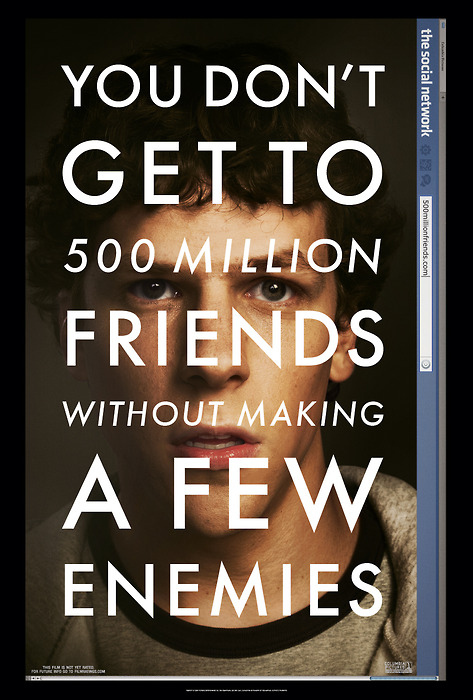
2.  This week's DVD was The Social Network.  We are finally managing to work our way through a long list of 'want to see' movies!

This Academy Award and Golden Globe Winner tells the story of the beginning of Facebook, from the perspective of two major lawsuits against it's creator, Mark Zuckerberg (played by Jesse Eisenberg).  As a movie it's fantastic: great screenplay by Aaron Sorkin (of The West Wing fame), great soundtrack, engaging story and interesting to watch. 

As a comment on society, people's greed and some of the billionaires the internet has produced: not so flattering.  Made me even less sure I want to remain on Facebook, which has been an ongoing issue for me for some time.  Good thing I am already thinking about the online life with The Next Story series.

Friday, October 7, 2011

The Rector's Wife

The Rector's Wife, Joanna Trollope

I devoured this book in a few days and finished it feeling completely overwhelmed.

Anna Bouverie is the rector's wife, mother and general parish dogsbody. When her husband, Peter, gets passed over for a promotion to archdeacon and sinks into a depression, she revolts. Sick of struggling to always make ends meet and the ongoing bullying of her daughter in school, Anna gets a job at the local supermarket to the horror of her husband and disgust of her parishioners. As she and her husband drift further apart, other men begin to show an interest.

It fascinated me on two levels:
1. I could completely understand her entire life. We do not minister in rural England, but it rang true on many, many levels: life in ministry, the continuous nature of pastoral support, the church structures, etc. While I do not live the life Anna lived, I could imagine it completely and the portrayal was frighteningly real. I also know some women whose lives mirror this even more closely that they would probably like to admit.

2. At the same time, on another level, it was completely alien. Anna was not converted. She (and her husband) had no concept of God's grace or glory. No real sense of service and absolutely no joy. His job is his job, even though it impinges quite significantly (and annoyingly) on her life. I am very thankful that while I could understand it it is nothing like my personal experience.

At the end the only word that truly summed it up for me was 'devastating'. It's a devastatingly harsh portrayal of ministry, parish life and people.


* To see another review see Rachael's on in tandem. She summarises the main issues very well.

Wednesday, October 5, 2011

The Next Story

The Next Story, Tim Challies

As I mentioned a month ago, I have been listening to a audio book by Tim Challies called The Next Story. Subtitled Life and Faith after the Digital Explosion, he explains how and why our society has become reliant on digital technology, what it means for our lives, and how it impacts on Christian faith.

It has been a fascinating read (or listen!).

So much so that I am going to dedicate a series of posts to it, to raise some issues and think about them. If you read this blog, you are an online person who probably uses much of the digital technology that is available today from Facebook & Twitter to iPods, iPhones and iPads; from eBay to blogger; from mobile phones to laptops to xBox. But do you think about the role of technology at all from a Christian perspective? Do you even know how to do so?
What does theology have to do with technology? More than you might think... We are looking for that sweet spot where our use of technology is not just thoughtful and informed, but it is informed by the bible, by an understanding of God’s purpose for technology. In that place of thoughtful technological discernment we live in light of what we know to be true about technology, what we know to be true about ourselves and what we know to be true about the God who made us. (Introduction, 16:30*).
There are a number of ways Christians can deal with technology:
  1. Embrace it – enthusiastically and unthinkingly. Yet this lacks discernment.
  2. Strict separation – see all digital as dangerous enemy. Yet this is not realistic.
  3. Be a discerning Christian
A Christian looks carefully at the new realities, ways and evaluates them and educates himself, thinking deeply about the potential consequences and effects of using a particular technology. Through it all, even as he is using a specific technology, he disciplines himself to be discerning, to embrace what can be embraced and to reject what needs to be rejected… he relies on the Holy Spirit who speaks his wisdom through the bible to learn how he can live with virtue in this new digital world. (19:30)
The rest of the book provides a history of technology, how it has changed the world and how as Christians we can think about and evaluate the benefits and risks for our Christian growth and maturity in technology.


Some things to think about:
  • Do you embrace technological advances? Are you one of the first to get the new latest gadget? What risks do you face with this?
  • Do you shun technology? Avoid it wherever possible? What are the risks with this?
  • Do you stop to think about what a new technology might do both to advance the kingdom of God and to stifle it?

* Sorry, can’t tell you page numbers, just time on the audio chapter!

Tuesday, October 4, 2011

Bible Passage

I continue to use the Explore bible reading notes by The Good Book Company.

I found today's so helpful, I thought I'd share a snippet.

1 Thess 1:9b-10:
They tell how you turned to God from idols to serve the living and true God, and to wait for his Son from heaven, whom he raised from the dead—Jesus, who rescues us from the coming wrath. 
We can overcomplicate the Christian life.  In some ways it's very simple.

We turn.
We serve.
We wait.
Turning. Serving. Waiting.  See how all three go together.  But some try to serve without having turned.  Others are waiting, not too bothered about serving.  Which of the three do you find the hardest?
  
And which idols to you find it hardest to turn from?


Monday, October 3, 2011

New book series - Radical Womanhood

Please note this series was originally on In Tandem, a blog for ministry wives.

Here at in tandem we are starting a new book series. We’ve looked at some practical ministry books, some books about marriage and some about Christian living. We thought it was time we looked at a book about women and feminism.

What do you think when you hear the word ‘feminist’? Do you embrace it? Run from it? Like to pick and choose parts of it? Do you understand why feminism arose and have any idea how to respond to it? Do you really even know what it is?

Next Monday, we will start working through Radical Womanhood, by Carolyn McCulley. Subtitled: Feminine faith in a feminist world, she challenges us to think through feminism, the impact it has had on the world and ourselves and how as Christian women we might respond to it.

Why don’t you join in?


If you would like to read the first chapter online, do so here. If you would like an introduction to the book by watching a 4-min video overview of feminist history by Carolyn McCulley - do so via this link.


Friday, September 30, 2011

God Rock

There is a new favourite CD in our car - God Rock - the new offering from Colin Buchanan.

We are big fans of Colin in this house - I think he is brilliant, the lyrics teach wonderful truths about God and the music is catchy and fun.

I think as Colin's kids get older, his music does also - and this one my son particularly loves.

There are songs themed around skateboarding, bike riding and big cars. 'Survival Man' pokes gentle fun at Bear Grylls, while reminding us that the battle is really man vs. death and God vs. sin. 'Super Chef' has a passing go at the Masterchef obsession, telling us that what we really need is the gospel recipe.

Our family favourite however is 'God United' which sounds like a soccer team song (or I suspect - am I allowed to say this? - a drinking song). It's so fun and catchy, we all sing it as loud as possible.

Sadly I couldn't find a link where you could listen to any of the songs. But if you have kids (age 4-10 and maybe older, and especially boys), they will love this.

Monday, September 26, 2011

To a better place...

The great chicken experiment has come to an end.

Almost a year to the day, we have drawn the curtains, end of the show, no more chickens here.

They truly have gone to a better place. Not a chicken pie factory. But rather a 1 acre property in the hills, where they can happily make friends with 3 other chooks in a lovely large pen, and free range to their hearts' content.

What have I learnt from the chicken experiment?
  • if they get out (and one was truly an excellent escape artist), they will always destroy the one part of the garden you are trying to preserve
  • they are very messy, being birds and all that
  • they make a lot of noise, in the hope of getting either company or food.
  • the eggs were lovely
  • the major lesson: in a marriage, if one partner really and truly does not want something, and has expressed it, it is wise for the other partner (ie. me in this scenario), to listen and respect said opinion.
Hence, for family harmony and my own sanity, the chickens have gone.

Now I await the areas newly renovated transformation into a veggie patch.

I will miss the eggs though. We had our final weekly scrambled eggs for Sunday night dinner last night, using 10 eggs. Unlikely to happen as a weekly occurrence any more - can't imagine I'll actually buy 21 eggs per week!

Friday, September 23, 2011

Mr Rosenblum's List

Mr Rosenblum's List, Natasha Solomons

I grabbed this off Mum's shelf last time I was in Sydney - she's always a source of great books.

It's the story of Jack and Sadie Rosenblum, Jewish German immigrants to England before WWII. Jack decides to assimilate to the British life totally and completely, working from a list of all the dos and don'ts of a proper Englishman.

It was a nice little book. Very easy to read. Good holiday choice.

I have decided though that I really prefer long books; really long books; or even those that are part of a series of many long books. Once I like a character and a story, I want to keep reading about them. I think this is why I am often frustrated with average length novels - they just don't contain enough details. Any suggestions from other readers of sagas out there?

Thursday, September 22, 2011

Running

I went in another fun run on Sunday.

The City-Bay again, although unlike last year's 6km, this time I attempted the 12kms. 

It was really hard.  

I don't really know why - I can run that distance, I have done it before.  But the rush of the day, all the people, the heat - who knows - I found it hard to run, hard to keep running and extremely hard not to stop.  My body has been sore for days.

Ah well, good to be humbled yet again.


(My offical time was 81:18, I had been hoping to beat 78, with a back up of 80 mins - oh well!)


Friday, September 16, 2011

Sarah Thornhill

Sarah Thornhill, Kate Grenville

I was delighted to discover that Kate Grenville, author of  The Secret River and The Lieutenant (both reviewed here), has just published the final in this loose trilogy, Sarah Thornhill.  

Sarah is the daughter of William Thornhill, the main character of The Secret River.  It is set some 20 years after the events of that book, and concentrates on Sarah and her life as she changes from a girl to a young woman.  Set in early settled New South Wales, it tells the story of love found and lost, then found again; with subplots covering the tensions in race relations (black, while and Maori) and family secrets.

Grenville has again drawn threads of her family history into the story (as she did for The Secret River), yet being told this time from a female perspective it adds another element.

Just this week I was lucky to go to a Get Reading Night, hosted by our local library, where Kate Grenville was the speaker.  It was very good and she spoke about how the story came from her searching through the family history, which then developed into this novel.

If you enjoy early colonial history novels or you have enjoyed Grenville's other work, you will definitely like this one.  

I should add - "3 cheers for libraries".  I read the review of this book in the paper 2 weeks ago, saying it was about to be released.  I reserved it at the library.  Two days later I had the book in my hands.   There would have been close to 200 people at the event the other night and I was only one of a handful who had read it.   Gotta love the library!!

Sunday, September 11, 2011

What were you doing when?

There are some moments in life that you will always remember where you were and what you were doing when they happened.

Most of them are key personal moments:
- when your husband proposed
- when you went into labour with a child 
- when a loved one died
- perhaps when you got your Yr 12 exam results, or your first job

However, some are world events.  You will all know that today is 10 years since September 11, 2001, when the Twin Towers fell and the world changed. 

I suspect everyone who was an adult that day (and many who were younger) remember where they were and what they were doing.   We were had finished a DVD, and switched to the TV, and we saw from just after the first plane crashed.  We watched the second plane crash and the first tower come down. 

With heavy hearts, we decided not to keep watching, but to go to bed, after praying fervently to our saviour God. 

People of a previous generation will tell you that they all can remember where they were and what they were doing the day JFK was shot, and the day Neil Armstrong walked on the moon.  I can clearly remember the day Diana, Princess of Wales, died.   

What world events have been etched on your mind, so that you remember what you were doing then?


As I have read some of the articles and tributes this week about 9/11, what has struck me is that for my children, it is already history.  It's not part of their knowledge or world.  It's in the past.  They will study it, surely, and we will tell them about it, but for them it will be 'old news'.  Like JFK was for me, or the World Wars. 

Which world events will you tell your children about?

Friday, September 9, 2011

Daughters-in-Law

Daughters-in-Law, Joanna Trollope

I have heard of Joanna Trollope for years, but never read any of her books. This one was a good one to start with (I think it may be her most recent). Trollope has relayed very well the challenges of relating as adults in an extended family.

Daughters-in-Law tells of Rachel & Anthony, empty nesters with 3 adult sons, all married. Rachel has been a very involved mother, and is finding the reality of her sons' attentions and primary affections focused elsewhere hard to manage. While at times she behaves quite badly, you have sympathy for her and also for her sons and daughters-in-law as they navigate adult relationships with their parents.

I have known some very intense mothers-in-law over the years who have really struggled to 'hand over' their sons (not mine - she's lovely!) and it seems to be a common feature that many women really do not believe any daughter-in-law can truly be good enough for their son. This book portrays that tension very well, yet also lets us see how hard it can be for a mother (especially a full-time stay at home mum) to really let go and move into a different, more 'hands-off' stage of life.

Even though it's fiction, it might be helpful reading for some who find this mother-in-law / child-in-law relationship a little tricky - and, let's be serious - who doesn't sometimes?!


I ended getting some more Joanna Trollope books out of the library, I'll let you know what they are like too, and I am definitely planning to get The Rector's Wife!


Friday, September 2, 2011

The Household Guide to Dying

The Household Guide to Dying, Debra Adelaide

I have just finished this book, and it was wonderful.

Not the easiest topic to read about, but a fantastic book nonetheless. Delia Bennet is a wife, mother of 2 girls and author of many Household Guides (to the Laundry, to the Kitchen). When she reaches the stage of terminal cancer, she realises that the next book she writes will be her last:
After the second operation and the third diagnosis, as I resigned myself to the fact that the latest Household Guide I'd written would be my last... I conceived in a flash the best idea ever, I didn't have to abandon the Household Guides at all. I rang Nancy...

Think of the title, I said. How catchy does The Household Guide to Dying sound?
The novel runs two concurrent stories - one the final months of Delia's life in her home with her family as she writes her book and prepares for death; and the other as she travels to far North Queensland to farewell a previous life and tragedy that met her there.

A warning to anyone currently grieving a loved one, or facing death or cancer themselves - it may be just too confronting.

However, I have to say I loved the writing, the story was intriguing, and it really was an excellent read.

Thursday, September 1, 2011

Catechism update

A month ago I shared some catechisms that we were considering using as a family. We were starting to teach them to the children and so I had adapted some simplified versions for children.

One month in and I have made some changes, so I thought I'd tell you about them as some readers were interested in the catechism idea also.

1. We have started working through Training Hearts, Teaching Minds, by Starr Meade (mentioned previously). She has created a set of weekly devotions around each question of the Westminster Shorter Catechism in Modern English.

We read it with Mr 8 and Miss 6 at the end of the day, and we are all enjoying it and learning lots. Each daily reading takes 5-10 mins to read and talk about, so it's very manageable.

To go alongside it, I have produced a document of just the questions and answers as she has them (in modern English), which is quite manageable. Mr 8's goal is to learn them as we go through - at the rate of 1 per week, he should be fine.


2. I realised my previous Family Catechism with all it's 146 questions was way too complicated for younger ones. Not only that it had some emphases I wasn't happy with. Maybe I am more Anglican than I thought!?

As we are going to work through Training Hearts, Teaching Minds with them all once they can handle it, they didn't need to get into all the details of the commandments, etc, at this stage.

However, I still like the idea and having started to learn some of it, I realised what they were capable of when the language was simpler and more familiar.

So in a burst of energy I have created a Simple Family Catechism. It is only 60 questions, and I think it represents some of the main things I want the kids to learn at this stage, keeping the general format of the Shorter Catechism as the guide.

I would love to know what you think of it.